
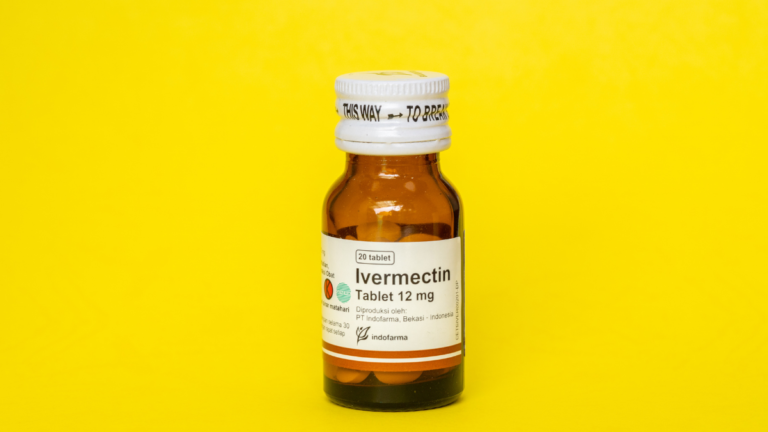
You have tried the medicated washes. Maybe a course of antibiotics, a little tea tree oil, a new pillowcase every night. The redness and the tiny bumps quiet down for a week or two, and then they creep back. When people reach that point, one word keeps coming up in their searches: ivermectin. This guide explains, in plain language, what ivermectin actually does to Demodex mites, what the newest studies show, the different forms that exist, and the safety points that matter, with the science laid out for practitioners too.

Ivermectin is one of the most-studied anti-parasitic options for reducing Demodex mite density.
Quick answer. Yes, ivermectin reduces Demodex mites. It paralyzes them by forcing tiny chloride channels in their nerves and muscles to stay open, so they cannot move or feed and die off over the following weeks. It comes as a prescription 1% cream (best studied, used on the face), an over-the-counter 0.5% lotion (a lice product used off-label on the eyelids in small studies), and oral tablets for widespread cases. It is not a cure you buy once; mites return if the follow-up routine stops, which is why clinicians pair it with daily lid and skin care.
The numbers people ask about
Pooled figures for topical ivermectin 1% from a 2025 systematic review and meta-analysis of five trials (180 participants).
What is ivermectin, and why do dermatologists use it for Demodex?
Ivermectin is an anti-parasitic medicine from the macrocyclic-lactone family. It has been used in people for decades to manage worm infections and scabies, and a 1% cream is approved for the bumps and redness of rosacea. That rosacea approval matters here, because a large share of stubborn adult rosacea is tangled up with a high Demodex load on the face.
Ivermectin is attractive for demodicosis because it does two useful things at once: it lowers mite numbers and it appears to calm inflammation in the surrounding skin. For a face that is both crawling and flaring, that combination is the whole point.
How ivermectin affects a Demodex mite
Mites move and feed using nerve and muscle signals. Ivermectin binds to glutamate-gated and GABA-gated chloride channels in those cells and holds them open. Chloride floods in, the signals shut down, and the mite is paralyzed. A paralyzed mite cannot feed, so it dies, and over the following weeks the Demodex density on the skin falls back toward the normal range of five or fewer mites per square centimeter.

Ivermectin opens chloride channels in the mite, paralyzing it; mite density then falls over the following weeks.
Those channels barely exist in the human brain, and ivermectin does not cross the healthy blood-brain barrier easily, which is a large part of why the drug is far harder on the parasite than on the person.
Does ivermectin actually reduce Demodex? What the studies show
The strongest recent evidence is for the topical 1% cream. A 2025 systematic review and meta-analysis pooled five trials and found that daily use produced a mean reduction of about 70 mites per square centimeter, cut the share of people still testing Demodex-positive by roughly 80%, and that the benefit was still measurable about twelve weeks after the course ended. Only mild, local side effects were reported.
Oral ivermectin is used for more widespread or resistant demodicosis. In reported protocols it is given as a weekly dose calculated by body weight, sometimes with a topical partner medicine, and always under a doctor s supervision. On the eyelids, a 2026 case series used an over-the-counter 0.5% ivermectin lotion applied in the office and saw collarettes (the tell-tale cuffs of Demodex blepharitis) clear for one to two months.
The forms of ivermectin used for Demodex

Which form fits depends on where the mites are and how widespread they are.
Topical 1% cream (prescription). The best-studied option, applied once daily to the face. This is the usual first choice for ivermectin for Demodex rosacea and ivermectin for Demodex on the face.
0.5% lotion (over the counter). Sold as a head-lice treatment and used off-label on the lash line in early Demodex blepharitis studies. Never put a lice product in or near the eyes on your own; the eyelids are delicate and this belongs with an eye-care provider.
Oral tablets (prescription). Kept for widespread body involvement or cases that will not settle with topicals, given by weight and supervised.
Where on the body it is used
People search by location, so here is the map. On the face, ivermectin targets the rosacea-type bumps and flushing driven by mites in the pores. On the eyelids and lashes, it aims at the crusty cuffs of Demodex blepharitis. On the scalp and body, it is used mainly when overgrowth is widespread. If you are still working out whether mites are your problem in the first place, start with how to know if you have Demodex mites and how testing is done.
Expect a flare first: the die-off.
As mites die in large numbers, many people get a short spell of worse redness, itching, or bumps before things improve. This die-off is common and usually settles within a couple of weeks. Read what a Demodex die-off looks like so it does not scare you into stopping too early.
Ivermectin, tea tree oil, or the full protocol?
These are not rivals so much as tools for different jobs. Ivermectin is a prescription-grade way to bring a high mite load down quickly. Tea tree oil and its active piece, terpinen-4-ol, are the best-studied natural option and are gentle enough for daily upkeep. The honest reason mites come back is almost never the killing step; it is the missing maintenance. That is why our complete step-by-step protocol pairs a reduction phase with a simple daily routine, and why our natural-remedies evidence review exists alongside the medical options.
For practitioners
Ivermectin acts as an agonist at invertebrate glutamate-gated chloride channels (and, at higher concentrations, GABA-gated channels), causing hyperpolarization, flaccid paralysis, and death of D. folliculorum. A parallel anti-inflammatory effect (down-modulation of neutrophil chemotaxis and cathelicidin/LL-37-driven signaling) helps explain its value in papulopustular rosacea, where mite density and the innate-immune cascade run together.
Reported regimens: topical ivermectin 1% cream once daily for 12 to 16 weeks; oral ivermectin ~200 mcg/kg weekly for two to five doses, sometimes with topical permethrin or metronidazole, for widespread or refractory demodicosis; and off-label 0.5% lotion on the lid margin for Demodex blepharitis. Confirm density with a standardized method (standardized skin surface biopsy or lash sampling), counsel patients on the die-off, and re-assess at 8 to 12 weeks. Prescribing, dosing, and contraindications remain a clinician decision.
People also ask
Does ivermectin kill Demodex mites? Yes. It paralyzes them by opening chloride channels in their nerve and muscle cells, and studies show it significantly lowers mite density on the skin and eyelids.
How long does ivermectin take to work on Demodex? With topical 1% cream, mite counts keep dropping over about twelve to sixteen weeks of daily use, and the benefit holds for weeks after stopping.
Can you buy ivermectin for Demodex over the counter? A 0.5% ivermectin lice lotion is sold without a prescription in some countries and has been used off-label on the eyelids in small studies, but the best-studied 1% cream and the oral tablets are prescription only.
Does oral ivermectin help Demodex on the face? It can, usually reserved for widespread or stubborn cases; for the face alone, most clinicians reach for the topical cream first.
Can ivermectin treat Demodex blepharitis? Early evidence with an in-office 0.5% lotion is promising for clearing lash collarettes, but eyelid care belongs with an eye-care provider. See our guide to Demodex blepharitis.
Not sure whether mites are behind your flare? Take the 2-minute Demodex quiz, browse the research hub, or find help through the practitioner directory.
References
- Paichitrojjana A, Khuancharee K, Paichitrojjana A. Efficacy of topical Ivermectin in controlling human Demodex infestation: a systematic review and meta-analysis. Parasite Epidemiol Control. 2025;e00461. PMC12523798.
- Graham BI. Demodex-associated blepharitis treated with nonprescription topical ivermectin: a case series. Clin Insights Eyecare. 2026;4(1):11-18. doi:10.66574/001c.158407.
- Evaluating the efficacy of oral ivermectin on clinical symptoms and Demodex densities in patients with demodicosis. 2024. PMC11585293.
- Die-off reaction of Demodex mites after treating demodicosis with oral ivermectin: a case report. JAAD Case Rep. 2024. Full text / PMC11399466.
About the author. Marina Ivakhnenko is a functional skin practitioner who focuses on Demodex-related skin conditions. This article is educational and is not a substitute for personal medical care. Ivermectin is a prescription medicine in most forms and countries; decisions about using it belong with your doctor or a qualified practitioner.


