
Introduction
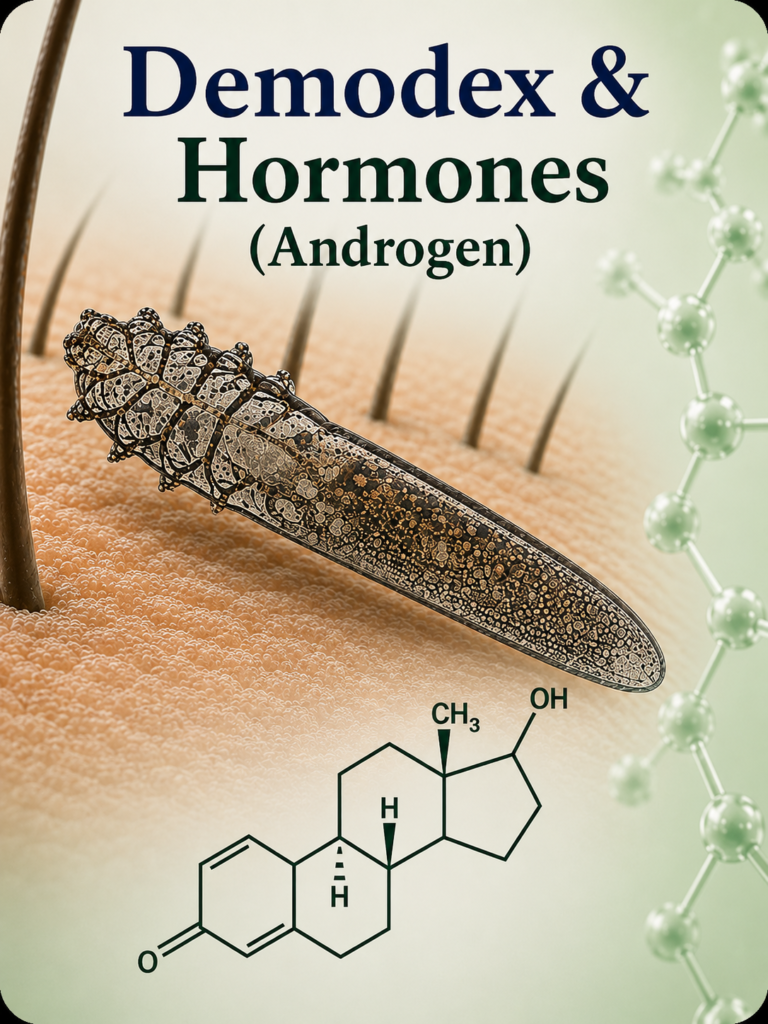
Demodex mites are microscopic parasites that naturally inhabit human skin, particularly in areas rich in sebaceous (oil-producing) glands. Most people carry small numbers of Demodex mites without experiencing symptoms. However, when mite populations increase excessively, they may contribute to various skin and eye conditions, including rosacea, blepharitis, dry eye disease, and facial irritation. Understanding the connection between hormones and Demodex is crucial for maintaining skin health.
Recent research suggests that hormones, especially androgens, may play an important role in creating an environment that supports Demodex proliferation. Although hormones do not directly cause Demodex infestation, they can influence skin oil production, immune responses, and inflammation, all of which may affect mite populations. This highlights the significance of understanding hormones and Demodex in relation to skin health.
Understanding the impact of hormones and Demodex is vital for addressing related skin issues.
What Are Androgens?
Androgens are a group of hormones that regulate many functions in both males and females, and their relationship with Demodex is of particular interest. Testosterone is the best-known androgen, but other hormones such as dehydroepiandrosterone (DHEA) and androstenedione also belong to this group. These hormones directly influence the proliferation of Demodex mites on the skin.
These hormones are responsible for:
- Stimulating sebaceous gland activity
- Influencing hair growth
- Regulating skin thickness
- Affecting immune responses
- Controlling oil production
Because Demodex mites feed on skin oils and debris, androgen-driven changes in sebum production may indirectly influence their survival.
Sebaceous Glands and Demodex Mites
Demodex mites thrive in areas with abundant sebaceous glands. Common locations include:
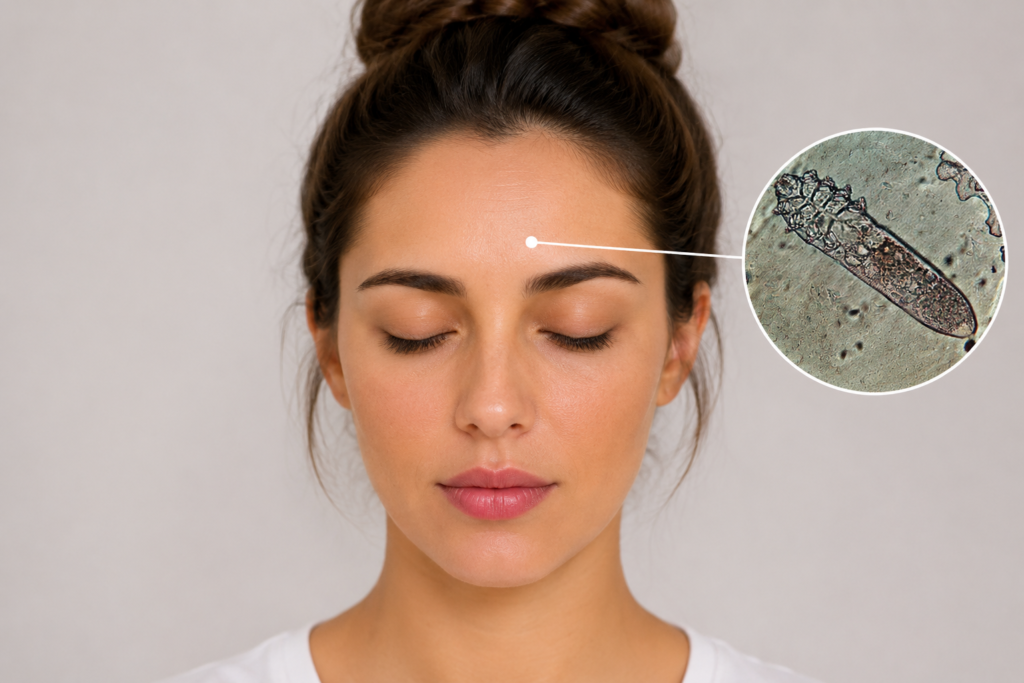
- Forehead
- Nose
- Cheeks
- Chin
- Scalp
- Eyelid margins
Sebaceous glands produce sebum, an oily substance that helps protect and moisturize the skin. However, excessive sebum production can create an ideal habitat for Demodex mites.
Studies have shown that individuals with oily skin often have higher densities of Demodex mites compared to those with dry skin.
How Androgens Increase Sebum Production
Androgens stimulate sebaceous gland cells and increase their activity. During periods of elevated androgen levels, the skin may produce significantly more oil.
This process can lead to:
- Oily skin
- Enlarged pores
- Acne breakouts
- Increased skin shine
- Greater Demodex survival opportunities
The more sebum available, the more resources Demodex mites have for feeding and reproduction.
Demodex, Puberty, and Hormonal Changes
Demodex infestations are relatively uncommon in young children because sebaceous glands are not fully active. During puberty, androgen levels rise dramatically, causing increased oil production throughout the skin.
This hormonal shift may explain why:
- Acne becomes more common
- Skin becomes oilier
- Demodex populations often increase
The same mechanism may contribute to the development of certain inflammatory skin conditions later in life.
Demodex and Polycystic Ovary Syndrome (PCOS)
Women with polycystic ovary syndrome (PCOS) frequently experience elevated androgen activity. Common symptoms include:
- Oily skin
- Acne
- Excess facial hair
- Hormonal imbalances
Researchers have proposed that increased sebum production in PCOS patients may create favorable conditions for Demodex proliferation, although more studies are needed to fully understand the relationship.
Hormones and Ocular Demodex
The eyelids contain specialized sebaceous glands known as meibomian glands. These glands produce oils that form part of the tear film.
Androgens help regulate meibomian gland function. When gland function becomes abnormal, several problems may occur:
- Dry eyes
- Blepharitis
- Meibomian gland dysfunction
- Eyelid inflammation
Because Demodex mites frequently inhabit eyelash follicles and meibomian glands, hormonal influences on these structures may affect ocular Demodex populations.
Demodex, Rosacea, and Hormonal Factors
Rosacea is one of the conditions most commonly associated with elevated Demodex density.
Researchers believe multiple factors contribute to rosacea, including:
- Genetic predisposition
- Immune system dysfunction
- Vascular abnormalities
- Skin microbiome changes
- Demodex overgrowth
Hormonal fluctuations may worsen these factors by increasing sebum production and inflammatory responses, creating conditions that favor both rosacea and Demodex proliferation.
Aging, Hormones, and Demodex
As people age, hormonal levels gradually change. These changes can alter skin structure, immune function, and gland activity.
Older adults often have:
- Higher Demodex prevalence
- Reduced skin barrier function
- Increased susceptibility to chronic inflammation
This may partly explain why Demodex-related conditions are more common in older populations.
The Role of the Immune System
Hormones do more than influence oil production. They also interact with the immune system.
Changes in hormonal balance may affect:
- Inflammatory responses
- Skin barrier integrity
- Microbial balance
- Resistance to parasites
When immune defenses are compromised, Demodex mites may multiply more easily and trigger greater inflammation.
Prevention and Management
While hormonal fluctuations cannot always be controlled, several strategies may help reduce the risk of Demodex overgrowth:
Maintain Good Facial Hygiene
Regular cleansing helps remove excess oil, debris, and environmental contaminants.
Practice Eyelid Hygiene
Daily eyelid cleansing may help reduce mite populations and prevent chronic inflammation.

Manage Oily Skin
Using dermatologist-approved skincare products can help regulate sebum production.
Address Underlying Hormonal Conditions
Individuals with persistent acne, oily skin, or hormonal disorders should consult healthcare professionals for proper evaluation.
Seek Professional Care
Persistent symptoms such as facial redness, eyelid irritation, itching, or recurrent styes may require professional diagnosis and treatment.
Conclusion
The relationship between Demodex mites and hormones is complex. While androgens do not directly cause Demodex infestations, they significantly influence sebum production and skin conditions that may support mite growth.
Understanding how hormones affect the skin and eyelids provides valuable insight into why certain individuals are more susceptible to Demodex-related disorders. Continued research may help clarify the intricate connection between hormones, immunity, skin health, and Demodex populations.
In conclusion, the relationship between hormones and Demodex is significant for understanding skin health and potential treatments for skin conditions triggered by these mites.
References
- Forton F, De Maertelaer V. Rosacea and Demodex: Little-known Diagnostic Signs and Symptoms.
- Demodex Blepharitis: Clinical Perspectives.
- Ocular Demodicosis as a Potential Cause of Ocular Surface Inflammation.
- American Academy of Dermatology. Sebaceous Glands and Skin Oil Production.
- National Library of Medicine. Human Demodex Mite: The Versatile Mite of Dermatological Importance.


