
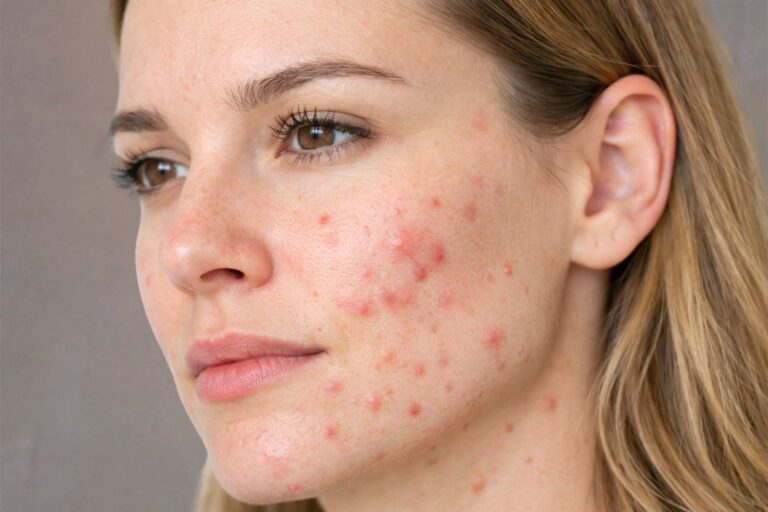
Acne-like skin eruptions are among the most common reasons people seek dermatological care. While many individuals assume that every pimple or facial bump is traditional acne, other conditions can produce very similar symptoms. One of the most frequently overlooked causes is Demodex infestation, also known as demodicosis.
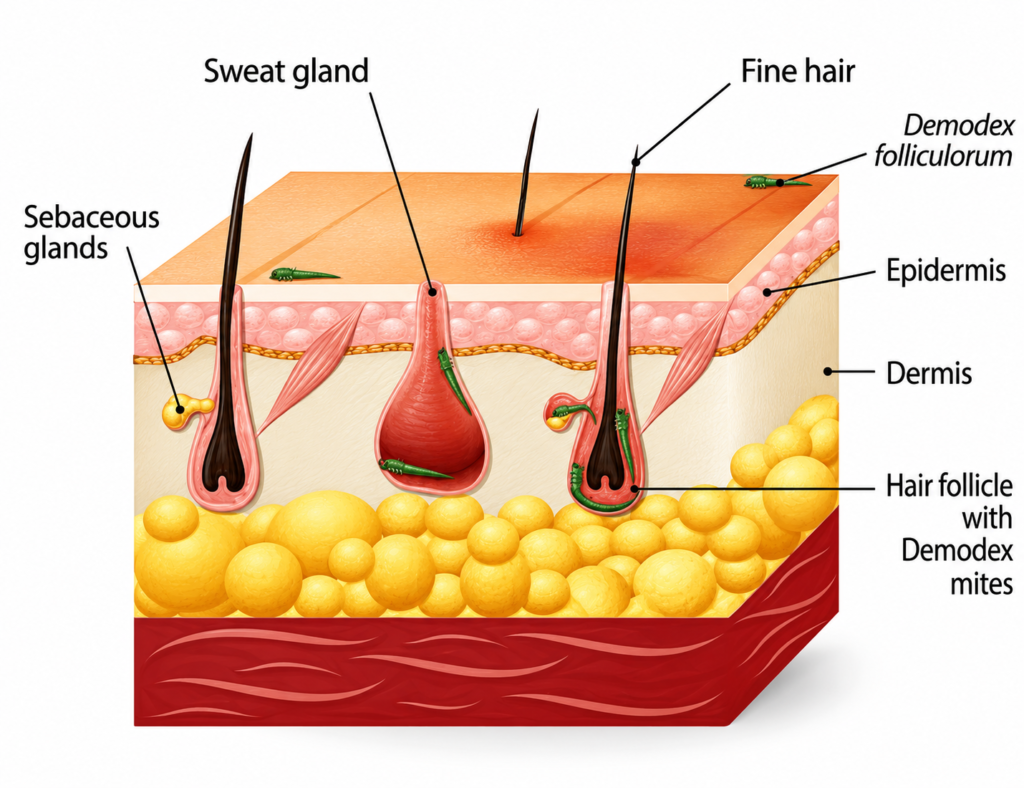
Demodex mites are microscopic parasites that naturally inhabit human hair follicles and sebaceous glands. In healthy individuals, these mites usually exist without causing symptoms. However, when their population increases excessively, they can trigger inflammation that resembles acne, rosacea, folliculitis, or other skin disorders.
Because treatment strategies differ significantly among these conditions, obtaining an accurate diagnosis is essential, particularly in the context of the Differential Diagnosis for Demodex Acne to avoid misdiagnosis of similar skin conditions and ensure appropriate care.
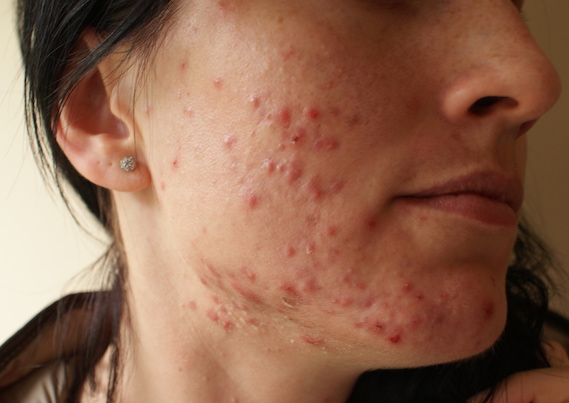
What Is Demodex Acne and Why is the Differential Diagnosis for Demodex Acne Important?
The Differential Diagnosis for Demodex Acne is crucial in ensuring appropriate treatment and distinguishing it from other conditions.
Understanding the Differential Diagnosis for Demodex Acne is pivotal for dermatologists to effectively differentiate between various acneiform conditions and provide suitable treatment.
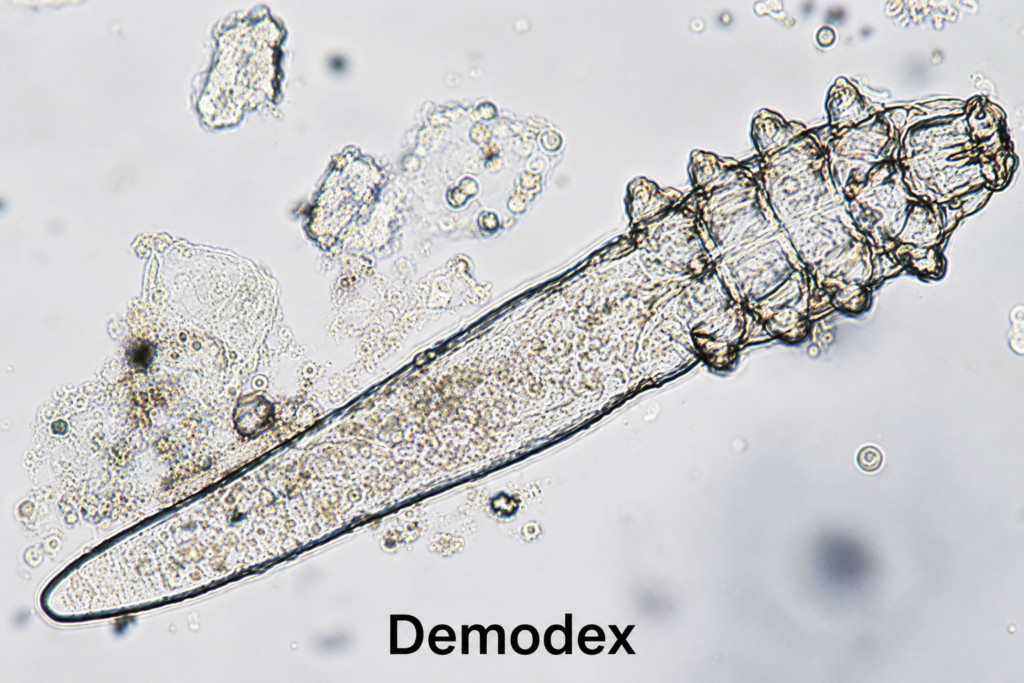
The term “Demodex acne” is not an official medical diagnosis, but it is commonly used to describe acne-like eruptions caused by an overgrowth of Demodex mites, particularly Demodex folliculorum and Demodex brevis.
Patients may develop:
These symptoms often appear on the cheeks, forehead, chin, nose, and around the eyes:
Why Differential Diagnosis Is Important
Many skin disorders share overlapping clinical features. As a result, patients are frequently treated for conventional acne for months or even years without improvement.
A proper differential diagnosis helps:
The following conditions are most commonly confused with Demodex-related skin disease.
1. Acne Vulgaris
Acne vulgaris is the most common skin condition mistaken for Demodex infestation.
Recognizing the differential diagnosis for Demodex acne can prevent misdiagnosis and lead to more effective treatments.
Similarities
Both conditions may present with:
Key Differences
Acne vulgaris typically includes:
Understanding the differential diagnosis for Demodex acne is crucial for effective treatment.
Demodex-related eruptions often:
When acne medications fail repeatedly, clinicians may investigate Demodex involvement.
2. Rosacea
Rosacea is one of the most important differential diagnoses because it has a well-documented association with increased Demodex density.
Similarities:
Key Differences
Rosacea often includes:
Patients with rosacea frequently demonstrate elevated Demodex counts, suggesting that mites may contribute to disease severity.
3. Bacterial Folliculitis
Folliculitis occurs when hair follicles become inflamed due to bacterial infection.
Similarities:
Key Differences
Bacterial folliculitis often:
Demodex folliculitis tends to be more chronic and less responsive to antibacterial therapies.
4. Fungal Folliculitis
Malassezia folliculitis, commonly called fungal acne, can closely resemble Demodex acne.
Similarities:
Key Differences
Fungal folliculitis typically:
Microscopic examination can help distinguish fungal organisms from Demodex mites.
5. Perioral Dermatitis
Perioral dermatitis affects the skin around the mouth and occasionally the nose and eyes.
Similarities:
Key Differences
Perioral dermatitis:
Dermatologists often differentiate these conditions based on lesion distribution and clinical history.
6. Seborrheic Dermatitis
Seborrheic dermatitis is a chronic inflammatory condition associated with excess sebum production and Malassezia yeast.
Similarities:
Key Differences
Seborrheic dermatitis usually presents with:
Although Demodex may coexist with seborrheic dermatitis, the two conditions require different management approaches.
Diagnostic Methods Used for Demodex Detection
Because visual examination alone may be insufficient, clinicians often use specialized diagnostic techniques.
Standardized Skin Surface Biopsy (SSSB)
A skin sample is collected using adhesive material and examined microscopically.
Advantages include:
Direct Microscopic Examination
Skin scrapings are examined under a microscope to identify mites directly.
This method provides:
Dermoscopy
Dermoscopy can reveal characteristic findings such as:
Confocal Microscopy
Advanced imaging techniques allow visualization of mites within follicles without invasive sampling.
When Should Demodex Be Suspected?
Healthcare professionals may suspect Demodex infestation when patients experience:
The presence of itching is particularly useful because traditional acne rarely causes significant itchiness.
Treatment Considerations
Treatment depends entirely on the underlying diagnosis. For confirmed Demodex overgrowth, healthcare providers may recommend:
Conversely, bacterial folliculitis may require antibiotics, while fungal folliculitis often responds to antifungal medications. This distinction highlights why accurate diagnosis is critical.
Conclusion
Demodex infestation can closely mimic several common dermatological disorders, including acne vulgaris, rosacea, bacterial folliculitis, fungal folliculitis, perioral dermatitis, and seborrheic dermatitis. Because symptoms frequently overlap, patients may remain undiagnosed for extended periods.
A careful clinical evaluation combined with appropriate diagnostic testing can help distinguish Demodex-related disease from other acne-like conditions. Early recognition not only improves treatment outcomes but also reduces unnecessary therapies and long-term skin irritation.
If persistent acne-like symptoms fail to respond to conventional treatments, evaluation for Demodex infestation should be considered as part of the differential diagnosis.


