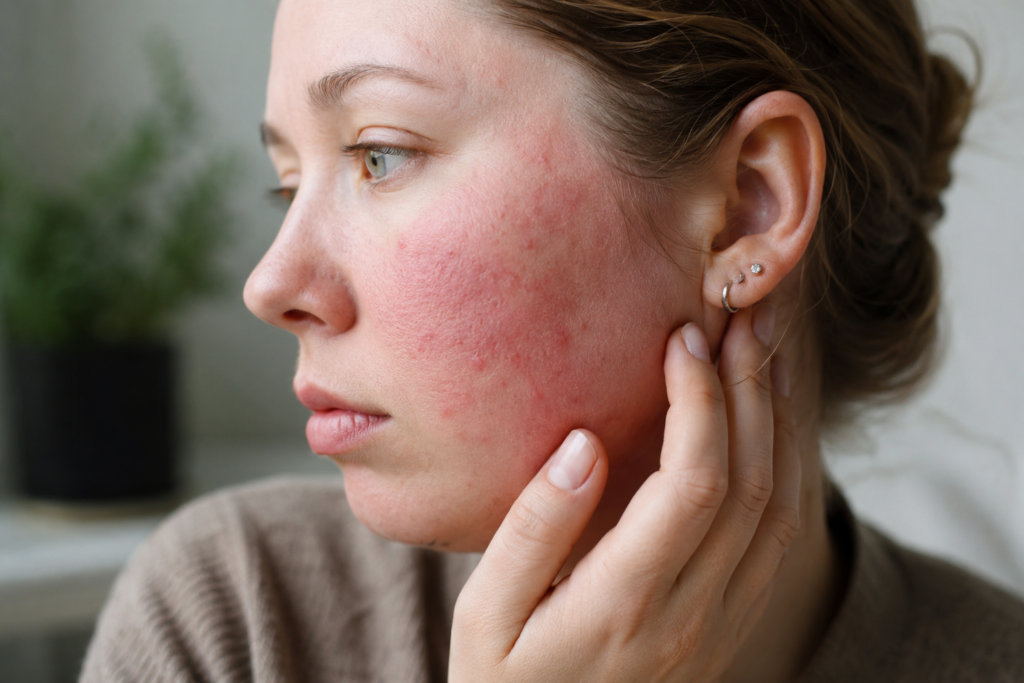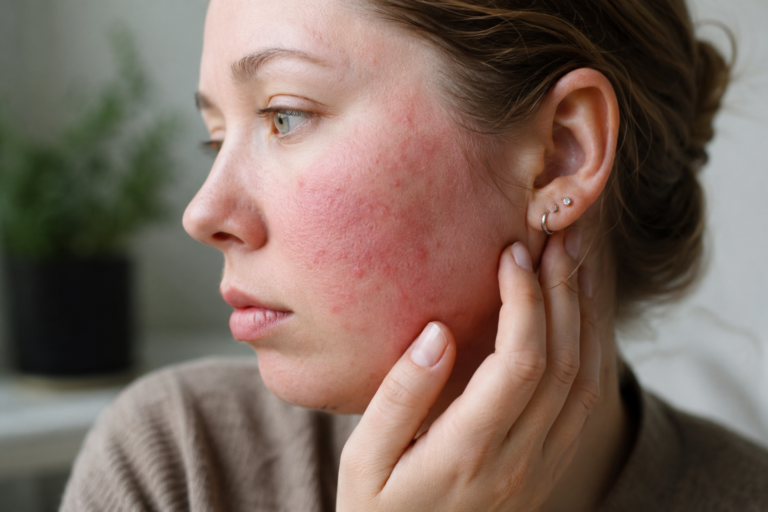
The doxycycline cleared the pustules for six weeks. The metronidazole cream calmed the central erythema. The brimonidine gel handled the flushing for date nights and important meetings. Each prescription delivered partial improvement, and each one wore off. Within months the cheeks were back to baseline, the papules were back in the nasolabial folds, and the patient had cycled through three dermatologists looking for the one who would finally explain why nothing held in cases of Demodex and Rosacea.
This is the clinical signature of Demodex-driven rosacea, and it accounts for the majority of treatment-resistant rosacea cases seen in dermatology clinics. The inflammation is being suppressed. The mites that keep restarting the inflammatory cascade are not. Until the Demodex side of the equation is addressed, the rosacea will return on a predictable timetable.
The Pathophysiology: How Demodex Triggers Rosacea
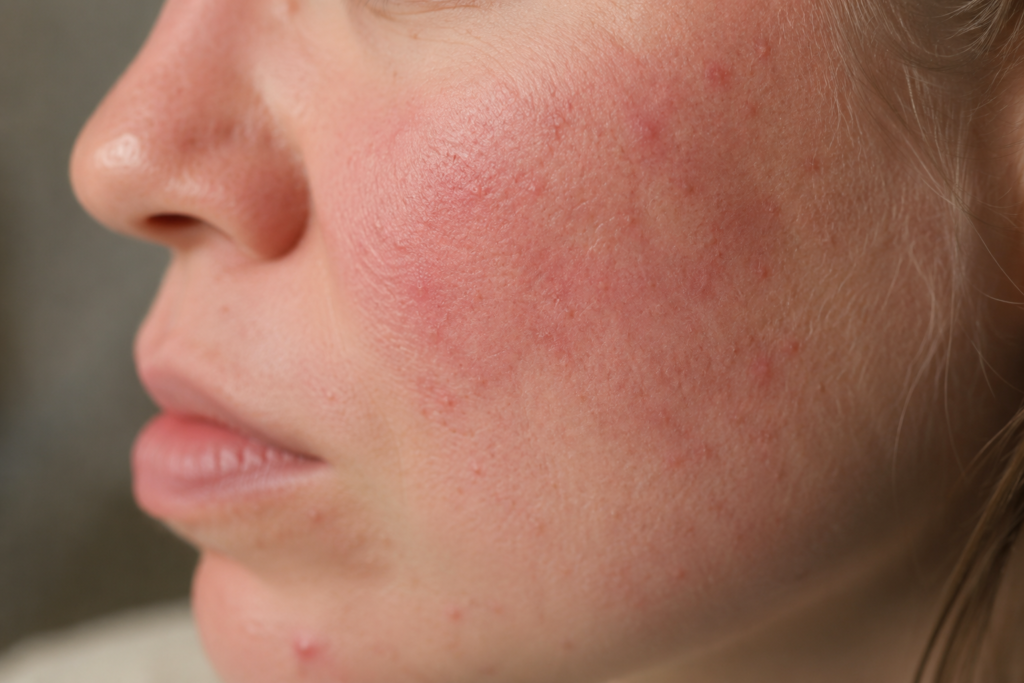
For decades rosacea was treated as a mysterious vasomotor disorder with no clear cause. The picture has changed substantially. The 2024 and 2025 dermatology and immunology literature now identifies Demodex Mites Rosacea as closely linked, with Demodex mites acting as one of the central drivers of the inflammatory cascade that produces rosacea, particularly its papulopustular and erythematotelangiectatic subtypes.
The mechanism is now well characterised. When Demodex density rises above the regulatory threshold of approximately five mites per square centimetre, several events occur in parallel within the pilosebaceous unit. The mites carry surface antigens and a gut bacterium called Bacillus oleronius that activate toll-like receptor 2 (TLR2) on keratinocytes and sebocytes. TLR2 activation upregulates a serine protease called kallikrein-5 (KLK5). KLK5 cleaves an inactive precursor (hCAP18) into an active antimicrobial peptide called LL-37, the human cathelicidin. LL-37 is the master switch of the rosacea inflammatory phenotype.
Active LL-37 stimulates mast cells through the MRGPRX2 receptor. Mast cells release histamine, tryptase, and matrix metalloproteinase 9 (MMP9). MMP9 then activates more KLK5, creating a self-amplifying inflammatory loop. LL-37 also recruits neutrophils, drives the Th1 and Th17 cytokine signature, induces angiogenesis through VEGF, and produces the vasodilation that patients experience as facial flushing. The chitin released when mites die in follicular tissue further activates TLR2, ensuring the loop is replenished with every mite death.
This is why the relationship between Demodex and Rosacea is not coincidence. The mite is not simply a passenger on inflamed skin. The mite is one of the inputs that switches the inflammatory machinery on.

The Dual-Mechanism Framework for Demodex Rosacea
Effective long-term management of Demodex and Rosacea cannot be achieved by addressing the inflammation alone. Two mechanisms must be tackled together.
Required Mechanisms for Durable Remission
- Direct reduction of Demodex density. The mite is the upstream trigger. Without lowering the mite count, the TLR2 and KLK5 cascade re-ignites every time topical or oral anti-inflammatory therapy is reduced or stopped. Acaricidal agents include topical ivermectin, terpinen-4-ol (the active in tea tree oil), and metronidazole with weak acaricidal activity at higher concentrations.
- Suppression of the downstream inflammatory cascade. Even after mite density falls, the KLK5 and LL-37 pathway needs to be calmed for the skin to clear. Azelaic acid is the most evidence-based KLK5 inhibitor. Subantimicrobial doxycycline (40 mg modified release) blocks MMP9 and reduces KLK5 activation. Topical brimonidine or oxymetazoline reduces the visible erythema while the upstream interventions are taking effect.
The five interventions below address both mechanisms. Most patients will combine two or three of them under dermatologist supervision. Monotherapy is rarely sufficient for moderate to severe Demodex rosacea.
The Five Evidence-Based Interventions for Demodex Rosacea
01. Topical Ivermectin 1 Percent Cream (Soolantra) — First Line for Papulopustular Rosacea
Indication. Papulopustular rosacea with confirmed or strongly suspected Demodex involvement. FDA approved for inflammatory lesions of rosacea since 2014.
Mechanism. Ivermectin binds to glutamate-gated chloride channels in invertebrate nerve and muscle cells, causing paralysis and death of Demodex within hours of exposure. It also has a directly anti-inflammatory effect, suppressing LPS-induced cytokine release independent of its acaricidal action. The dual mechanism explains why topical ivermectin produces both rapid reduction in pustule count and longer-term reduction in baseline erythema.
Clinical protocol.
- Apply a pea-sized amount to the entire face once daily, in the evening, after gentle cleansing.
- Avoid the eye margin and the inside of the nostrils.
- Continue for a minimum of twelve weeks before assessing efficacy.
- Full clinical response often takes sixteen weeks. Initial worsening (a flare in the first two to four weeks) is common as dying mites release pro-inflammatory content; this is not a treatment failure.
- For maintenance, taper to alternate-day application rather than stopping abruptly.
Evidence summary. A 2025 systematic review and meta-analysis confirmed that topical ivermectin produces statistically significant reductions in both Demodex density and Investigator Global Assessment (IGA) scores compared with vehicle and with metronidazole. The pivotal phase III trials (Stein Gold et al.) demonstrated superiority to metronidazole 0.75 percent at sixteen weeks. Real-world dermatology practice now treats Soolantra as first-line for moderate papulopustular rosacea with suspected Demodex involvement.
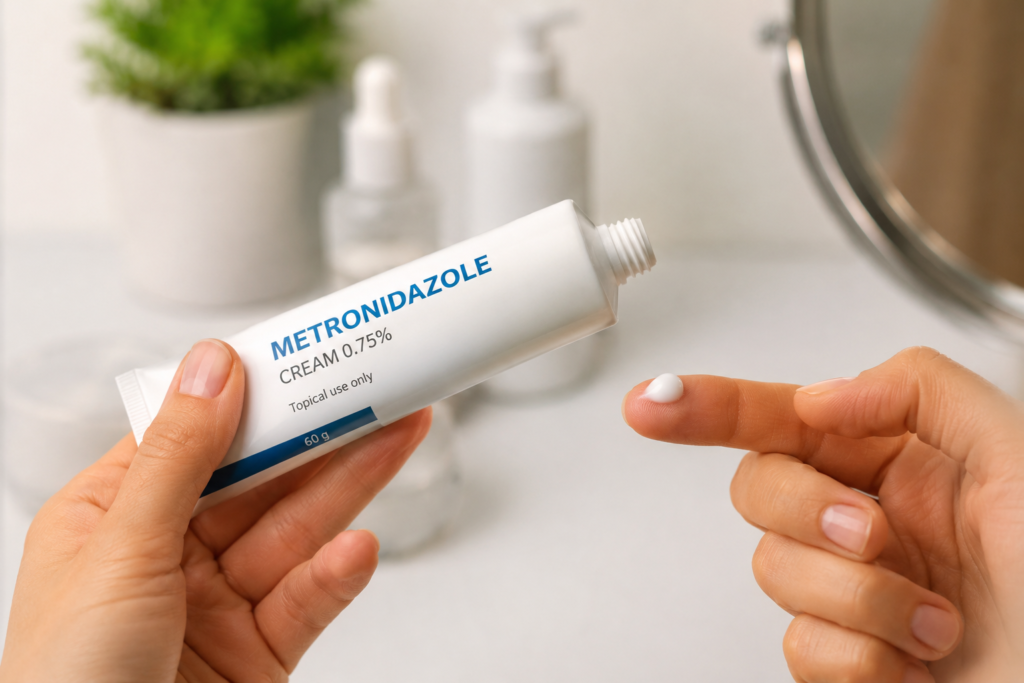
02. Topical Metronidazole — Established Anti-Inflammatory With Weak Acaricidal Activity
Indication. Mild to moderate papulopustular rosacea, often as a starting point or as a maintenance therapy after ivermectin-induced clearance.
Mechanism. Metronidazole reduces neutrophil reactive oxygen species production, inhibits LL-37 mediated inflammation, and exerts mild antibacterial activity against the gram-negative organisms (including B. oleronius) carried by Demodex. It does not directly kill mites at typical topical concentrations, but it interrupts the inflammatory consequences of mite activity.
Clinical protocol.
- Apply metronidazole 0.75 percent gel or cream twice daily, or metronidazole 1 percent cream once daily, to affected areas.
- Use a fragrance-free, pH-balanced cleanser before application.
- Continue for at least eight weeks before judging response. Full effect by twelve weeks.
- Well tolerated long term. Considered safe in pregnancy where ivermectin is preferred to be avoided.
Evidence summary. Metronidazole has been used in rosacea for more than three decades and is supported by multiple randomised controlled trials demonstrating reduction in inflammatory lesion count and erythema. In head-to-head trials it is generally less potent than topical ivermectin against papulopustular disease, but its tolerability profile makes it a useful first step or maintenance agent.
03. Azelaic Acid 15 Percent Gel or Foam — Direct KLK5 Pathway Inhibition
Indication. Papulopustular rosacea, particularly in patients who cannot tolerate ivermectin, or as an adjunct where a dual-mechanism topical regimen is desired.
Mechanism. Azelaic acid is one of the few topical agents with documented direct inhibition of the KLK5 and cathelicidin pathway. It downregulates KLK5 expression, reduces LL-37 generation, and exerts antimicrobial activity against the gram-negative organisms associated with Demodex. It also has mild keratolytic activity, helping to unblock the follicular openings that allow mites to proliferate.
Clinical protocol.
- Apply azelaic acid 15 percent gel or foam twice daily to affected areas.
- Expect mild stinging and burning during the first two weeks; this typically subsides.
- Combine with a fragrance-free emollient to support barrier function.
- Can be paired with topical ivermectin (azelaic acid in the morning, ivermectin in the evening) under dermatologist supervision.
- Continue for a minimum of twelve weeks before assessing response.
Evidence summary. Multiple randomised trials confirm efficacy of azelaic acid 15 percent in papulopustular rosacea. The combination of azelaic acid with topical ivermectin shows additive benefit in real-world dermatology practice, and the KLK5-inhibitory mechanism of azelaic acid makes it mechanistically complementary to the acaricidal action of ivermectin.
04. Terpinen-4-ol and Tea Tree Oil Preparations — Targeted Acaricidal Adjunct

Indication. Patients with confirmed or suspected Demodex rosacea who want a natural acaricidal option, who cannot access or tolerate topical ivermectin, or who have concurrent Demodex blepharitis requiring a periocular intervention.
Mechanism. Terpinen-4-ol, the principal active compound in tea tree oil, exerts direct acaricidal activity against D. folliculorum and D. brevis through disruption of the mite cell membrane and interference with cuticular lipids. Standardised preparations deliver predictable doses without the irritation associated with raw tea tree oil.
Clinical protocol.
- Apply 2 to 5 percent diluted tea tree oil to facial skin in a non-comedogenic carrier each evening.
- Use a standardised terpinen-4-ol eyelid wipe morning and evening if there is concurrent ocular involvement.
- Continue for at least twelve weeks to cover multiple Demodex life cycles.
- The full evidence-based clinical protocol, including correct concentrations and the four-phase 12-week regimen, is reviewed in detail in the dedicated tea tree oil for Demodex clinical guide.
Evidence summary. A 2025 systematic review demonstrated non-inferiority of dilute tea tree oil preparations to topical metronidazole for papulopustular rosacea associated with Demodex. Tea tree oil is increasingly used as part of combination regimens in patients seeking to reduce reliance on prescription topicals.
05. Oral Subantimicrobial Doxycycline 40 mg Modified Release — Systemic Anti-Inflammatory
Indication. Moderate to severe papulopustular rosacea, particularly with extensive distribution, ocular involvement, or rapid progression. FDA approved for inflammatory lesions of rosacea.
Mechanism. At a subantimicrobial dose (40 mg modified release, splitting the dose into 30 mg immediate release plus 10 mg delayed release), doxycycline does not exert meaningful antibacterial effect on the skin microbiome but does block MMP9 activity, reduce KLK5 activation, suppress neutrophil chemotaxis, and lower the production of pro-inflammatory cytokines. This decouples the anti-inflammatory benefit from the antibiotic resistance risk that limits long-term traditional dose doxycycline use.
Clinical protocol.
- Take 40 mg modified release doxycycline once daily, with a full glass of water, an hour before or two hours after food.
- Avoid taking with calcium, iron, or antacids, which reduce absorption.
- Continue for at least sixteen weeks. Taper or transition to topical maintenance once clearance is achieved.
- Combine with a topical acaricidal agent (ivermectin or terpinen-4-ol) for dual-mechanism cover.
- Photoprotection is essential during oral tetracycline therapy.
Evidence summary. Pivotal trials of 40 mg modified release doxycycline demonstrated significant reduction in inflammatory lesion count without measurable microbiome disturbance. The combination of subantimicrobial doxycycline with topical ivermectin has become a standard approach for moderate to severe Demodex-associated papulopustular rosacea in dermatology practice.
The Structured 12-Week Demodex Rosacea Protocol
The most common reason Demodex rosacea protocols fail is that they are stopped before the mite reproductive cycle has been fully interrupted. Adult mites die under treatment, but eggs are largely protected by their chitinous shell. New cohorts hatch every two to three weeks and reinstall the inflammatory trigger. A twelve-week minimum protocol, structured across four sequential phases, is required to break this cycle.
Phase 1, Weeks 1 and 2: Barrier Stabilisation and Trigger Audit
Strip the skincare routine down to the basics. Fragrance-free, pH-balanced cleanser. Ceramide-rich emollient morning and evening. Mineral-based broad-spectrum SPF 30 or higher. Discontinue retinoids, high-percentage acids, fragranced products, and oleic-acid-rich oils. Identify and reduce known rosacea triggers: alcohol, spicy food, hot beverages, extreme temperatures, intense exercise without cooling, and stress where modifiable. The aim is to settle baseline inflammation so that the acaricidal phase is tolerable.
Phase 2, Weeks 3 to 8: Active Combination Therapy
Morning: gentle cleanser, azelaic acid 15 percent (or metronidazole), mineral SPF. Evening: gentle cleanser, topical ivermectin 1 percent (or 5 percent dilute tea tree oil), ceramide emollient. In moderate to severe presentations, add oral subantimicrobial doxycycline 40 mg modified release each morning. Expect an initial flare in the first two to four weeks as dying mites release inflammatory content. This is biologically expected and is not a sign of treatment failure.
Phase 3, Weeks 8 to 12: Intensification and Reassessment
For responders, maintain the Phase 2 routine and begin to address residual erythema with topical brimonidine 0.33 percent gel or oxymetazoline 1 percent cream on an as-needed basis. For slow responders, consider adding a complementary mechanism: switching the morning topical from azelaic acid to a different agent, or substituting an in-office vascular laser (PDL or KTP) for persistent telangiectasia. Address systemic cofactors in parallel; see the next section.
Phase 4, Week 12 Onward: Maintenance and Relapse Prevention
Taper to a maintenance regimen of topical ivermectin three times weekly or topical metronidazole daily, plus continued barrier and sun protection. Oral subantimicrobial doxycycline can usually be discontinued at week sixteen if clearance is sustained. Relapse risk is highest in the first six months after intensification; reinstate Phase 2 at the first sign of returning papules or pronounced flushing.
Systemic Cofactors: Why Some Demodex and Rosacea Cases Never Fully Clear
A subset of rosacea patients responds well to topical and oral therapy but relapses each time treatment intensity is reduced. In almost every case, an unaddressed systemic driver is keeping the immune environment in the state that allowed Demodex overgrowth in the first place.
The Demodex-gut axis is the most consistently documented systemic driver. Small intestinal bacterial overgrowth (SIBO) and gut dysbiosis increase intestinal permeability, allowing bacterial lipopolysaccharide (LPS) to enter the bloodstream. The resulting innate immune activation increases sebum production through TLR2 signalling (the same receptor activated by Demodex itself), expanding the nutrient substrate the mite needs to thrive, while simultaneously suppressing the regulatory T cell populations that normally restrain mite density. A 2008 study in Clinical Gastroenterology and Hepatology reported SIBO in 46 percent of rosacea patients compared with 5 percent of controls, and rifaximin-based SIBO eradication produced marked rosacea improvement in nearly half of treated cases. A 2025 meta-analysis confirmed elevated SIBO prevalence in rosacea cohorts.
The 2024 Tabriz cross-sectional study and other recent cohort analyses identified additional modifiable variables associated with elevated Demodex density and persistent rosacea:
- Alcohol consumption. Odds ratio above 11 in cohort data. Mechanisms include direct gut microbiome disruption, sebum composition change, and cutaneous vasodilation that worsens visible flushing.
- Poor sleep quality. Recent immunology data link impaired sleep to elevated KLK5 and IL-8 in rosacea patients. Treg function depends on adequate sleep and intact circadian rhythm.
- Chronic psychological stress and anxiety. Associated with raised KLK5 and IL-22 in the same cohort. Stress-induced neuropeptides (substance P) also potentiate mast cell activation.
- Physical inactivity, under one hour weekly. Associated with elevated Demodex density through gut motility impairment and reduced systemic anti-inflammatory tone.
- Chronic nickel sensitisation. A 2023 cohort showed nickel-sensitised rosacea patients had Demodex densities of 15 per square centimetre versus 7 in non-sensitised patients, suggesting that allergen-driven Th polarisation can amplify the rosacea-Demodex relationship.
Further Reading on demodex.net/
- Tea Tree Oil for Demodex Mites: A Complete Clinical Evidence Guide
- Natural Remedies for Demodex Mites: A Clinical Evidence Review
- The Demodex-Gut Axis: Why Skin Mites Are a Gut Health Problem
- Demodex Research Library: Peer-Reviewed Evidence
- Testing and Diagnosis: How Demodex Is Confirmed Clinically
- Demodex Blepharitis: When the Eyelids Are Also Involved
- Find a Demodex-Aware Dermatologist Near You
Frequently Asked Questions About Demodex and Rosacea
Does everyone with rosacea have Demodex?
Demodex and Rosacea are closely linked because Demodex mites are present on almost all adult human skin in small numbers, but what differentiates rosacea patients is mite density. Across a 2024 systematic review of twenty-six observational studies covering 1,675 rosacea patients, the mean Demodex density on cheek biopsy was 6.42 mites per square centimetre, exceeding the conventional clinical threshold of five per square centimetre. A 2025 cross-sectional study of Iranian rosacea patients found a mean density of 19.2 per square centimetre, nearly four times the threshold. So while presence is universal, overgrowth is the distinguishing feature of Demodex and Rosacea.
Does treating Demodex actually improve rosacea?
Yes, and the evidence is now robust. The pivotal trials of topical ivermectin 1 percent (Soolantra) demonstrated superior reduction in inflammatory lesions and Investigator Global Assessment scores compared with vehicle and with topical metronidazole at sixteen weeks. A 2025 meta-analysis pooling multiple ivermectin trials confirmed statistically significant reductions in Demodex density and clinical disease severity. Patients whose papulopustular rosacea is being driven primarily by elevated Demodex density typically experience substantial improvement when an acaricidal agent is added to their regimen for managing Demodex and Rosacea.
What is the KLK5 and cathelicidin pathway in plain language?
KLK5 (kallikrein-5) is a protein-cutting enzyme in the skin. It activates an inactive precursor (hCAP18) into a working antimicrobial peptide called LL-37, also known as cathelicidin. LL-37 is useful in small amounts because it kills bacteria, but in rosacea skin it is produced in excessive quantities. It then drives the inflammation, blood vessel growth, and redness that patients see in the mirror. Demodex mites switch on this pathway by activating a receptor called TLR2 on skin cells. Standard rosacea treatments work in part by interrupting this pathway, which is why understanding it explains both why these treatments work and why they need to be combined with mite-targeted therapy in Demodex and Rosacea cases.
Which rosacea subtypes are most associated with Demodex?
Papulopustular rosacea and erythematotelangiectatic rosacea show the strongest association with elevated Demodex density. Ocular rosacea is closely associated with Demodex blepharitis, where D. brevis in particular is implicated. Phymatous rosacea (rhinophyma and related) is also associated with very high mite densities in late-stage disease. Patients with mixed or transitional presentations often show involvement across multiple subtypes linked to Demodex and Rosacea.
Why does my rosacea come back when I stop my medication?
Two reasons. First, most rosacea topicals (metronidazole, doxycycline, brimonidine) act on the downstream inflammatory cascade rather than the upstream mite trigger. When you stop, the trigger fires again. Second, the Demodex life cycle is fourteen to eighteen days. Treatment courses shorter than twelve weeks frequently fail to interrupt all generations, allowing the mite population to rebound. A protocol that combines an acaricidal agent (ivermectin or tea tree oil) with an anti-inflammatory agent for at least twelve weeks, followed by a maintenance phase, dramatically reduces relapse rates compared with anti-inflammatory monotherapy.
Can I have rosacea without ever having Demodex involvement?
Yes, although it is increasingly uncommon as a pure subtype. Demodex and Rosacea are strongly linked in many patients, but rosacea itself has multiple contributing drivers including UV damage, vascular dysregulation, neurogenic inflammation, gut microbiome imbalance, and the cathelicidin pathway. In some patients the dominant driver is not Demodex. These patients typically respond well to vascular-focused interventions (laser, brimonidine, oxymetazoline) and gain less from acaricidal therapy. A skin surface biopsy or dermoscopy can clarify whether Demodex and Rosacea are connected in an individual case and help guide treatment selection.
Is rosacea contagious because Demodex is involved?
No. Demodex mites are part of the normal human microbiome and are not considered contagious in the way that scabies or lice are. Mite transfer between close contacts (partners, parents and children) is documented, but transfer alone does not cause rosacea. Rosacea develops when individual factors (immune regulation, skin barrier integrity, sebaceous activity, systemic inflammation, genetics) combine to allow mite overgrowth. You cannot give rosacea to another person by physical contact in the way you can give them a cold, even in cases involving Demodex and Rosacea.
How do I know if Demodex is driving my rosacea specifically?
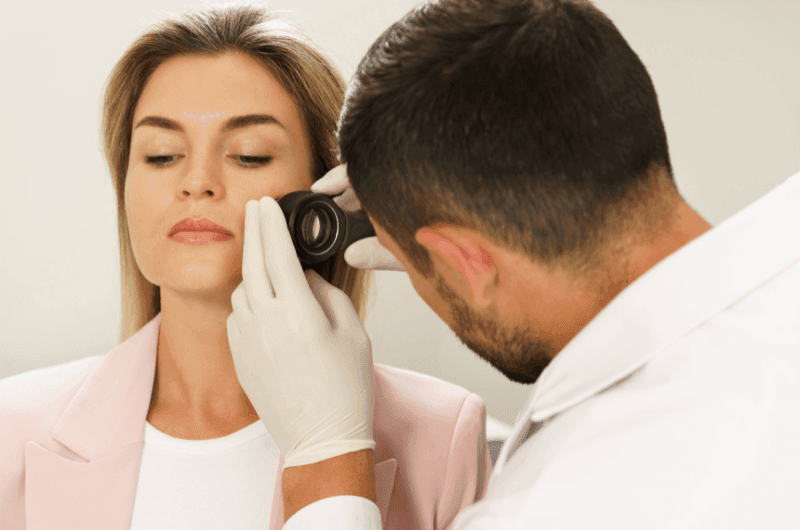
Clinical signs that point to a Demodex-dominant rosacea include sandpaper-like skin texture, follicular prominence, persistent central facial papules in a follicular distribution, eyelid grittiness or collarettes (suggesting concurrent Demodex blepharitis), nighttime worsening of itching or burning, and a history of partial response to standard rosacea therapy followed by predictable relapse. Confirmation requires a clinical assessment by a dermatologist, ideally including dermoscopy or a standardised skin surface biopsy to quantify mite density. The demodex.net/ symptom assessment can help organise your symptoms before the appointment and determine whether Demodex and Rosacea are likely connected in your case.
References and Evidence Sources
- Chang YS, Huang YC. Role of Demodex mite infestation in rosacea: a systematic review and meta-analysis. Journal of the American Academy of Dermatology. 2017;77(3):441-447.e6.
- Geng RSQ, Bourkas AN, Mufti A, Sibbald RG. Rosacea: pathogenesis and therapeutic correlates. Journal of Cutaneous Medicine and Surgery. 2024;28(2):178-189.
- Yao Y, Liu R, Wang B, et al. Therapeutic strategies focusing on immune dysregulation and neuroinflammation in rosacea. Frontiers in Immunology. 2024;15:1403798.
- Forton FMN. The pathogenic role of Demodex mites in rosacea: a potential therapeutic target already in erythematotelangiectatic rosacea? Dermatology and Therapy. 2020;10(6):1229-1253.
- Tabriz University of Medical Sciences Cohort. A cross-sectional survey of the relationship between rosacea and Demodex mite infestation. Iranian Journal of Dermatology. 2025;28(1):e123456.
- Paichitrojjana A. Efficacy of topical ivermectin in Demodex-associated rosacea: a systematic review and meta-analysis. Clinical, Cosmetic and Investigational Dermatology. 2025;18:33-47.
- Two A, Hata T, Nakatsuji T, et al. Kallikrein 5-mediated inflammation in rosacea: clinically relevant correlations with acute and chronic manifestations. Journal of Clinical and Aesthetic Dermatology. 2014;7(1):20-25.
- Yamasaki K, Di Nardo A, Bardan A, et al. Increased serine protease activity and cathelicidin promotes skin inflammation in rosacea. Nature Medicine. 2007;13(8):975-980.
- Stein Gold L, Kircik L, Fowler J, et al. Long-term safety of ivermectin 1% cream versus azelaic acid 15% gel in treating inflammatory lesions of rosacea: results of two 40-week controlled, investigator-blinded trials. Journal of Drugs in Dermatology. 2014;13(11):1380-1386.
- Demirseren DD, Cicek H, Aksoy Sarac G. Which factors influence Demodex mite density in standardized superficial skin biopsy in patients with rosacea? A prospective cross-sectional analysis. PubMed PMID 38787449. 2024.
- Martínez-Ortega J, Medina Angulo T, Mut Quej JE. Unilateral papulopustular dermatosis: Demodex mites bridging rosacea and demodicosis. Cureus. 2025;17(3):e79877.
- Parodi A, Paolino S, Greco A, et al. Small intestinal bacterial overgrowth in rosacea: clinical effectiveness of its eradication. Clinical Gastroenterology and Hepatology. 2008;6(7):759-764.
- Wang JY, Wang YH, Su LC, et al. Contact hypersensitivity and Demodex mite infestation in patients with rosacea: a retrospective cohort analysis. European Journal of Dermatology. 2023;33(1):45-52.
- Lacey N, Russell-Hallinan A, Zouboulis CC, Powell FC. Demodex mites modulate sebocyte immune reaction: possible role in the pathogenesis of rosacea. Journal of the European Academy of Dermatology and Venereology. 2024;38(2):245-255.
- Schaller M, Almeida LMC, Bewley A, et al. Rosacea treatment update: recommendations from the global ROSacea COnsensus (ROSCO) panel. British Journal of Dermatology. 2017;176(2):465-471.
- JAAD Systematic Review. Association of Demodex mite infestation and rosacea: a systematic review of 26 observational studies covering 1,675 patients. Journal of the American Academy of Dermatology. 2024;91(3 Supplement):AB128.
- Chen M, Yang L, Zhou P, et al. Single-cell transcriptomics reveals aberrant skin-resident cell populations and identifies fibroblasts as a determinant in rosacea. Nature Communications. 2024;15:8737.
About the Author
Marina Ivakhnenko is a clinical writer and editorial lead at demodex.net/, where she develops evidence-based content for patients and practitioners managing Demodex mite overgrowth. Her work draws from peer-reviewed dermatology, ophthalmology, and parasitology literature and is reviewed by the demodex.net/ clinical advisory board. Marina specialises in translating complex parasitology and skin immunology research into clear, clinically actionable guidance.