The breakouts started in your twenties. Or after coming off the contraceptive pill. Or three months after a stressful life event. The lesions cluster along the jawline, the chin, sometimes the cheeks — small, uniform, inflamed papules and pustules that no acne treatment has fully cleared.
You have been told it is hormonal acne. You have tried hormonal interventions, anti-androgen protocols, sugar restriction, dairy elimination. The pattern persists.
This article explains why Demodex and hormonal acne are interlocked conditions in a significant proportion of treatment-resistant adult acne cases — and why correctly identifying the mite-hormone axis is the difference between temporary suppression and lasting resolution. The clinical signature, the mechanisms, the evidence base, and a structured 12-week protocol are detailed below.
≥5/cm²
Mite density threshold defining clinical demodicosis in adult-onset acne presentations
14–18 days
Complete Demodex lifecycle — explains relapse after hormonal acne treatments
3–9 months
Typical post-pill window for hormonal Demodex acne onset in previously clear-skinned patients
Pathophysiology: Why Demodex and Hormonal Acne Overlap
Adult hormonal acne and Demodex overgrowth share the same underlying terrain: dysregulated sebum production driven by hormonal shifts. The two conditions are not parallel but interlocked. Hormonal fluctuations create the sebum-rich follicular environment that Demodex mites require to bloom, and the resulting mite overgrowth produces the inflammatory papulopustular lesions that are then attributed to hormonal acne alone.
Demodex folliculorum and Demodex brevis feed primarily on sebum and follicular keratinocytes. Their population density is directly proportional to sebaceous gland activity, as documented in peer-reviewed dermatology literature. Any state that increases sebum output — androgen surges, post-pill rebound, perimenopausal estrogen decline, polycystic ovary syndrome, chronic cortisol elevation — simultaneously expands the substrate available for mite reproduction.
This is the mechanism by which patients who have never previously experienced acne develop sudden papulopustular eruptions in adulthood, particularly along the jawline, chin, and perioral region — areas of highest sebaceous gland density and the same regions classically affected by hormonal acne. The role of androgens in sebaceous activation is now well established.

Demodex and hormonal acne typically presents with a jawline and chin distribution — reflecting the regions of highest sebaceous gland density and primary feeding sites for Demodex mites. Image: Pexels
The Hormonal Triggers That Activate Demodex
Five hormonal states create the conditions under which subclinical Demodex populations expand into clinical overgrowth:
1. Post-pill rebound. Coming off combined hormonal contraceptives produces a documented surge in sebaceous gland activity within 3–9 months as the suppressive effect of synthetic estrogens and progestins reverses. The pill also depletes zinc, B6, folate, and beneficial gut flora — well-documented nutrient depletions that independently contribute to mite suppression.
2. Androgen dominance. Elevated free testosterone, DHT, or DHEA-S — whether from PCOS, adrenal hyperactivation, or insulin resistance — drives 5-alpha-reductase activity in the skin and amplifies sebum production at every follicle Demodex can colonise. The androgen-sebum-acne axis is reviewed in detail here.
3. Estrogen decline. Perimenopause, post-partum hormonal transitions, hypothalamic amenorrhea, and stress-induced HPG axis suppression all reduce estrogen’s protective effect on skin barrier function and sebaceous regulation. Estrogen’s role in skin physiology has been extensively studied.
4. Progesterone deficiency. Low luteal phase progesterone — common in post-pill states, chronic stress, and hypothyroid presentations — removes progesterone’s anti-inflammatory and sebum-regulating effects. The progesterone-skin connection exposes follicles to unopposed androgenic activity.
5. Cortisol elevation. Chronic stress produces sustained cortisol elevation that directly stimulates sebaceous glands via cutaneous CRH receptors, suppresses regulatory T cells that normally constrain Demodex populations, and disrupts the gut microbiome. The stress-skin axis mechanism is now clinically recognised.
Clinical Implication
In adult patients presenting with treatment-resistant Demodex and hormonal acne — particularly with onset post-pill, post-partum, or in association with confirmed thyroid or hormonal pathology — Demodex density assessment should be considered alongside hormonal workup. Standard acne protocols frequently fail in this population because they target sebum and bacteria without addressing the parasitic component driving the inflammatory phenotype.
The Dual-Mechanism Treatment Framework
Effective management of Demodex and hormonal acne requires interventions that address both the mite population and the hormonal terrain that sustained the overgrowth. Single-modality treatment — hormonal regulation alone or acaricidal treatment alone — produces partial and relapsing response, as demonstrated in recent clinical reviews.
Required Mechanisms
Evidence-based protocols for Demodex and hormonal acne must simultaneously address:
- Direct acaricidal action — reduction of adult mite population and interruption of larval development through topical agents with documented efficacy against D. folliculorum and D. brevis
- Hormonal terrain correction — restoration of androgen-estrogen-progesterone balance, regulation of cortisol, and repletion of the post-pill nutrient depletions (zinc, B6, folate, magnesium) that suppress endogenous mite regulation
The five interventions detailed below address both mechanisms and form the foundation of the integrated 12-week protocol that follows. Each is reviewed alongside our complete natural remedies evidence guide for cross-reference.

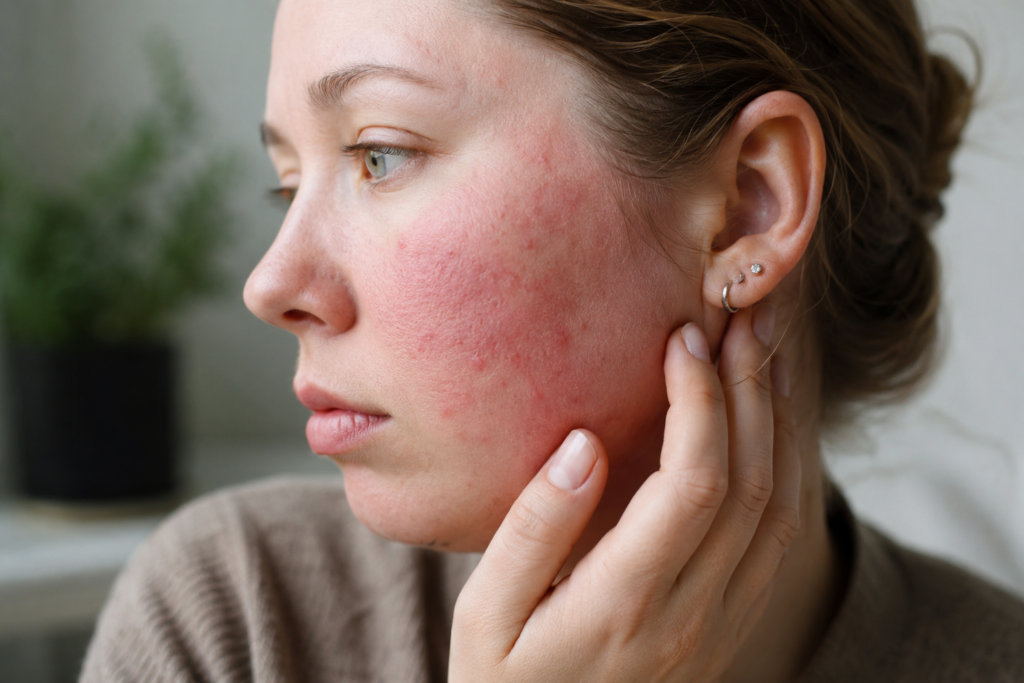
Integrated Demodex and hormonal acne protocols combining acaricidal topicals with hormone-balancing internal support produce the highest sustained response rates. Image: Pexels
01. Topical Ivermectin and Azelaic Acid — Direct Acaricidal Therapy
Ivermectin 1% cream remains the most clinically validated topical for confirmed Demodex involvement in papulopustular presentations. Multiple randomised controlled trials demonstrate superiority over topical metronidazole in mite density reduction and inflammatory lesion resolution. Azelaic acid 15% gel provides complementary antimicrobial, anti-inflammatory, and sebum-regulating action, as documented in comparative efficacy studies.
Clinical Protocol
- Ivermectin 1% cream applied to affected areas once daily in the evening for a minimum of 12 weeks
- Expect transient die-off response in weeks 1–2 — temporary worsening before improvement is normal and indicates therapeutic activity
- Azelaic acid 10–15% applied in the morning provides daytime antimicrobial cover and addresses post-inflammatory marks
- For patients without prescription access: tea tree oil standardised to ≥50% terpinen-4-ol diluted to 2–5% in non-oleic carrier as an evidence-based alternative — review our complete tea tree oil clinical guide for dosing protocols
02. Zinc Supplementation — Sebum and Hormone Regulation
Zinc operates at multiple points in the mite-hormone axis. It inhibits 5-alpha-reductase, the enzyme that converts testosterone to dihydrotestosterone, directly reducing androgenic stimulation of sebaceous glands. Zinc is a required cofactor for progesterone synthesis. It modulates the cutaneous immune response that constrains Demodex populations. And combined hormonal contraceptive use produces documented zinc depletion that persists into the post-pill period.
Clinical Protocol
- Zinc bisglycinate or zinc picolinate 15–30mg daily with food — clinical evidence for zinc in acne supports this range
- Test serum zinc before supplementing in any patient with prior long-term zinc use — elevated levels are common and require dose adjustment
- Pair with copper bisglycinate 1–2mg if supplementation continues beyond 8 weeks to maintain mineral ratio
- Monitor for nausea — switch forms or reduce dose if tolerability is poor
03. Vitex (Chaste Tree Berry) — Progesterone Recovery
Vitex agnus-castus stimulates luteinising hormone release and supports corpus luteum function, raising endogenous progesterone in patients with documented luteal phase deficiency. Systematic review evidence supports its use in premenstrual hormonal dysregulation. This is particularly relevant in post-pill presentations, where progesterone recovery lags behind estrogen for 6–12 months, producing the relative estrogen dominance state that exacerbates both mite activity and inflammatory acne. Additional Vitex efficacy data demonstrates clinical response in mastalgia and luteal phase defect.
Clinical Protocol
- Standardised Vitex extract 400mg in the morning
- Minimum 3 months for clinical effect — Vitex acts on the HPG axis and requires sustained dosing
- Contraindicated in pregnancy and in patients on hormonal contraceptives or dopamine-modulating medications
- Best paired with cycle-tracking to assess luteal phase improvement
04. Saccharomyces Boulardii and Gut Restoration
The gut–skin axis is now well-documented in both adult acne and Demodex pathology. Saccharomyces boulardii, a beneficial yeast, upregulates secretory IgA, competitively excludes pathogenic species including Ruminococcus gnavus (recently implicated in inflammatory skin conditions), and supports the mucin layer that maintains the intestinal barrier. Restoring gut integrity reduces the systemic inflammatory load that drives both sebum dysregulation and immune suppression of Demodex — a connection further explored in our complete Demodex-gut axis clinical review.
Clinical Protocol
- Saccharomyces boulardii 5 billion CFU daily — clinical efficacy data supports this dose
- Continue for minimum 3 months alongside any concurrent probiotic protocol
- Pair with bovine colostrum 2g daily for mucosal repair in patients with documented gut dysbiosis
- For patients with confirmed SIBO, complete dedicated SIBO treatment before initiating prebiotic fibre interventions
05. Methylated B Vitamins and Magnesium — Methylation and HPA Support
Combined hormonal contraceptive use depletes folate, B6, B12, and zinc; chronic stress depletes magnesium and B6, as confirmed by comprehensive nutrient depletion reviews. These deficiencies impair the methylation pathways that metabolise and clear estrogen, the neurotransmitter synthesis that regulates mood, and the HPA axis function that determines cortisol output. Each of these systems directly influences the hormonal and immune terrain that supports or suppresses Demodex.
Clinical Protocol
- Methylfolate 400mcg and methylcobalamin (B12) 500mcg daily — methylated forms bypass MTHFR variations
- P5P (active B6) 25mg with breakfast — particularly indicated where xanthurenate is elevated on organic acids testing
- Magnesium bisglycinate 300mg in the evening — supports sleep and HPA modulation
- Selenium 200mcg daily — critical where thyroid antibodies are present (frequently comorbid with hormonal acne)
Structured 12-Week Clinical Protocol for Demodex and Hormonal Acne

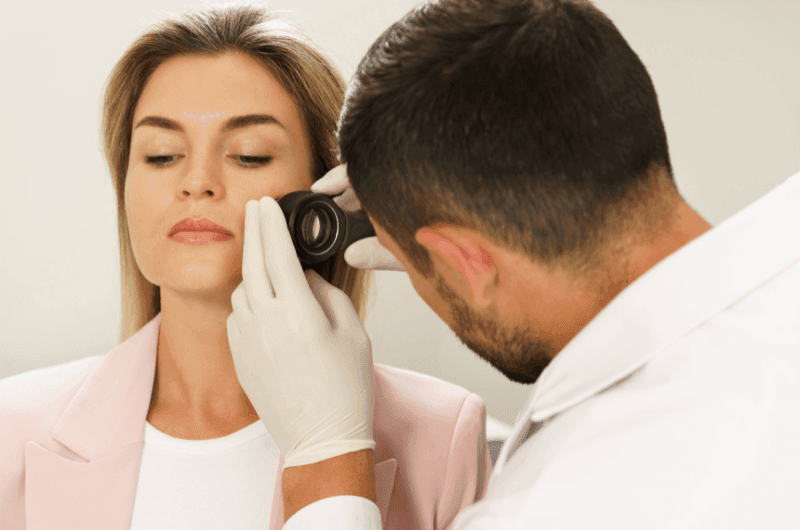
A minimum 12-week protocol structured across four phases is required to address both the Demodex lifecycle and hormonal terrain stabilisation in Demodex and hormonal acne. Image: Pexels
The most common protocol failure in this condition is treatment duration. Hormonal recalibration takes a minimum of 3 cycles; the Demodex lifecycle requires 12 weeks to interrupt multiple generations. Shorter protocols produce partial improvement followed by predictable relapse, as evidenced in systematic meta-analyses of treatment duration.
Phase 1 (Weeks 1–2) — Barrier Stabilisation and Baseline Assessment
Establish a non-irritating skincare baseline before introducing acaricidal agents. Discontinue all comedogenic, occlusive, or oleic-acid-rich products — these directly feed Demodex. Initiate gentle cleansing, ceramide-rich barrier repair, and broad-spectrum mineral SPF. Begin internal foundations: zinc (only if serum status confirmed appropriate), methylated B complex, magnesium, omega-3, and vitamin D with K2. Order hormonal workup, thyroid panel including TPO antibodies, ferritin, and selenium where available. Review the complete diagnostic self-assessment guide for patient education during this phase.
Phase 2 (Weeks 3–8) — Active Acaricidal and Hormonal Foundation
Introduce ivermectin 1% nightly with azelaic acid in the morning. Begin Saccharomyces boulardii, bovine colostrum, and Vitex if luteal progesterone is confirmed low. Continue all Phase 1 supplements. Address dietary inputs — increase protein, healthy fats, complex carbohydrates; eliminate alcohol and minimise refined sugar. Implement daily stress reduction practice; sleep consistency becomes a clinical priority.
Phase 3 (Weeks 8–12) — Intensification and Hormonal Rebalancing
Assess response. In slow responders, add cycle-timed Calcium D-Glucarate (Day 1–5 and Day 22–28) to support estrogen clearance, DIM 100mg to shift estrogen metabolism toward the protective 2-OH pathway, and consider adding cruciferous vegetables and pomegranate to the diet for additional estrogen metabolism support. Continue all Phase 2 interventions. For overlapping rosacea presentations, see our complete rosacea clinical guide.
Phase 4 (Week 12 onward) — Maintenance and Relapse Prevention
Reduce ivermectin to 2–3 nights per week as mite density normalises. Continue internal support indefinitely; reassess at month 6 with repeat hormonal testing. Reinstate full active protocol promptly at any sign of recurrence. In patients with confirmed Hashimoto’s, PCOS, or chronic stress drivers, indefinite maintenance dosing is clinically appropriate. The 5 powerful Demodex treatments review covers maintenance options in greater depth.
Systemic Cofactors: Addressing the Root Cause of Demodex and Hormonal Acne
No topical protocol — pharmaceutical or natural — produces sustained remission in Demodex and hormonal acne patients with unaddressed systemic drivers. The four most clinically significant systemic cofactors in this population are:
1. Subclinical thyroid dysfunction. Hashimoto’s thyroiditis and subclinical hypothyroidism are significantly over-represented in adult women with hormonal acne, as demonstrated by prevalence studies. Suboptimal T3 production impairs sebum regulation, immune surveillance, and progesterone synthesis. Full thyroid panel including TPO and thyroglobulin antibodies, free T3, free T4, and reverse T3 is clinically warranted.
2. Insulin resistance and blood sugar dysregulation. Hyperinsulinemia elevates free androgens by suppressing sex hormone binding globulin (SHBG) and directly stimulates sebaceous activity via IGF-1 signalling. Fasting insulin above 8 mIU/L warrants dietary and lifestyle intervention regardless of HbA1c status.
3. Chronic stress and HPA dysregulation. Sustained cortisol elevation suppresses progesterone production through pregnenolone steal, impairs thyroid hormone conversion, disrupts gut microbiome composition, and activates cutaneous mast cells. Stress-induced sebogenesis is a measurable clinical phenomenon — in many adult presentations it is the primary driver.
4. Post-pill nutrient depletion. The contraceptive pill produces measurable depletion of folate, B6, B12, B2, zinc, magnesium, selenium, and coenzyme Q10. Recovery without active repletion takes 12–24 months — too slow to allow the hormonal system to recalibrate in the post-pill window.
Practitioner Guidance
In patients with Demodex and hormonal acne that has not responded to standard dermatological intervention, systematic assessment of thyroid function, fasting insulin, hormonal balance via cycle-timed testing, and Demodex density assessment significantly improves diagnostic accuracy. Review the complete clinical diagnosis protocol for testing methodology. The integration of dermatological and functional medicine frameworks is the most reliable route to sustained resolution.
Further Reading on demodex.net/
- Demodex and Rosacea: The Complete Clinical Guide to the Mite-Rosacea Connection
- The Demodex-Gut Axis: Why Your Skin Mites Are Really a Gut Health Problem
- Demodex Mites: Natural Remedies, Treatment Options, and Clinical Evidence
- Tea Tree Oil for Demodex Mites: Complete Clinical Evidence Guide
- How to Tell If You Have Demodex Mites: Self-Assessment Guide
- Clinical Diagnosis of Demodex Infestation
- Demodex Mites Rosacea: 5 Powerful Treatments That Work
- Research Library: Peer-Reviewed Evidence on Demodex
Frequently Asked Questions about Demodex and Hormonal Acne
How do I know if my hormonal acne is actually Demodex and hormonal acne combined?
Clinical features that suggest mite involvement in adult hormonal breakouts include: uniform small papulopustules rather than mixed comedonal lesions, sandpaper-like skin texture between active lesions, nocturnal itching or crawling sensations, persistent flushing or background erythema, and failure to respond to standard hormonal acne protocols including spironolactone or combined oral contraceptives. Confirmatory diagnosis requires skin scrape or standardised skin surface biopsy demonstrating mite density above 5 mites per square centimetre.
Why did my Demodex and hormonal acne start after coming off the pill?
The contraceptive pill suppresses sebaceous gland activity through synthetic progestins with anti-androgenic effects and through estrogen-mediated SHBG elevation. Discontinuation produces a rebound surge in sebum production within 3–9 months as the suppressive effect reverses. This sebum surge directly feeds existing Demodex populations that were previously held in check, producing sudden papulopustular eruptions in patients with no prior acne history. The pill also depletes zinc, B vitamins, and gut flora — each of which contributes to mite regulation — compounding the susceptibility.
Can I treat this condition with diet alone?
Dietary intervention is necessary but rarely sufficient as a standalone treatment in confirmed Demodex overgrowth. Anti-inflammatory dietary protocols reduce the sebum and inflammatory burden that supports mite populations, but the existing mite density typically requires direct acaricidal intervention — pharmaceutical or evidence-based natural agents such as tea tree oil — to produce meaningful clinical resolution. A combined approach addressing diet, hormonal balance, and direct mite reduction produces the highest sustained response rates.
How long does it take for mite-driven hormonal breakouts to clear?
Symptomatic improvement is typically observed within 4–6 weeks of consistent integrated protocol implementation. Significant reduction in active lesions occurs by weeks 8–12. Full resolution of post-inflammatory hyperpigmentation requires 3–6 months beyond active treatment. Hormonal recalibration — particularly post-pill recovery — typically requires 6–12 months for full expression. Expect transient worsening (die-off response) in weeks 1–2 of acaricidal treatment.
Is this skin condition contagious?
Demodex mites are commensal organisms present on most adult human skin at low density. Transmission between adults is theoretically possible through close contact but is not the clinically relevant exposure route in adult hormonal acne — the relevant variable is host susceptibility to overgrowth rather than acquisition. Shared cosmetic products, applicators, and pillowcases can support mite persistence; routine hygiene measures including 2-day pillowcase rotation, mascara replacement, and weekly brush cleaning are appropriate adjunct interventions.
Should I stop my acne medication to test for mites?
No. Discontinuation of any prescribed treatment should be discussed with the prescribing clinician. Demodex density testing can be performed concurrently with existing treatment, and integrated protocols can be initiated alongside standard care. The relevant clinical question is whether current treatment is producing complete resolution; in cases of partial or relapsing response, Demodex assessment is a reasonable next diagnostic step.
References & Evidence Sources
- Forton FM. (2022). The pathogenic role of Demodex mites in rosacea: a potential therapeutic target already in erythematotelangiectatic rosacea? Dermatology and Therapy. PMC9209633
- Paichitrojjana A, et al. (2025). Efficacy of topical ivermectin in controlling human Demodex infestation: systematic review and meta-analysis. Parasitology Epidemiology and Control. PMC12523798
- Cervantes J, et al. (2018). The role of zinc in the treatment of acne: A review of the literature. Dermatologic Therapy. PubMed 29193602
- Palmery M, et al. (2013). Oral contraceptives and changes in nutritional requirements. European Review for Medical and Pharmacological Sciences. PubMed 23852908
- Stein L, et al. (2015). Efficacy and safety of ivermectin 1% cream in treatment of papulopustular rosacea. Journal of Drugs in Dermatology. PubMed 25809863
- Webster J, et al. (2014). Vitex agnus-castus extract for the management of premenstrual symptoms. Planta Medica. PubMed 23136064
- Parodi A, et al. (2013). Small intestinal bacterial overgrowth in rosacea. JAAD. PubMed 23602178
- Bowe WP, Logan AC. (2011). Acne vulgaris, probiotics and the gut-brain-skin axis. Gut Pathogens. PubMed 29642630
- Thiboutot D, et al. (2014). Acne vulgaris and the epidermal barrier. Journal of Clinical and Aesthetic Dermatology. PMC4025519
- Drago F, et al. (2016). The role of small intestinal bacterial overgrowth in rosacea. Journal of the European Academy of Dermatology and Venereology. PubMed 27671917
- Slominski A, et al. (2014). Sensing the environment: regulation of local and global homeostasis by the skin neuroendocrine system. Advances in Anatomy Embryology and Cell Biology. PubMed 24553997
- Smith RN, et al. (2007). The effect of a high-protein, low glycemic-load diet versus a conventional, high glycemic-load diet on biochemical parameters associated with acne vulgaris. American Journal of Clinical Nutrition. PubMed 22884359
About the Author
Marina Ivakhnenko — Functional Skin Practitioner & Author, The Demodex Solution
Marina Ivakhnenko is a functional skin practitioner with a clinical focus on the root-cause assessment and management of Demodex overgrowth, rosacea, hormonal acne, and inflammatory skin conditions. As author of The Demodex Solution, she works with patients and clinicians to identify the immune, microbiome, hormonal, and lifestyle drivers underlying chronic skin presentations — with treatment protocols grounded in current peer-reviewed evidence. Her work integrates dermatology, endocrinology, and functional medicine frameworks.
Clinical Disclaimer: This article is intended for educational purposes and does not constitute clinical advice or a substitute for professional medical evaluation. Evidence summaries reflect the literature as of the publication date. Clinicians should apply independent professional judgement; patients should consult a qualified healthcare provider before initiating any new treatment, particularly in the context of pregnancy, lactation, hormonal therapy, or concurrent pharmacological treatment.
Understanding the intersection of demodex and hormonal acne can improve treatment protocols.
In conclusion, many factors contribute to demodex and hormonal acne presentations.
Ultimately, understanding demodex and hormonal acne leads to improved patient care.
An integrated approach to demodex and hormonal acne is key for effective treatment.
Treatment options for demodex and hormonal acne should be well-rounded and thorough.
Exploring the effects of demodex and hormonal acne can uncover new therapeutic approaches.
For optimal results, both demodex and hormonal acne should be addressed in treatment plans.
Improving knowledge about demodex and hormonal acne leads to better clinical outcomes.
Identifying the link between demodex and hormonal acne can help tailor treatments.
Further research into demodex and hormonal acne is needed for improved therapies.
Many health professionals are now focusing on demodex and hormonal acne relationships.
Addressing demodex and hormonal acne concurrently can optimize treatment pathways.
The relationship between demodex and hormonal acne is an important area of study.
Awareness of demodex and hormonal acne can facilitate better patient outcomes.
Understanding the full scope of demodex and hormonal acne is critical for practitioners.
A tailored approach to demodex and hormonal acne can yield substantial results.
Many individuals struggle with demodex and hormonal acne simultaneously.
Effective therapies address both demodex and hormonal acne concerns.
Identifying demodex and hormonal acne can enhance treatment efficacy.
The interplay of demodex and hormonal acne should not be overlooked.
Insights into demodex and hormonal acne can lead to more effective solutions.
Consulting a dermatologist familiar with both demodex and hormonal acne is recommended.
For those experiencing demodex and hormonal acne, understanding triggers is vital.
Many treatments focus on demodex and hormonal acne simultaneously for better results.
Addressing both demodex and hormonal acne is essential for long-term skin health.
Research indicates that treating demodex and hormonal acne together can improve outcomes.
Several patients have reported a direct link between demodex and hormonal acne flare-ups.
Understanding the connection between demodex and hormonal acne is crucial for effective treatment.