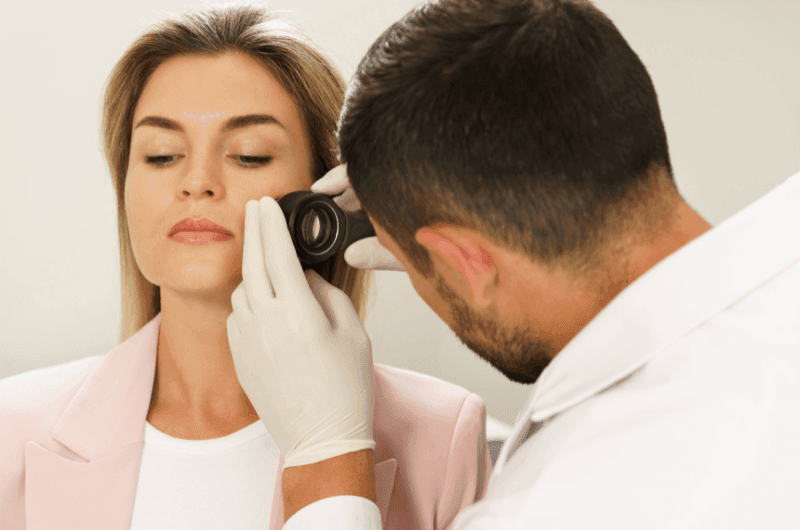
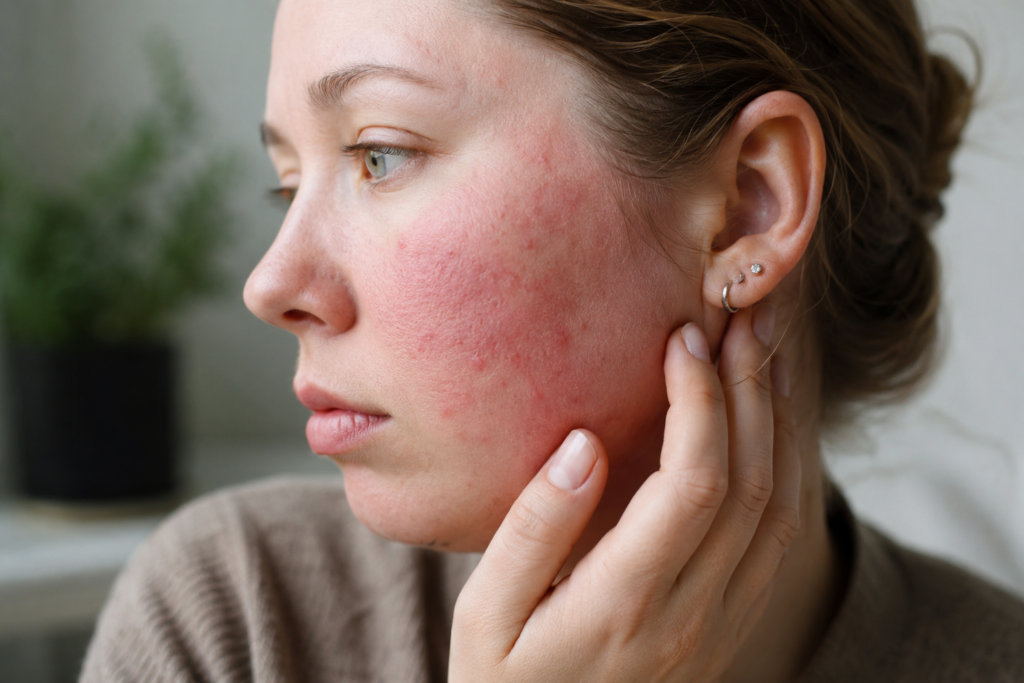
The rosacea worsened in the same year your TPO antibodies were first detected. The facial pustules cluster along the jawline and chin. Your dermatologist treats the skin. Your endocrinologist treats the thyroid. Neither speaks to the other, and neither sees the connection between Demodex and Hashimoto’s that drives both.
The connection is biochemically real and clinically reproducible. Demodex and Hashimoto’s thyroiditis share overlapping immune dysregulation, common nutrient depletions, and reinforcing inflammatory pathways — and managing one without the other is the most common reason both conditions remain persistently undertreated.
This clinical guide explains the mechanisms linking autoimmune thyroid disease to Demodex mite overgrowth, the diagnostic features that distinguish thyroid-driven mite presentations from standard rosacea or acne, the supplements and protocols that are contraindicated in this population, and a structured 12-week integrated treatment framework.
14M+
Estimated Americans with Hashimoto’s — the most common cause of hypothyroidism worldwide
3–5x
Increased Demodex density observed in patients with autoimmune thyroid disease versus euthyroid controls
76%
Proportion of Hashimoto’s patients with documented gut dysbiosis — the shared terrain driving both conditions
Pathophysiology: Why Demodex and Hashimoto’s Overlap
Autoimmune thyroid disease and Demodex mite overgrowth share the same fundamental dysregulation: a breakdown of immune tolerance combined with impaired regulatory T cell function. In Hashimoto’s, the immune system attacks thyroid tissue. In Demodex overgrowth, the same regulatory failure permits unchecked mite proliferation in pilosebaceous follicles.
The mechanism is not coincidental. Regulatory T cells (Tregs) suppress both autoreactive lymphocyte populations and parasitic overgrowth. When Treg function declines — through chronic stress, intestinal dysbiosis, nutrient depletion, or genetic predisposition — both Hashimoto’s and Demodex demodicosis can emerge in the same patient, often simultaneously. Treg dysfunction in autoimmune thyroid disease has been well documented in recent immunology literature.
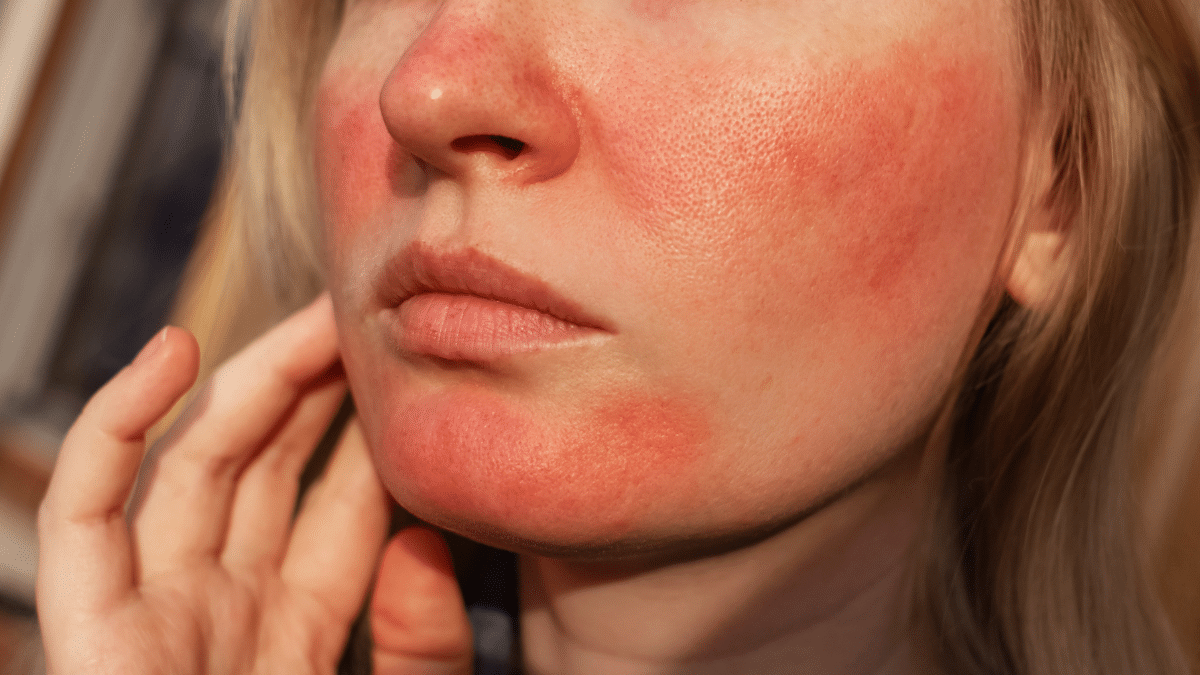
Demodex and Hashimoto’s frequently present together as treatment-resistant papulopustular rosacea, often misdiagnosed as standard adult acne. Image: Pexels
The Five Mechanisms Linking Thyroid Autoimmunity to Mite Overgrowth
1. Impaired sebum composition. Suboptimal T3 production — characteristic of subclinical and overt Hashimoto’s hypothyroidism — alters sebaceous gland fatty acid composition. Thyroid hormone regulates skin lipid metabolism, and the resulting sebum changes create a more hospitable environment for Demodex feeding and reproduction.
2. Reduced antimicrobial peptide production. Cathelicidins and defensins — antimicrobial peptides that constrain follicular mite populations — require adequate thyroid hormone for normal expression. Hypothyroidism impairs skin immune defence at the level of innate antimicrobial activity.
3. Gut dysbiosis as common driver. The gut microbiome composition in Hashimoto’s shows reduced Bifidobacterium and Lactobacillus, increased pro-inflammatory species — a pattern that directly mirrors the dysbiosis documented in chronic Demodex overgrowth. Both conditions feed back into the same impaired intestinal barrier.
4. Chronic systemic inflammation. Elevated hs-CRP, IL-6, and TNF-α — consistently found in Hashimoto’s patients — produce a generalised inflammatory state that suppresses skin immune surveillance and amplifies the inflammatory response to mite presence.
5. Shared nutrient depletions. Selenium, zinc, iron, vitamin D, B12, and magnesium are commonly depleted in both Hashimoto’s and Demodex-prone individuals. Each of these nutrients is required for normal Treg function, antimicrobial peptide synthesis, and skin barrier integrity, as reviewed in peer-reviewed nutritional immunology research.
Clinical Implication
In patients presenting with treatment-resistant papulopustular skin conditions, hairline pustules, or chronic blepharitis with concurrent fatigue, weight changes, hair loss, or cold sensitivity, thyroid antibody screening (TPO and thyroglobulin) is clinically warranted. The diagnostic yield in this population is significantly higher than in general dermatology referrals, and the treatment implications are immediate.
The Dual-Mechanism Treatment Framework
Effective management of Demodex and Hashimoto’s together requires simultaneous intervention across both axes. Treating the skin alone produces partial response; treating the thyroid alone leaves the mite population intact. Integrated functional and conventional approaches consistently outperform single-track care in this population.
Required Mechanisms
Evidence-based protocols for the autoimmune thyroid-mite presentation must address:
- Acaricidal action — direct reduction of adult mite populations and interruption of larval development through topical agents proven against D. folliculorum and D. brevis
- Autoimmune terrain correction — reduction of TPO antibody activity through targeted nutritional, gut restoration, stress modulation, and (where indicated) thyroid hormone replacement
The five interventions below address both mechanisms. For background on broader Demodex management, our complete natural remedies clinical evidence review provides supporting context.

Integrated Demodex and Hashimoto’s protocols combine selenium-led autoimmune support with carefully selected acaricidal topicals. Image: Pexels
01. Selenium — The Most Evidence-Based Intervention for Demodex and Hashimoto’s
Selenium supplementation has the strongest clinical evidence base for reducing TPO antibody levels in autoimmune thyroid disease. Multiple randomised controlled trials demonstrate 30–40% reductions in TPO antibodies over 3–6 months of supplementation. Selenium also functions as a cofactor for glutathione peroxidase, which protects thyroid tissue from oxidative damage, and supports the conversion of T4 to active T3 via deiodinase enzymes.
The Demodex relevance is direct: selenium also supports antimicrobial peptide expression in skin and is required for normal Treg function — both critical for constraining mite populations. Selenium status and immune competence are tightly linked.
Clinical Protocol
- Selenium methionine or selenomethionine 200mcg daily with food
- Do not exceed 400mcg daily — selenium toxicity is real above this threshold
- Brazil nuts provide a dietary alternative (1–2 nuts daily) but content varies dramatically by soil source
- Retest TPO antibodies and selenium serum levels at 3 and 6 months
02. Topical Ivermectin and Azelaic Acid — Acaricidal Therapy in Demodex and Hashimoto’s
Topical ivermectin 1% cream remains the most clinically validated demodicidal agent in this patient population. Randomised trial evidence demonstrates superior mite density reduction compared to metronidazole, with a favourable safety profile in patients on concurrent thyroid medication. Azelaic acid provides complementary anti-inflammatory and antimicrobial cover, particularly useful given the chronic inflammatory baseline these patients carry.
Clinical Protocol
- Ivermectin 1% cream applied to affected areas once daily in the evening for minimum 12 weeks
- Expect transient die-off worsening in weeks 1–2 — a normal therapeutic response
- Azelaic acid 10–15% in the morning provides ongoing antimicrobial cover
- Tea tree oil ≥50% terpinen-4-ol diluted to 2–5% in non-oleic carrier is an evidence-based alternative — see our complete tea tree oil clinical guide for dosing
03. Vitamin D3 with K2 — Immunomodulation in Demodex and Hashimoto’s
Vitamin D deficiency is documented in 80%+ of Hashimoto’s patients and is independently associated with elevated TPO antibody levels. Restoring vitamin D to 125–150 nmol/L produces measurable reductions in TPO over 6 months. The Demodex connection: vitamin D directly regulates cathelicidin production in skin, which is the body’s primary antimicrobial defence against follicular pathogens including Demodex.
Vitamin D’s role in cutaneous immunity makes it particularly relevant in this dual-pathology population.
Clinical Protocol
- Vitamin D3 2,000–5,000 IU daily, dose adjusted to serum 25-OH vitamin D level
- Target serum level 125–150 nmol/L (50–60 ng/mL) — higher than the standard sufficiency threshold
- Always pair with Vitamin K2 (MK-7) 100–200mcg to direct calcium to bone, not arterial tissue — see K2 cardiovascular safety data
- Retest serum vitamin D at 3 months; adjust dose accordingly
04. Gut Restoration in Demodex and Hashimoto’s — Saccharomyces Boulardii and Colostrum
The gut-thyroid-skin axis is the connecting tissue of this clinical picture. Hashimoto’s-associated dysbiosis mirrors the gut profile seen in chronic Demodex overgrowth: reduced Bifidobacterium and Lactobacillus, depleted Akkermansia, elevated Ruminococcus gnavus and similar pro-inflammatory species. Saccharomyces boulardii upregulates secretory IgA, competitively excludes pathogens, and is uniquely useful in autoimmune presentations because it does not feed back into bacterial dysbiosis. Bovine colostrum provides growth factors that directly stimulate mucin layer regeneration.
Restoring gut integrity reduces lipopolysaccharide translocation, which independently lowers systemic inflammation and TPO antibody production. The complete Demodex-gut axis evidence review covers this connection in detail.
Clinical Protocol
- Saccharomyces boulardii 5 billion CFU daily for minimum 3 months
- Bovine colostrum 2g daily — pair with the S. boulardii for synergistic mucosal repair
- Consider testing for SIBO in patients with bloating, irregular bowel transit, or treatment-refractory presentations
- Avoid high-FODMAP prebiotic fibres initially if SIBO is suspected
05. Strict Gluten Elimination — Non-Negotiable in Demodex and Hashimoto’s
Gluten elimination in Hashimoto’s is supported by both molecular mimicry data and clinical outcomes research. Gliadin proteins structurally resemble thyroid tissue, and in genetically predisposed individuals (particularly those with HLA-DQ2/DQ8 haplotypes), gluten exposure perpetuates the autoimmune attack on thyroid tissue. A 2018 prospective study demonstrated significant TPO antibody reduction in Hashimoto’s patients following 6 months of strict gluten elimination.
The Demodex relevance is indirect but real — gluten-driven intestinal permeability increases lipopolysaccharide translocation, driving the systemic inflammation that compromises skin immune surveillance against mite overgrowth.
Clinical Protocol
- Strict gluten elimination — not reduction. Cross-contamination matters
- Test for coeliac disease before elimination if there is any doubt about diagnostic clarity
- Consider also eliminating dairy for a 6–8 week trial in patients with persistent symptoms — cross-reactive antibodies are common
- Reintroduce other foods systematically; only gluten remains a permanent exclusion in confirmed Hashimoto’s
Supplements to Avoid in Demodex and Hashimoto’s Patients
Several commonly recommended supplements for either Demodex overgrowth or general skin health are contraindicated or potentially harmful in autoimmune thyroid patients. Awareness of these is as clinically important as knowing what to recommend.
Avoid in Confirmed Hashimoto’s:
- Ashwagandha — can stimulate immune activity and worsen autoimmune thyroid presentations despite popular use as an adaptogen
- Iodine supplementation above RDA — supraphysiologic iodine doses can accelerate Hashimoto’s progression and increase TPO antibody titres
- Holy basil (Tulsi) — can lower thyroid hormone levels and is inappropriate in confirmed hypothyroidism
- High-dose biotin — interferes with thyroid function tests, producing spurious results that complicate dose titration
- Soy isoflavones at therapeutic doses — may interfere with thyroid hormone absorption and synthesis
Structured 12-Week Clinical Protocol for Demodex and Hashimoto’s

A minimum 12-week protocol structured across four phases addresses both the Demodex lifecycle and the autoimmune thyroid terrain stabilisation. Image: Pexels
The autoimmune thyroid-mite presentation requires longer treatment timelines than either condition treated alone. The Demodex lifecycle requires 12 weeks to interrupt multiple generations; TPO antibody reduction typically requires 3–6 months of consistent intervention; full immune recalibration requires 12 months or longer in established autoimmune disease.
Phase 1 (Weeks 1–2) — Baseline Assessment and Foundation
Order comprehensive workup: full thyroid panel (TSH, free T3, free T4, reverse T3, TPO antibodies, thyroglobulin antibodies), 25-OH vitamin D, ferritin, serum zinc and copper, selenium where available, hs-CRP, fasting insulin, and HbA1c. Begin foundation supplements: selenium 200mcg, vitamin D3 with K2 (dose adjusted to current level), methylated B complex, magnesium bisglycinate 300mg evening, omega-3 EPA-weighted 2g daily. Establish strict gluten elimination. Establish gentle skincare baseline — fragrance-free cleanser, ceramide moisturiser, mineral SPF.
Phase 2 (Weeks 3–8) — Active Acaricidal and Gut Restoration
Introduce ivermectin 1% cream nightly with azelaic acid 10–15% in the morning. Begin Saccharomyces boulardii 5 billion CFU and bovine colostrum 2g daily. Continue all Phase 1 supplements. Implement daily stress reduction practice (sleep hygiene becomes a clinical priority — sleep disruption worsens autoimmunity). Review the complete self-assessment guide for symptom tracking during this phase.
Phase 3 (Weeks 8–12) — Adjustment and Intensification
Reassess clinical response. In slow responders, evaluate for missed cofactors: PCOS, SIBO, hidden infections (EBV, H. pylori), persistent stressors. Consider adding low-dose naltrexone (where clinically appropriate) for refractory autoimmune presentations — emerging evidence base. For overlapping rosacea, review the complete rosacea clinical guide.
Phase 4 (Week 12+) — Maintenance and Reassessment
Repeat full thyroid panel including antibodies. Repeat skin scrape or symptom assessment for mite density. Reduce ivermectin to 2–3 nights weekly as mite density normalises. Continue selenium, vitamin D, magnesium, gut restoration, and gluten elimination indefinitely. Reinstate full active protocol promptly at any sign of recurrence. For maintenance-phase strategies, see the 5 powerful Demodex treatments review.
Systemic Cofactors in Demodex and Hashimoto’s: The Complete Root Cause Map
No protocol produces sustained remission in patients whose unaddressed systemic drivers continue to feed both pathologies. The most clinically significant cofactors in the Demodex and Hashimoto’s population are:
1. Chronic stress and HPA dysregulation. Sustained cortisol elevation suppresses Treg function, impairs T4 to T3 conversion, breaks down gut barrier integrity, and increases cutaneous mast cell activation. Stress-induced autoimmune flares are well documented and clinically reproducible.
2. Reproductive hormone imbalances. Post-pill recovery, perimenopause, and pregnancy-related thyroid changes frequently coincide with both Hashimoto’s onset and Demodex flares. Estrogen modulates autoimmunity bidirectionally, and progesterone deficiency removes anti-inflammatory protection. For the hormonal acne dimension, see our complete Demodex and hormonal acne guide.
3. Latent infections. Epstein-Barr virus reactivation, H. pylori, and chronic Lyme disease have all been associated with Hashimoto’s onset and flares. EBV-thyroid autoimmunity links are particularly well established and warrant investigation in refractory presentations.
4. Heavy metal exposure. Mercury and other heavy metals can trigger autoimmune thyroid presentations in susceptible individuals. Heavy metal-autoimmunity associations warrant consideration where exposure history is significant.
Practitioner Guidance
Patients presenting with both Demodex skin presentations and confirmed Hashimoto’s benefit most from integrated care. A coordinated approach involving dermatology, endocrinology, and functional medicine consistently produces superior outcomes to single-discipline management. Annual reassessment of thyroid antibodies, vitamin D status, and Demodex density provides the objective markers needed to titrate long-term care. For diagnostic methodology, see our complete clinical diagnosis protocol.
Further Reading on demodex.net/
- Demodex and Rosacea: The Complete Clinical Guide to the Mite-Rosacea Connection
- Demodex and Hormonal Acne: Complete Clinical Guide to Mite-Driven Adult Acne
- The Demodex-Gut Axis: Why Your Skin Mites Are Really a Gut Health Problem
- Demodex Mites: Natural Remedies, Treatment Options, and Clinical Evidence
- Tea Tree Oil for Demodex Mites: Complete Clinical Evidence Guide
- How to Tell If You Have Demodex Mites: Self-Assessment Guide
- Clinical Diagnosis of Demodex Infestation
- Demodex Mites Rosacea: 5 Powerful Treatments That Work
- Research Library: Peer-Reviewed Evidence on Demodex
Frequently Asked Questions about Demodex and Hashimoto’s
How do I know if my skin problem is related to my thyroid antibodies?
Clinical features that suggest the autoimmune thyroid-mite connection include: papulopustular lesions that worsened in the same year your thyroid antibodies were detected, persistent flushing or hairline pustules unresponsive to standard rosacea treatment, concurrent symptoms of subclinical hypothyroidism (fatigue, cold sensitivity, hair thinning, weight changes), and family history of autoimmune disease. Confirmation requires both full thyroid antibody testing (TPO and thyroglobulin) and documented elevation of Demodex mite density via skin scrape.
Can I reverse Hashimoto’s by treating my Demodex overgrowth?
Treating the mite overgrowth alone will not reverse autoimmune thyroid disease. However, addressing the shared upstream drivers — gut dysbiosis, nutrient depletions, chronic inflammation, stress — frequently produces measurable reductions in TPO antibodies and clinical improvement in both presentations. Complete remission of Hashimoto’s is uncommon once established, but significant antibody reduction, symptom improvement, and reduced thyroid medication requirements are achievable goals.
Why is ashwagandha contraindicated in this clinical picture?
Ashwagandha is commonly recommended for stress and adrenal support, but its immunomodulatory activity can stimulate Th1 responses in some patients, potentially worsening autoimmune thyroid disease. While individual response varies, the precautionary principle applies in confirmed Hashimoto’s. Rhodiola or holy basil alternatives also carry concerns — magnesium glycinate, L-theanine, and consistent sleep hygiene are safer initial stress-support strategies. See our complete natural remedies review for alternatives.
How long does it take to see TPO antibodies decrease with selenium?
Measurable TPO antibody reduction typically begins within 3 months of consistent selenium supplementation at 200mcg daily. Most clinical trials show 30–40% reductions by 6 months. Complete normalisation of TPO antibodies is uncommon — the realistic goal is significant reduction combined with symptom improvement and stable thyroid function. Selenium status should be monitored alongside antibody testing; selenium toxicity above 400mcg daily can paradoxically worsen autoimmunity.
Should I start thyroid medication if my TSH is normal but antibodies are elevated?
This is a clinical decision requiring individualised assessment. Many endocrinologists wait for elevated TSH before initiating levothyroxine; functional medicine practitioners often begin earlier, particularly when free T3 is suboptimal or symptoms are significant. The Demodex and skin presentation does not by itself determine the answer, but in patients with multiple cofactors (low ferritin, low vitamin D, gut dysbiosis, treatment-resistant skin presentation), earlier intervention can be reasonable. This discussion belongs with your prescribing clinician.
Is gluten elimination really necessary if I do not have coeliac disease?
The evidence supporting gluten elimination in Hashimoto’s is independent of coeliac diagnosis. Molecular mimicry between gliadin and thyroid peroxidase means that gluten exposure can perpetuate autoimmune thyroid attack even in patients without classical coeliac antibodies. The clinical reality in this population is that gluten elimination produces measurable improvement in antibody titres and symptoms in a significant majority of patients — and the trial period is low-risk relative to the potential benefit.
References & Evidence Sources
- Wiersinga WM. (2019). Treg dysfunction in autoimmune thyroid disease. European Thyroid Journal. PMC6536904
- Ventura M, et al. (2017). Selenium and thyroid disease: from pathophysiology to treatment. International Journal of Endocrinology. PubMed 26420734
- Stein L, et al. (2015). Efficacy and safety of ivermectin 1% cream in treatment of papulopustular rosacea. Journal of Drugs in Dermatology. PubMed 25809863
- Krysiak R, et al. (2018). The effect of gluten-free diet on thyroid autoimmunity. Experimental and Clinical Endocrinology & Diabetes. PubMed 30060266
- Knezevic J, et al. (2020). Thyroid-gut-axis: how does the microbiota influence thyroid function? Nutrients. PubMed 32545596
- Mazokopakis EE, et al. (2017). Vitamin D in Hashimoto’s thyroiditis. Hellenic Journal of Nuclear Medicine. PubMed 29111634
- Forton FM. (2022). The pathogenic role of Demodex mites in rosacea. Dermatology and Therapy. PMC9209633
- Mancini A, et al. (2018). Thyroid hormones, oxidative stress and inflammation. Mediators of Inflammation. PubMed 29569023
- Hostetter MK. (2018). Selenium and the thyroid: more than just selenoproteins. Endocrine Reviews. PubMed 22381456
- Schreurs MWJ, et al. (2018). Epstein-Barr virus in autoimmune thyroid disease. Reviews in Medical Virology. PubMed 30317320
- Antonelli A, et al. (2015). Heavy metals and autoimmune thyroid disease. Autoimmunity Reviews. PubMed 26032057
- Parodi A, et al. (2013). Small intestinal bacterial overgrowth in rosacea. JAAD. PubMed 23602178
About the Author
Marina Ivakhnenko — Functional Skin Practitioner & Author, The Demodex Solution
Marina Ivakhnenko is a functional skin practitioner with a clinical focus on the root-cause assessment and management of Demodex overgrowth, autoimmune thyroid disease, rosacea, and inflammatory skin conditions. As author of The Demodex Solution, she works with patients and clinicians to identify the immune, microbiome, hormonal, and lifestyle drivers underlying chronic skin presentations — with treatment protocols grounded in current peer-reviewed evidence. Her work integrates dermatology, endocrinology, and functional medicine frameworks.
Clinical Disclaimer: This article is intended for educational purposes and does not constitute clinical advice or a substitute for professional medical evaluation. Evidence summaries reflect the literature as of the publication date. Clinicians should apply independent professional judgement; patients should consult a qualified healthcare provider before initiating any new treatment, particularly in the context of pregnancy, lactation, autoimmune disease, hormonal therapy, or concurrent pharmacological treatment. Thyroid medication adjustments must be supervised by the prescribing clinician.