Have you experienced persistent itchiness and hair loss despite trying various shampoos? If this resonates with you, there’s a chance that the real culprit has been overlooked: demodex on the scalp. This microscopic mite thrives in hair follicles and sebaceous glands, causing inflammation and irritation. Understanding demodex on the scalp is essential for effective treatment and can help address symptoms that many people mistakenly attribute to other conditions.
This guide synthesises peer-reviewed dermatology and parasitology research published through early 2026 to give patients and clinicians a clear, evidence-based picture of scalp demodicosis. You will learn how to distinguish it from seborrheic dermatitis and bacterial folliculitis, how to test for it, what the published treatment evidence actually shows, and how to follow a structured 12-week protocol that has consistently produced clinical resolution in case series.
This guide synthesizes research on scalp demodicosis, offering insights into its symptoms, diagnosis, and treatment. You’ll learn how to differentiate it from conditions like seborrheic dermatitis and bacterial folliculitis while following a structured treatment protocol that can lead to improvement.
Of consecutive scalp biopsies performed for hair loss show Demodex in pilosebaceous units (Am J Dermatopathol, 333-biopsy study)
Of scalp follicles containing Demodex showed perifollicular inflammation — a nonrandom association (Aquilina et al.)
Clinical resolution rate in published case series of scalp Demodex folliculitis treated with topical ivermectin or oral metronidazole
In This Article
- What Is Demodex on the Scalp?
- Symptoms: How Scalp Demodicosis Actually Presents
- The Hair Loss Connection: What the Evidence Really Says
- Differential Diagnosis: Seborrheic Dermatitis, Folliculitis, AGA
- Testing and Diagnosis: How to Confirm Scalp Demodex
- 12-Week Evidence-Based Treatment Protocol
- Who Is at Highest Risk?
- Further Reading
- Frequently Asked Questions
- References
What Is Demodex on the Scalp?
The connection between demodex on the scalp and various scalp conditions continues to be explored in dermatological research.
Demodex folliculorum and Demodex brevis are obligate human ectoparasitic mites that live their entire life cycle inside pilosebaceous units. While the face, eyelashes, and nasolabial folds are their classic locations, both species also colonise the scalp — particularly the hair-bearing skin of the vertex, frontal hairline, occiput, and behind the ears. D. folliculorum resides in the upper part of the hair follicle, where it feeds on follicular epithelial cells and keratin. D. brevis burrows deeper into the sebaceous glands attached to the follicle, where it consumes sebum.
Understanding demodex on the scalp is crucial for effective treatment. The symptoms associated with this condition can be mistaken for other scalp disorders. It is essential to seek a proper diagnosis and treatment plan to manage demodex on the scalp effectively.
Documentation and awareness about demodex on the scalp can lead to improved care and treatment strategies.
Educational resources on demodex on the scalp can empower patients to take control of their scalp health. Understanding the potential consequences of untreated demodex on the scalp can motivate individuals to seek help sooner rather than later.
At low densities, scalp Demodex behaves as a commensal — it lives there without producing symptoms. The transition from commensal to pathogen happens when mite density exceeds the threshold the local immune system can tolerate. That threshold appears to be the same as on facial skin — approximately five mites per square centimetre on standardised skin surface biopsy — though scalp-specific data are still limited.
Once the population crosses that threshold, two parallel pathological pathways are activated. The first is mechanical — the physical bulk of multiple mites distends the follicle, disrupts the keratinisation pattern, and obstructs sebum drainage. The second is immunological — chitin in the mite exoskeleton, antigens from Bacillus oleronius bacteria carried inside Demodex, and excretory waste all activate Toll-like receptor 2 and trigger a cytokine cascade (IL-1β, IL-6, IL-8, TNF-α) that perpetuates perifollicular inflammation.
For the broader biology of both species, including the 14 to 18 day life cycle that governs how long any treatment must be sustained to be effective, see our companion article on Demodex basics and life cycle.
Understanding the effects of demodex on the scalp is crucial for effective treatment. Patients often overlook this common issue, leading to unnecessary frustration and ineffective treatments. Raising awareness about demodex on the scalp can help individuals seek appropriate care sooner.
For anyone experiencing symptoms, understanding demodex on the scalp can empower patients to seek appropriate care and avoid unnecessary frustration.
Symptoms: How Scalp Demodicosis Actually Presents
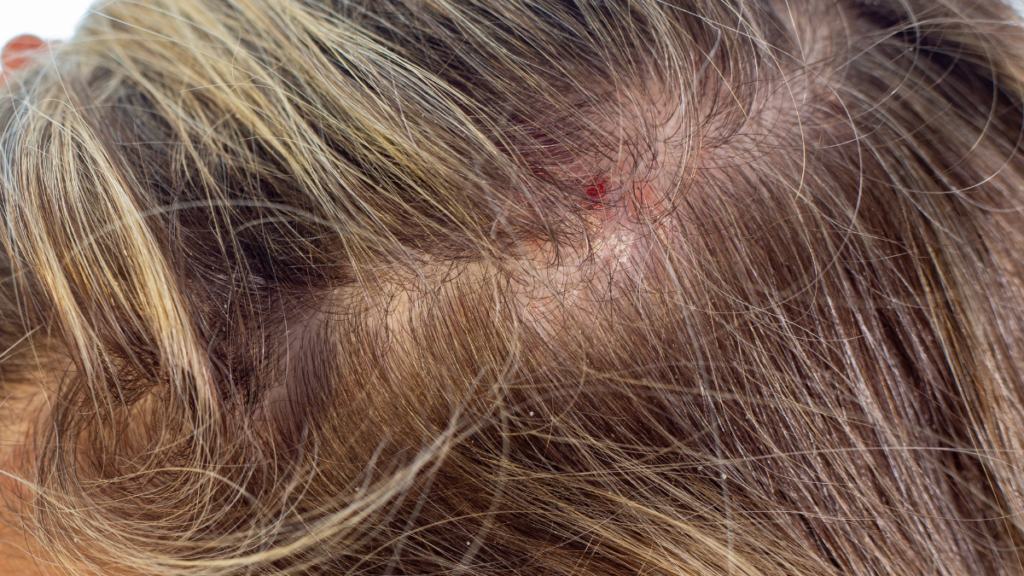
Scalp Demodex does not produce a single distinctive sign the way collarettes do on the eyelashes. Instead, it produces a constellation of symptoms that, taken together, point strongly to mite overgrowth. Recognising the pattern is the first diagnostic step.
Persistent Itching, Worse at Night
Recognizing the symptoms of demodex on the scalp is crucial for timely intervention. Seeking a diagnosis can lead to proper treatment and alleviate discomfort.
For further insights, consider reading about the demodex on the scalp and its implications for hair health. The connection between these mites and various scalp conditions continues to gain attention in dermatological research.
The most consistent symptom of scalp demodicosis is itch — and it has a specific temporal pattern. Demodex mites emerge from the follicles to mate on the skin surface at night, between approximately 11 pm and 3 am. Patients commonly describe a worsening of scalp itch in bed, sometimes described as a crawling sensation. This nocturnal pattern is not pathognomonic, but when present alongside other findings, it raises clinical suspicion.
Perifollicular Papules and Pustules
Scalp Demodex folliculitis produces small, dome-shaped erythematous papules and pustules that are centred precisely on individual hair follicles. The lesions tend to cluster along the hairline (frontal and temporal), in the area behind the ears, and around the vertex. Unlike bacterial folliculitis, the pustules of Demodex folliculitis often persist for weeks without clear improvement on standard topical antibiotics — a clinical clue that should prompt re-evaluation.
Scaling and Crusting
Fine, dry scaling and occasional crusting on a background of perifollicular erythema is a frequent finding. In published case series, this presentation is often initially misdiagnosed as seborrheic dermatitis and treated with ketoconazole shampoo or topical corticosteroids — neither of which addresses the underlying mite burden, and the latter of which may actually worsen demodicosis by suppressing local immunity.
Patchy Hair Shedding and Round Alopecic Areas
The questions surrounding demodex on the scalp often arise during consultations. It’s essential for healthcare providers to address these concerns and provide useful information on managing this condition.
Recognizing the signs of demodex on the scalp is vital for timely diagnosis and treatment. If you experience persistent itching and irritation, it may be worth discussing demodex on the scalp with your dermatologist.
Demodex folliculitis of the scalp has been documented to produce small, round, alopecic patches with reddish-brown follicular papules and surrounding erythema, as reported by Helou and colleagues. This is distinct from the symmetric, gradual frontal and crown thinning seen in androgenetic alopecia. The patches are inflammatory, often itchy, and the hair loss within them is reversible in the early stages with appropriate acaricidal treatment.
Greasy, Heavy Scalp Feel That Persists After Washing
With the growing interest in demodex on the scalp, more research is being conducted to explore effective treatments and management strategies. Staying informed about the latest findings can greatly benefit patients.
Patients frequently report that the scalp feels oily again within hours of shampooing, even when no excessive sebum is visibly present. This reflects the sebaceous gland hyperactivity that both predisposes to Demodex overgrowth and is, in turn, sustained by it. A 2009 study found that 85.4 percent of patients with scalp involvement had clinically greasy hair.
For those suffering from symptoms, seeking information about demodex on the scalp can open doors to potential relief and better management strategies.
The conversation about demodex on the scalp is gaining momentum as more patients seek answers to their scalp health issues.
Many patients do not realize that demodex on the scalp plays a significant role in scalp health. It can lead to various symptoms that may require medical attention.
The presence of demodex on the scalp can be a challenging condition to manage. Patients often report increased symptoms at night, correlating with the life cycle of these mites.
By consulting with a dermatologist, patients can gain valuable insights into how best to address and treat demodex on the scalp.
Microscopic examination can confirm the presence of demodex on the scalp, helping differentiate it from other scalp conditions.
The Hair Loss Connection: What the Evidence Really Says
For anyone suffering from the effects of demodex on the scalp, finding the right treatment is critical for relief and recovery.
The relationship between scalp Demodex and hair loss is one of the most heavily searched — and most misunderstood — topics in this field. The evidence supports a nuanced position that is neither alarmist nor dismissive.
What the research does show: in a landmark 333-biopsy study published in the American Journal of Dermatopathology, Demodex was found in 5.1 percent of scalp biopsies submitted for hair loss evaluation. In the four cases identified as pathogenic — characterised by hair loss with erythema, scales, and pustules — there was histologically confirmed perifollicular neutrophilic or mononuclear cell infiltrate, and all four cases responded completely to anti-Demodex therapy with metronidazole. A separate analysis found that 83 percent of follicles containing Demodex showed inflammation, demonstrating a nonrandom association between the two.
What the research does not show: a causal relationship between Demodex and classic male or female pattern androgenetic alopecia. A case-control study of 41 AGA patients versus 33 controls found Demodex in 19.5 percent of patients versus 15.2 percent of controls — a difference that did not reach statistical significance. The hypothesis that Demodex drives ordinary pattern baldness is, on current evidence, weakly supported at best.
Many patients may not realize that demodex on the scalp can be the underlying cause of their scalp issues.
Where the picture becomes more interesting is in the subset of AGA patients with associated perifollicular microinflammation — a histological finding in roughly 30 percent of AGA biopsies. In this inflammatory subset, treatment response to minoxidil drops from approximately 77 percent (non-inflammatory cases) to 55 percent. The 2025 hair-loss literature increasingly argues that addressing this perifollicular inflammation — whether driven by Demodex, by Malassezia, or by a combination — is a legitimate adjunct strategy in selected patients whose AGA has plateaued on conventional therapy.
Identifying the symptoms of demodex on the scalp can help patients seek appropriate treatment sooner.
The bottom line: Demodex does not cause pattern hair loss in most patients, but in the inflammatory subset of AGA — and in the distinct entity of Demodex folliculitis of the scalp — addressing the mite burden is a legitimate, evidence-supported intervention that can both relieve itching and improve the local environment for hair growth.
Differential Diagnosis: Seborrheic Dermatitis, Folliculitis, AGA
As awareness about demodex on the scalp increases, patients are better equipped to advocate for their own health and treatment options.
Scalp demodicosis is most commonly misdiagnosed as one of three other conditions. Distinguishing them is critical because the treatments differ substantially.
Versus Seborrheic Dermatitis
Seborrheic dermatitis classically produces yellowish, greasy scales on an erythematous base, located in the seborrheic distribution (scalp, eyebrows, nasolabial folds, ear canals). The hair shedding pattern, when present, is diffuse rather than patchy. Critically, seborrheic dermatitis usually responds within 2 to 4 weeks to ketoconazole 2 percent shampoo or selenium sulfide. Scalp Demodex folliculitis does not respond to these agents because they have minimal acaricidal activity. A patient who has gone through a full antifungal trial without improvement deserves a second look at Demodex.
Effective management of demodex on the scalp requires a comprehensive understanding of its symptoms and treatment options.
Versus Bacterial Folliculitis
Bacterial folliculitis produces follicular pustules that respond to topical or systemic antibiotics (mupirocin, clindamycin, doxycycline). Cultures typically grow Staphylococcus aureus or coagulase-negative staphylococci. In Demodex folliculitis, bacterial cultures are negative or grow only normal skin flora, and the pustules persist or recur after appropriate antibiotic courses. A pattern of recurrent folliculitis that responds partially to antibiotics — only to relapse — is a Demodex pattern.
Versus Androgenetic Alopecia
AGA produces symmetric thinning in the classic male (vertex and frontal) or female (central widening of the part) patterns. There is no significant itching, no inflammation, and no pustules. The hairs that remain are thinner and shorter than normal terminal hairs (miniaturisation). Demodex folliculitis can coexist with AGA — in which case both should be treated — but the inflammatory features should not be dismissed as part of AGA itself.
Testing and Diagnosis: How to Confirm Scalp Demodex

Clinical suspicion is the starting point, but objective confirmation matters — both to avoid unnecessary treatment and to monitor response. There are three useful techniques.
Trichoscopy (Dermoscopy of the Scalp)
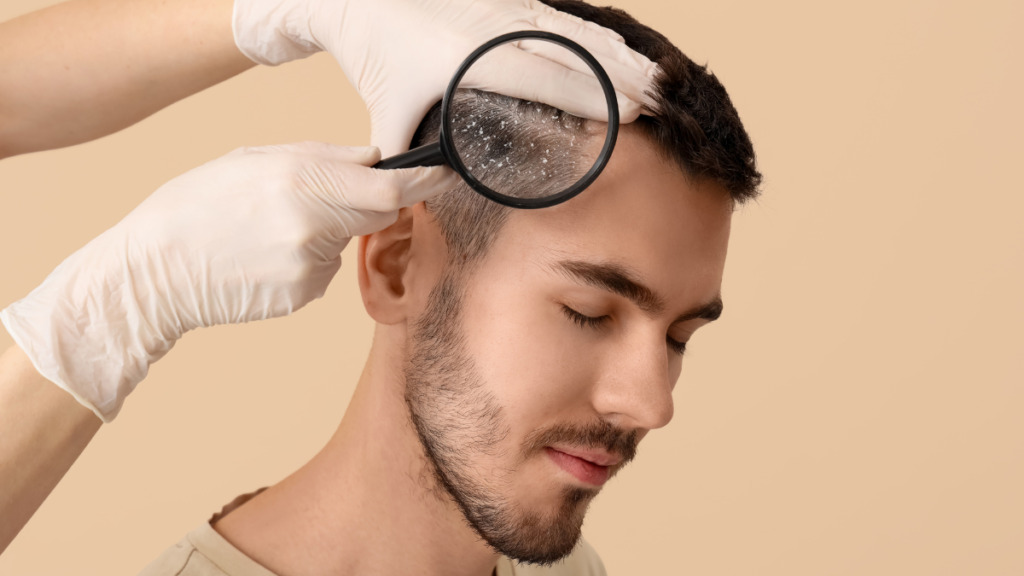
A handheld dermatoscope, used by a trichologist or dermatologist, can reveal findings invisible to the naked eye. The most specific sign of scalp Demodex is the presence of follicular plugs containing whitish, gelatinous, tail-like protrusions emerging from the follicular ostium — these are commonly called “Demodex tails” and have been validated in dermoscopic studies as highly specific. Additional findings include perifollicular erythema and follicular keratotic plugs.
Standardised Skin Surface Biopsy (SSSB)
For individuals experiencing symptoms, understanding demodex on the scalp is essential for effective treatment and management.
This non-invasive technique uses cyanoacrylate glue on a glass slide pressed onto a marked one square centimetre area of scalp for approximately 60 seconds, then lifted and examined microscopically. Mite counts above five per square centimetre are diagnostic. For an in-depth walk-through, see our article on clinical diagnosis of Demodex infestation.
Direct Microscopy of Plucked Hairs
Plucking three to four hairs from suspicious areas and examining them under light microscopy with immersion oil can reveal adult mites clinging to the hair sheath or visible inside the follicular unit. This technique is rapid, inexpensive, and can be performed in any office with a basic microscope.
As treatment protocols evolve, understanding the role of demodex on the scalp in various conditions becomes increasingly important. This knowledge can lead to better patient outcomes and satisfaction.
Scalp Biopsy
A 4 mm punch biopsy is reserved for cases where the diagnosis remains unclear after the above. On histology, Demodex folliculitis shows superficial perifollicular inflammation with mononuclear and neutrophilic infiltrate, occasional granulomas, and visible mites within the follicular infundibulum or sebaceous duct. Biopsy is particularly valuable when the clinical picture overlaps with cicatricial alopecia or sarcoidosis.
12-Week Evidence-Based Treatment Protocol for Scalp Demodex
The protocol below synthesises published case-series data and current dermatology consensus on scalp demodicosis. It is structured in four phases over twelve weeks, designed to be discussed with and managed by a licensed dermatologist or trichologist.
Phase 1 (Weeks 1 to 2): Reduce Inflammation and Prepare the Scalp
Patients are encouraged to consider demodex on the scalp when experiencing unexplained scalp issues, as it can often be overlooked.
Effective management of demodex on the scalp involves a comprehensive understanding of its symptoms, potential causes, and treatment options available.
- Stop all topical corticosteroids on the scalp — they suppress local immunity and can worsen Demodex overgrowth.
- Start gentle daily scalp cleansing with a sulphate-free, fragrance-free shampoo. Avoid prolonged contact time with potent surfactants that strip barrier lipids.
- For patients with significant inflammation, consider a short course of sub-antimicrobial doxycycline 40 mg modified-release once daily (off-label for scalp) to suppress the IL-1β and IL-8 cascade while acaricidal therapy is initiated. Avoid in pregnancy and in patients with significant sun exposure without UV protection.
- Document baseline with photography (hairline, vertex, occiput) for comparison at week 6 and week 12.
Phase 2 (Weeks 3 to 8): Active Acaricidal Treatment
This is the phase where mite numbers are actively reduced. The strongest published evidence supports two main approaches, often used together.
- Topical ivermectin 1 percent cream applied to affected scalp areas nightly. Multiple published case reports document complete clinical and microbiological resolution of scalp Demodex folliculitis with this approach. Ivermectin inhibits glutamate-gated chloride channels in the mite’s nervous system. It also has direct anti-inflammatory activity.
- Tea tree oil 5 percent shampoo used three to five times per week, with a contact time of three to five minutes before rinsing. Terpinen-4-ol, the active acaricidal component of tea tree oil, has been shown to disrupt Demodex cell membranes and inhibit egg hatching. For a complete review of the evidence, see our article on tea tree oil for Demodex mites.
- Permethrin 5 percent cream, applied to the scalp once weekly for four weeks, is an alternative for patients who cannot tolerate ivermectin or who fail to respond. Permethrin works through a different ion channel (sodium channel disruption) and provides a non-cross-resistant option.
- Oral metronidazole 500 mg twice daily for 14 days has resolved scalp Demodex folliculitis in published case series. It is most useful in severe, treatment-refractory, or extensive disease.
Many people are unaware that demodex on the scalp can lead to significant discomfort. Recognizing its symptoms early can lead to more effective treatments and relief.
Phase 3 (Weeks 9 to 10): Confirm Response and Optimise Scalp Health
- Reassess with trichoscopy and clinical photography. Compare to baseline.
- If hair shedding had been a feature, consider adding topical minoxidil 5 percent once daily — but only after inflammation is well controlled, because minoxidil can transiently worsen itch in inflamed scalps.
- Address underlying sebaceous overactivity: a 12-week trial of zinc 30 mg daily plus omega-3 supplementation (EPA plus DHA 2 g daily) may help normalise sebum composition.
- Screen for and address systemic cofactors — see the next section.
Phase 4 (Weeks 11 to 12 and Beyond): Maintenance and Relapse Prevention
- Transition to twice-weekly tea tree oil shampoo as long-term maintenance.
- Replace pillowcases at least twice weekly and wash all bedding at 60°C or higher to kill any environmental mites.
- Replace hairbrushes every three months during active treatment. Disinfect existing brushes weekly by soaking in hot water with diluted tea tree oil.
- Schedule clinical reassessment at three months and six months. In high-risk patients (immunocompromised, severe rosacea, hair transplantation history), quarterly review is preferable.
Who Is at Highest Risk of Scalp Demodex Overgrowth?
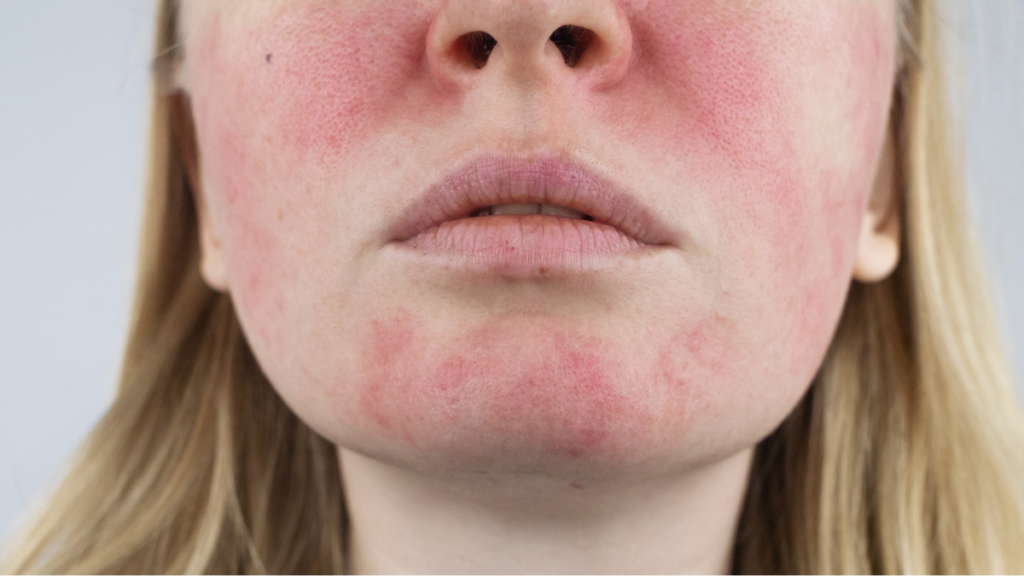
Five risk factor categories are repeatedly identified in the published scalp Demodex literature. Recognising them helps target both diagnostic suspicion and the depth of any treatment plan.
Microscopic examination can confirm the presence of demodex on the scalp, helping to differentiate it from other scalp conditions.
Advancing Age
Demodex carriage rises progressively with age and approaches 100 percent in adults over 70. Scalp involvement parallels facial carriage. Older patients presenting with new-onset scalp itch, perifollicular pustules, or unexplained shedding deserve specific evaluation for demodicosis.
Immunosuppression
Any condition or medication that reduces T-cell-mediated immunity raises the risk of clinically significant scalp Demodex. Documented triggers in the literature include HIV, haematological malignancy with chemotherapy, organ transplantation, biological agents (TNF-α, IL-4, IL-13, and IL-17 inhibitors), and systemic or potent topical corticosteroids. Demodex folliculitis has been reported repeatedly in paediatric leukaemia patients on maintenance chemotherapy.
Exploring the latest research on demodex on the scalp can provide valuable insights into effective treatment strategies and patient care.
Rosacea and Seborrheic Dermatitis
Patients with established facial rosacea or seborrheic dermatitis have higher rates of scalp Demodex involvement, reflecting both the shared sebaceous environment and the systemic susceptibility. See our complete Demodex and Rosacea clinical guide for the underlying mechanisms.
Recent Hair Transplantation
A 2025 case in Clinical and Experimental Dermatology documented localised Demodex folliculitis after hair transplantation, attributing the overgrowth to local immune disruption from trauma and prolonged post-procedure topical care. Patients with new scalp symptoms after a hair restoration procedure should be specifically evaluated for demodicosis before extending standard antibiotic or antifungal therapy.
Diabetes and Metabolic Dysregulation
Poorly controlled type 2 diabetes consistently shows elevated Demodex prevalence across multiple cross-sectional studies. The mechanism likely combines impaired cell-mediated immunity with altered sebum composition. HbA1c optimisation is a legitimate therapeutic target in recurrent or treatment-refractory scalp demodicosis.
Further Reading on demodex.net/
- Demodex Blepharitis: Complete Clinical Guide — How scalp and eyelid Demodex often coexist, and why testing one prompts evaluation of the other.
- Demodex and Rosacea: The Complete Clinical Guide — The shared inflammatory pathways that link scalp and facial demodicosis.
- Tea Tree Oil for Demodex: A Clinical Evidence Guide — Terpinen-4-ol concentrations, formulations, and contact-time evidence.
- How to Tell If You Have Demodex Mites: Self-Assessment Guide — Symptom checklists and when to seek formal testing.
- Demodex Research Hub — Curated peer-reviewed literature organised by topic.
Frequently Asked Questions
Can Demodex on the scalp cause hair loss?
In the specific entity of Demodex folliculitis of the scalp, yes — the inflammation associated with mite overgrowth can produce patchy, often reversible, hair shedding in the affected areas. However, the evidence does not support Demodex as a cause of typical pattern (androgenetic) hair loss. In AGA patients who have perifollicular microinflammation on biopsy, addressing the mite burden may be a useful adjunct to standard therapy.
What does Demodex scalp itch feel like?
Patients most commonly describe a persistent, sometimes crawling, itch that is worse at night — particularly between 11 pm and 3 am, when adult mites surface from the follicles to mate. The itch may localise to specific areas (frontal hairline, vertex, behind the ears) or be diffuse. It does not typically respond to antihistamines.
Does dandruff shampoo kill Demodex?
Standard antifungal dandruff shampoos (ketoconazole 2 percent, selenium sulfide, zinc pyrithione) have minimal direct activity against Demodex mites. They are designed to suppress Malassezia, a yeast — not arachnid parasites. Tea tree oil shampoos formulated with terpinen-4-ol at five percent or higher have documented acaricidal activity and are a more appropriate adjunctive choice.
How long does scalp Demodex treatment take?
Because the Demodex life cycle is 14 to 18 days and most acaricidal agents do not kill eggs, treatment must be sustained for a minimum of six weeks to break the reproductive cycle. The full 12-week protocol described above ensures eradication and reduces relapse risk. Symptom improvement is often noticeable within the first two to three weeks.
Is scalp Demodex contagious?
Demodex mites are transferable through direct close contact, including face-to-face contact during sleep and shared pillowcases, hairbrushes, or towels. However, whether transfer produces clinically significant overgrowth depends overwhelmingly on host factors — immune status, age, sebaceous activity. Routine household contact does not typically produce disease in healthy contacts.
It’s important to recognize that demodex on the scalp can lead to various symptoms and conditions, making awareness essential for effective treatment.
Can I treat scalp Demodex at home without a doctor?
Mild cases may improve with consistent tea tree oil shampoo (5 percent terpinen-4-ol) used three times weekly for six weeks. However, accurate diagnosis matters — many patients who self-treat for “Demodex” actually have seborrheic dermatitis or bacterial folliculitis, and vice versa. A dermatologist or trichologist consultation, ideally with trichoscopy, is recommended for any persistent scalp symptoms before committing to a long course of self-treatment.
What is the difference between scalp Demodex and seborrheic dermatitis?
Seborrheic dermatitis is driven by Malassezia yeast and characteristically produces yellowish, greasy scales that respond to antifungal shampoo within weeks. Scalp Demodex folliculitis is driven by mite overgrowth and produces follicle-centred papules and pustules that do not respond to antifungals. The two conditions can coexist, and patients with persistent symptoms despite full antifungal treatment deserve specific evaluation for Demodex.
References
- Aquilina C, Schwartz J, Boutsen Y, et al. Demodex Folliculitis of the Scalp: Clinicopathological Study of 17 Cases. American Journal of Dermatopathology. 2016;38(9):658-663.
- Karincaoglu Y, Bayram N, Aycan O, Esrefoglu M. Evaluation of the Relationship Between Androgenetic Alopecia and Demodex Infestation. Indian Journal of Dermatology. 2009;54(1):24-27.
- Helou W, Avitan-Hersh E, Bergman R. Demodex Folliculitis of the Scalp: Clinicopathological Findings. American Journal of Dermatopathology. 2016;38(9):658-663.
- Lin CW, Yang TY, Chen JJ. Demodex Folliculitis of the Scalp Successfully Treated With Topical Ivermectin. Dermatologica Sinica. 2021;39(4):200-202.
- Gilaberte Y, Frias MP, Pérez-Lorenz JB. Localised demodicosis of the scalp following hair transplantation. Clinical and Experimental Dermatology. 2025 (Advance article).
- Mahé YF, Michelet JF, Billoni N, et al. Androgenetic Alopecia and Microinflammation. International Journal of Dermatology. 2000;39(8):576-584.
- Forton FMN, Germaux MA, Brasseur T, et al. Demodicosis and rosacea: epidemiology and significance in daily dermatologic practice. Journal of the American Academy of Dermatology. 2005;52(1):74-87.
- Maleki B, Haghshenas N, Rezaei-Tavirani M, et al. Global prevalence of human Demodex mite: a systematic review and meta-analysis. Acta Tropica. 2025;268:107693.
- Lacey N, Kavanagh K, Tseng SC. Under the lash: Demodex mites in human diseases. The Biochemist. 2009;31(4):2-6.
- Elston DM. Demodex mites: facts and controversies. Clinics in Dermatology. 2010;28(5):502-504.
- Cheng AM, Sheha H, Tseng SC. Recent advances on ocular Demodex infestation. Current Opinion in Ophthalmology. 2015;26(4):295-300.
- Liu J, Sheha H, Tseng SCG. Pathogenic role of Demodex mites in blepharitis. Current Opinion in Allergy and Clinical Immunology. 2010;10(5):505-510.
Medical Disclaimer
This article is produced for educational use. It does not substitute for individual clinical judgement or replace consultation with a licensed dermatologist or trichologist. Treatment decisions involving prescription medications, particularly oral metronidazole, topical ivermectin, permethrin, or oral doxycycline, must be made in consultation with a qualified prescriber. See the full medical disclaimer.
Ultimately, addressing demodex on the scalp not only alleviates symptoms but also enhances overall scalp health.
Effective management of demodex on the scalp often requires a combination of treatments and lifestyle changes to achieve optimal results.
Many patients find success in addressing demodex on the scalp through a multifaceted approach that includes both topical and systemic therapies.
Future studies on demodex on the scalp are likely to uncover more about their role in scalp health and possible treatment innovations.
Understanding the implications of demodex on the scalp can lead to improved patient education and better treatment outcomes.
For those struggling with symptoms, seeking information about demodex on the scalp can open doors to potential relief and management strategies.
As knowledge about demodex on the scalp increases, patients are better equipped to advocate for their own health and treatment options.
Understanding the implications of demodex on the scalp can benefit both patients and healthcare providers by facilitating better treatment decisions.
In summary, recognizing the presence of demodex on the scalp is key to managing scalp health and ensuring effective treatment.