Introduction
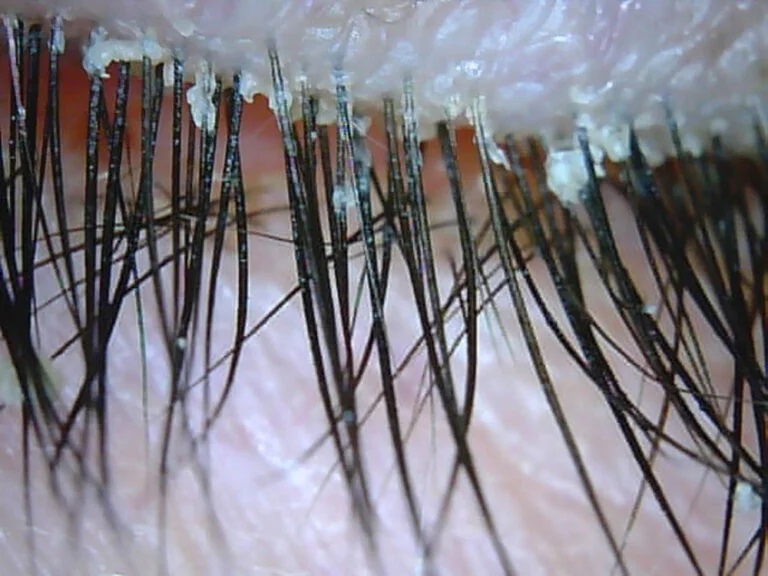
Demodex and Collarettes are closely linked in the diagnosis of Demodex blepharitis. Collarettes, also known as cylindrical dandruff, are one of the most recognizable signs of a Demodex infestation affecting the eyelids. Millions of people suffer from chronic eyelid irritation, redness, itching, and dry eye symptoms without realizing that tiny mites may be contributing to their discomfort. One of the most important clinical signs associated with Demodex infestation is the presence of collarettes, often referred to as cylindrical dandruff around the eyelashes. The relationship between Demodex and Collarettes plays a crucial role in understanding these symptoms.
Recent research has highlighted collarettes as a key indicator of Demodex blepharitis, making them an important focus during eye examinations. Understanding the relationship between Demodex mites and collarettes can help patients recognize symptoms earlier and seek appropriate treatment before long-term complications develop. Recognizing Demodex and Collarettes early can significantly improve treatment outcomes and patient comfort.
What Are Demodex Mites?
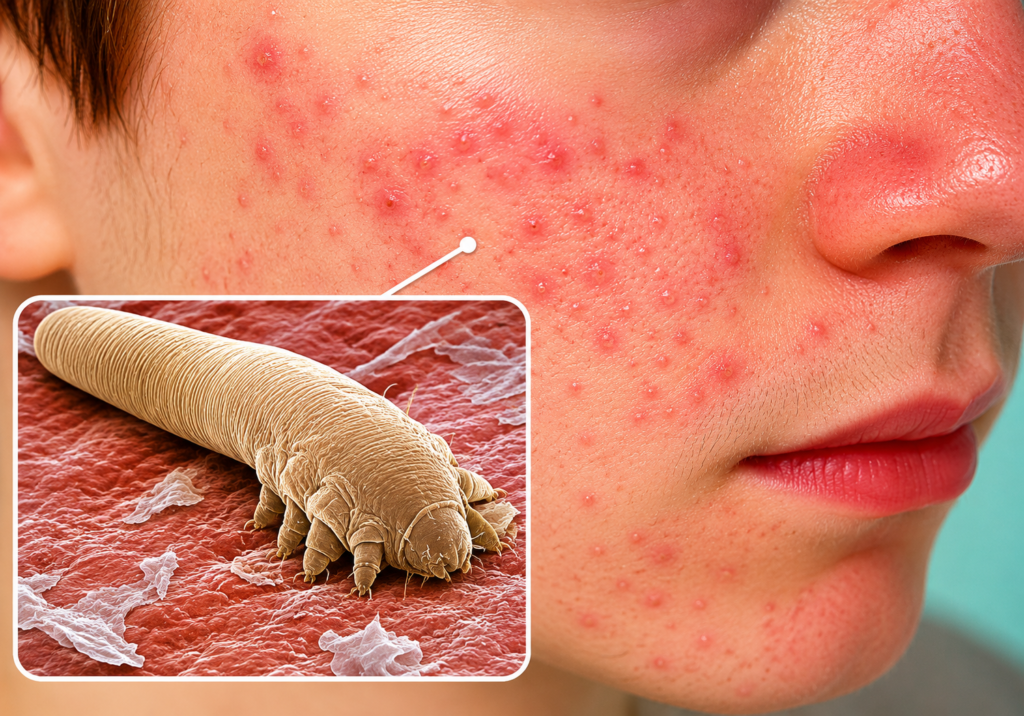
Demodex mites are microscopic ectoparasites that naturally live on human skin. They are among the most common human parasites and are found in hair follicles and sebaceous glands throughout the body.
The two species most commonly found in humans are:
Demodex folliculorum
This species primarily inhabits eyelash follicles and is most strongly associated with eyelid disease and collarette formation.
Demodex brevis
This species lives deeper within sebaceous and meibomian glands, where it may contribute to gland dysfunction and dry eye disease.
Although Demodex mites are considered part of the normal skin microbiome, excessive populations can trigger inflammation and contribute to various ocular and dermatological conditions.
What Exactly Are Collarettes?
Collarettes are waxy, cylindrical deposits that form around the base of the eyelashes. Unlike ordinary dandruff, they remain attached to the lash shaft and often encircle it like a sleeve.
These structures contain:
- Dead epithelial cells
- Keratinized skin debris
- Sebaceous secretions
- Demodex eggs
- Mite exoskeleton fragments
- Waste products produced by mites
- Bacterial biofilm components
When examined under slit-lamp magnification, collarettes appear as characteristic cuffs surrounding the eyelashes and are considered one of the most specific signs of Demodex blepharitis.
Why Are Collarettes Considered a Hallmark Sign?
For many years, diagnosing Demodex infestation required removing eyelashes and examining them under a microscope. However, modern clinical studies have demonstrated that the presence of collarettes alone is highly predictive of Demodex infestation.
In fact, many eye care specialists now consider collarettes to be the most reliable visible sign of Demodex blepharitis.
This is important because:
- They can be identified quickly during routine examinations.
- They are highly associated with active Demodex infestation.
- Their severity often correlates with disease burden.
- They help differentiate Demodex blepharitis from other eyelid disorders.
Because of this strong association, collarettes have become a major focus in recent ophthalmology research and clinical guidelines.
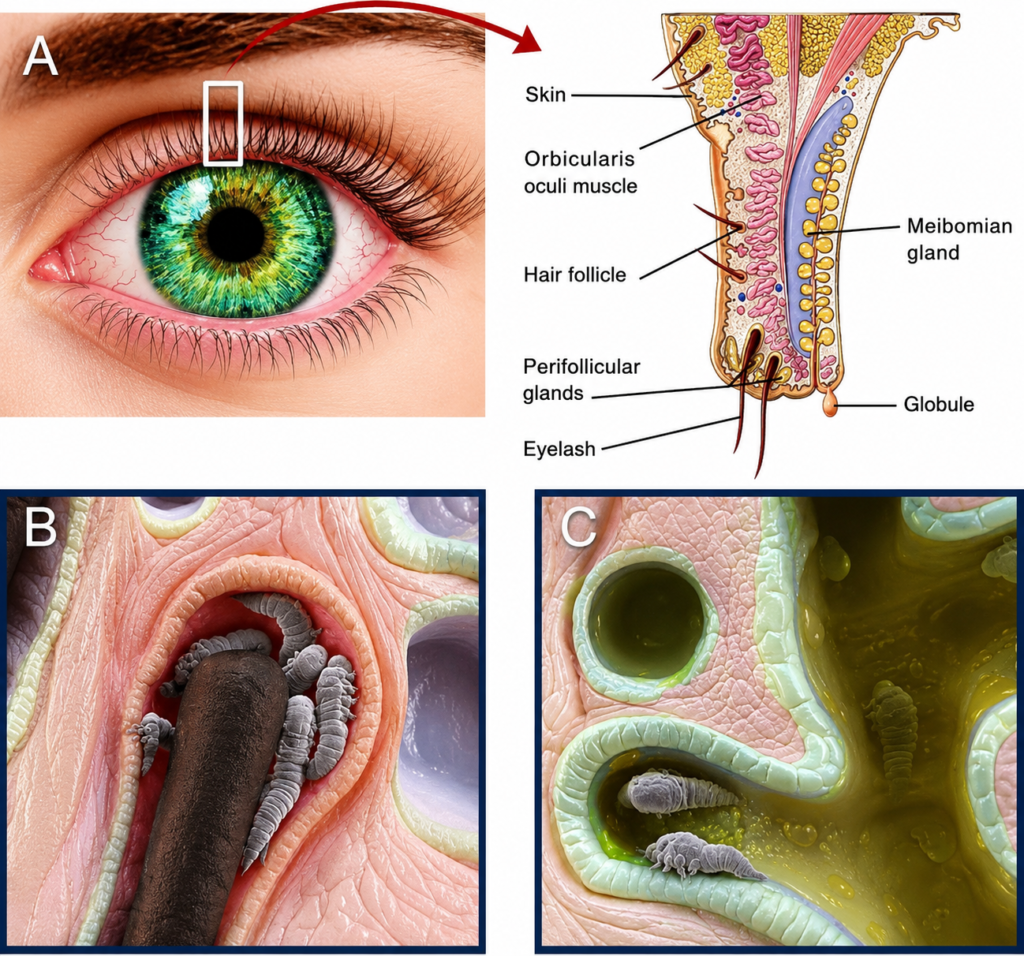
A Overview schematic of eyelash and gland structures. B Demodex folliculorum mites located within the lash follicle. C Demodex brevis mites located within the meibomian gland
How Do Demodex Mites Cause Collarettes?
The formation of collarettes is a gradual process. As Demodex mites feed on skin cells and oils within the eyelash follicles, they reproduce and deposit waste products. Their movement and biological activity trigger inflammation within the follicle.
Over time, several materials accumulate around the base of the lash:
- Dead skin cells
- Inflammatory debris
- Excess oils
- Mite waste
- Mite eggs
- Decomposing mite remnants
This accumulation eventually forms the characteristic cylindrical collarette surrounding the eyelash.The greater the mite population, the more extensive the collarette formation tends to become.
Symptoms Associated With Demodex and Collarettes
Patients with Demodex-related collarettes often report chronic symptoms that may persist for months or even years.
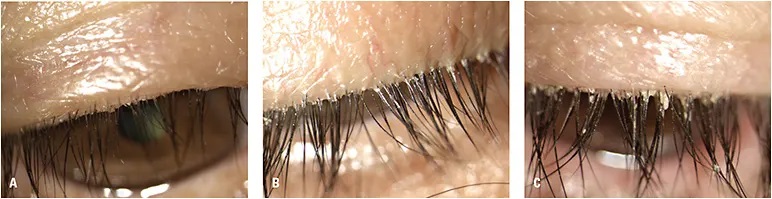
Collarettes are often sectoral; they cluster, and will likely progress to more diffuse lash involvement, with longer and thicker collarettes.
Common symptoms include:
Itchy Eyelids
One of the most frequently reported symptoms is persistent itching around the lash line.
Burning Sensation
Inflammation caused by mites may produce a burning or stinging feeling.
Foreign Body Sensation
Many patients describe the sensation as feeling like sand or grit in their eyes.
Crusting Around the Eyelashes
Collarettes often create visible debris along the lash margins.
Redness
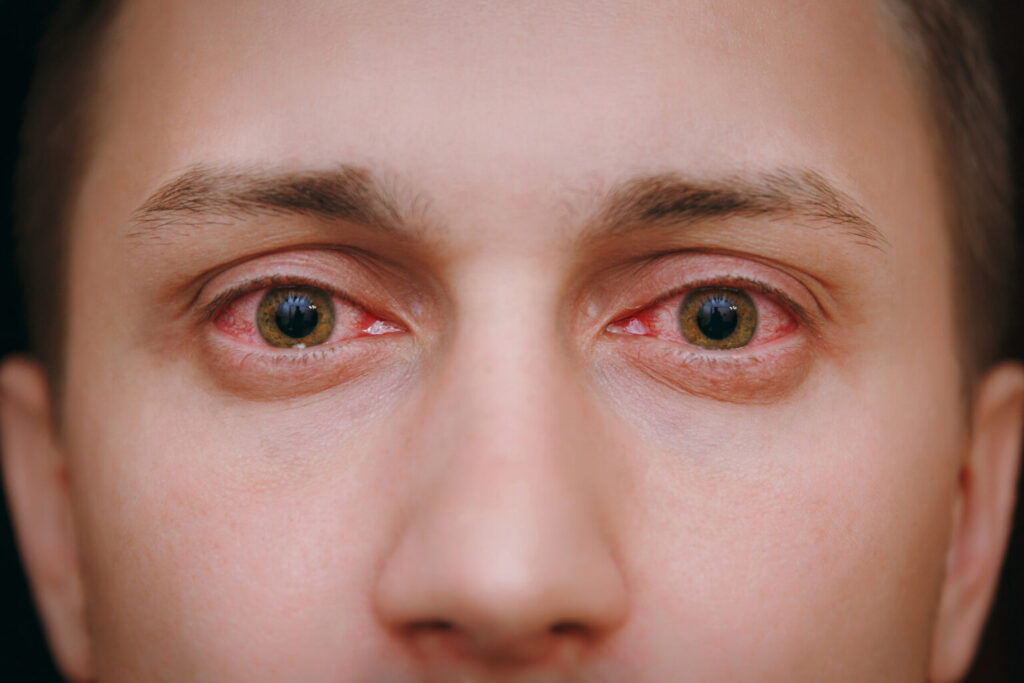
The eyelid margins may appear swollen, irritated, and inflamed.
Dry Eye Symptoms
It is essential to address symptoms related to Demodex and Collarettes to prevent worsening conditions. Demodex infestation frequently coexists with meibomian gland dysfunction, contributing to:
- Eye dryness
- Fluctuating vision
- Increased sensitivity to light
- Eye fatigue
Recurrent Styes and Chalazia
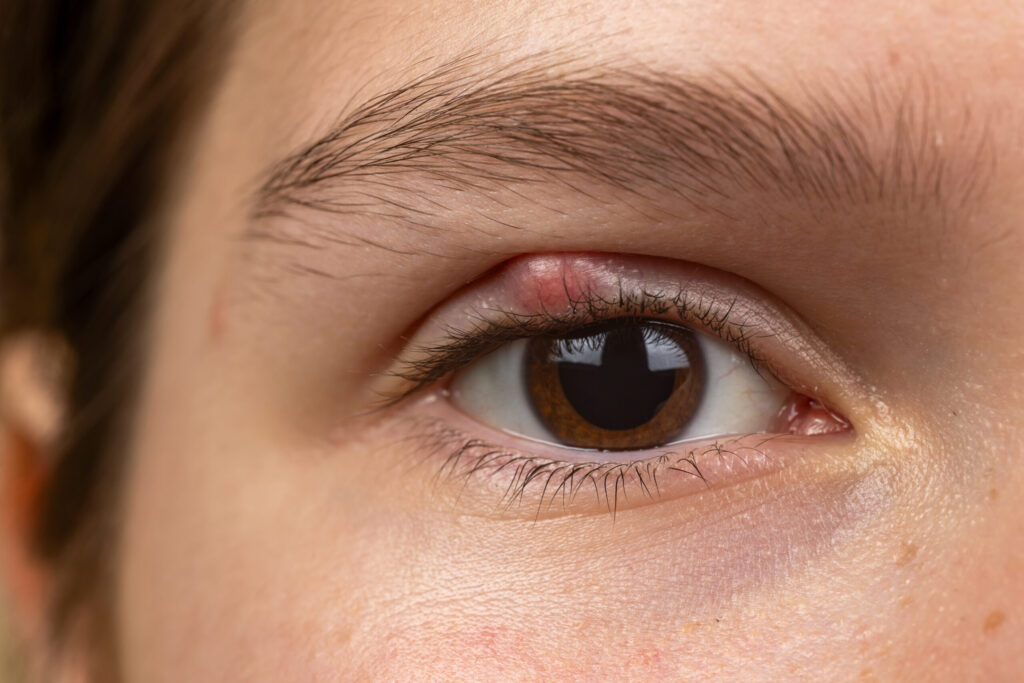
Chronic inflammation associated with Demodex may increase the likelihood of recurrent eyelid lumps.
The Link Between Demodex, Collarettes, and Dry Eye Disease
Growing evidence suggests that Demodex infestation may play a significant role in dry eye disease.
Demodex mites can:
- Block meibomian gland openings
- Trigger gland inflammation
- Alter tear film stability
- Promote bacterial growth
- Increase ocular surface inflammation
As a result, patients with prominent collarettes often experience significant dry eye symptoms.
Several studies have found a strong association between Demodex blepharitis and meibomian gland dysfunction, suggesting that treating Demodex may improve overall ocular surface health.
Who Is Most Likely to Develop Collarettes?
Certain individuals may be at increased risk:
Older Adults
Demodex populations tend to increase with age.
Individuals With Rosacea
Rosacea has been strongly linked to higher Demodex densities.
Patients With Chronic Blepharitis
Many cases of treatment-resistant blepharitis involve underlying Demodex infestation.
Contact Lens Wearers
Eyelid irritation may be worsened by existing Demodex-related inflammation.
Immunocompromised Individuals
Reduced immune function may allow mite populations to increase more easily.
Diagnosis of Demodex Blepharitis
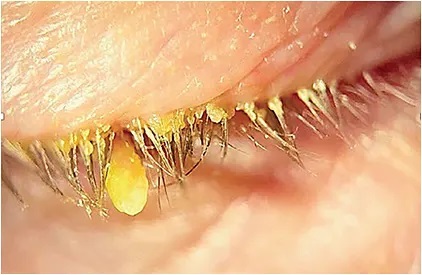
Eye care professionals can identify Demodex and Collarettes during a slit-lamp examination. Diagnosis begins with a comprehensive eye examination.
Eye care professionals may:
- Inspect eyelid margins.
- Identify collarettes around eyelashes.
- Evaluate ocular surface inflammation.
- Assess meibomian gland health.
- Perform microscopic eyelash examination when necessary.
In many modern practices, the presence of collarettes is sufficient to strongly suspect Demodex infestation.
Treatment and Management
Treating Demodex and Collarettes usually involves proper eyelid hygiene and targeted therapies.
Management strategies may include:
Eyelid Cleansing
Daily cleansing helps remove debris and reduce inflammatory material.
Lid Hygiene Products
Specialized eyelid cleansers may assist in maintaining cleaner lash margins.
Tea Tree Oil-Based Treatments
Certain formulations have been used to reduce Demodex populations under professional guidance.
Management of Dry Eye Disease
Artificial tears and meibomian gland therapies may help address associated symptoms.
Routine Eye Examinations
Regular follow-up allows clinicians to monitor symptom improvement and collarette reduction.
Why Early Treatment Matters
Ignoring Demodex-related collarettes may allow inflammation to persist for years.
Potential consequences include:
- Chronic blepharitis
- Progressive meibomian gland dysfunction
- Persistent dry eye symptoms
- Recurrent chalazia
- Ocular surface irritation
- Reduced quality of life
Early recognition and intervention may help prevent these complications.
Conclusion
Collarettes are more than simple eyelash debris, they are one of the most important clinical signs of Demodex blepharitis. These cylindrical deposits form when Demodex mites, inflammatory debris, oils, and waste products accumulate around the eyelashes.
Because collarettes are strongly associated with Demodex infestation, they serve as a valuable diagnostic clue for eye care professionals. Recognizing the connection between Demodex and collarettes can lead to earlier diagnosis, targeted treatment, improved eyelid health, and better overall eye comfort.
If you experience chronic eyelid itching, redness, crusting, or dry eye symptoms, consult an eye care professional to determine whether Demodex mites may be contributing to your condition.
References
- High Prevalence of Demodex in Eyelashes with Cylindrical Dandruff .
- Demodex Blepharitis: Clinical Perspectives
- Pathogenic Role of Demodex Mites in Blepharitis
- Demodex Blepharitis: A Comprehensive Review
- Clinical Diagnosis and Management of Demodex Blepharitis
- Demodex and the Eye – A Review
- Fluorescein Dye Improves Microscopic Evaluation and Counting of Demodex in Blepharitis with Cylindrical Dandruff