
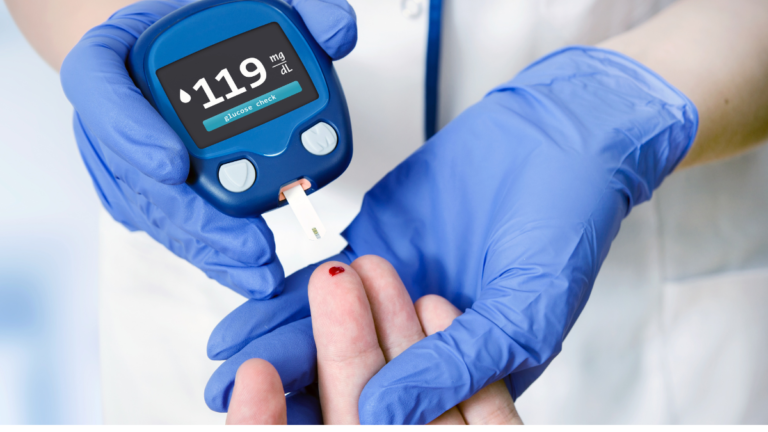

You have done everything right. You used the tea tree wipes. You finished the ivermectin course. Your skin cleared, or nearly cleared, and then within a couple of months the redness, the bumps, and the gritty eyelids all came back. Your dermatologist shrugs and calls it “chronic rosacea.” Nobody ever asked about your blood sugar.
This is one of the most under-recognized relationships in Demodex medicine. Diabetes does not just co-exist with mite overgrowth. It drives it — and it does so through several mechanisms at once. If you are diabetic or pre-diabetic and you keep relapsing, the missing piece of your protocol may not be a stronger acaricide. It may be your HbA1c.
Quick Answer
Yes — diabetes is an independent risk factor for Demodex overgrowth, and the association is now well documented. In a 2026 cross-sectional study of 302 blepharitis patients, type 2 diabetes was associated with a 2.46-fold increase in the odds of demodicosis (OR 2.456, 95% CI 1.457–4.141, p < 0.001), ranking diabetes as the third most significant risk factor overall after other blepharitis and rosacea. Research by Akdeniz and colleagues found not only higher mite density on the cheeks of diabetic patients, but physically larger mites, with a positive correlation between mite counts and HbA1c. In gestational diabetes, Demodex density was 24.2% versus 3.3% in healthy controls (p < 0.001) — and patients with poorly controlled glucose had significantly higher density than those with well-controlled glucose. The mechanisms are immune dysregulation, altered sebum composition, impaired skin barrier function, and chronic low-grade inflammation. The practical implication: in a diabetic patient with recurrent rosacea or blepharitis, glycemic control is part of the skin protocol, not a separate issue.
How High Blood Sugar Feeds Mite Overgrowth

Demodex is a commensal. It lives on nearly every adult without causing trouble, held in check by a set of host defenses. Diabetes degrades several of those defenses at once, which is why the effect is larger than you would expect from any single mechanism.
1. Immune dysregulation
Chronic hyperglycemia impairs neutrophil chemotaxis, phagocytosis, and macrophage function. The innate immune surveillance that normally caps mite density is weakened. This is the same reason diabetic patients are more prone to skin infections generally — and Demodex is, functionally, an opportunistic organism that expands whenever immune pressure drops.
2. Altered sebum composition
Demodex feeds on sebum. Diabetes alters the composition of that sebum, changing the lipid substrate available in the follicle. The mites are not just less controlled; they are better fed. This is a key reason mite density can climb even when hygiene is impeccable.
3. Impaired skin barrier
Diabetic skin characteristically shows elevated transepidermal water loss (TEWL), reduced hydration, and slower repair. A compromised barrier creates a more permissive follicular environment and makes the skin more reactive to the inflammatory products the mites generate.
4. Chronic low-grade inflammation
Type 2 diabetes is an inflammatory state. That persistent cytokine load amplifies the reaction to mite antigens and to Bacillus oleronius, the bacterium carried on the Demodex cuticle that is a potent activator of Toll-like receptor 2. So the diabetic patient may have both a higher mite burden and a stronger inflammatory response to the same burden.
This is why an acaricide alone keeps failing
Kill every mite on a diabetic patient’s face today and the terrain that permitted the overgrowth is completely unchanged tomorrow: still immunosuppressed, still altered sebum, still a leaky barrier, still inflamed. The population rebuilds. This is not treatment failure. It is treating the occupant and leaving the house exactly as it was.
The Evidence, in Detail

The odds ratio: 2.46×
The strongest recent data comes from a 2026 cross-sectional, observational study published in Archivos de la Sociedad Española de Oftalmología. Across 302 patients with signs of blepharitis, overall Demodex prevalence was 49.3%. Type 2 diabetes was associated with a significant risk of developing demodicosis: odds ratio 2.456 (95% CI 1.457–4.141), p < 0.001.
Critically, the authors placed diabetes third in the hierarchy of risk factors for demodicosis — after blepharitis of another etiology and rosacea. That is a striking position for a metabolic condition in an ophthalmology risk list.
Mite size, not just mite count
This is the finding that most surprises clinicians. Akdeniz and colleagues examined cheek biopsies from diabetic patients versus controls and found a significantly higher mean mite density and a significantly greater mean mite size. The mites were physically larger. The same body of work reported a positive correlation between Demodex counts and HbA1c levels — a direct dose-response relationship between glycemic control and mite burden.
Gestational diabetes: the control experiment
Gestational diabetes provides an unusually clean natural experiment, because it is a defined metabolic state with a clear before and after. Keskin and colleagues found Demodex density of 24.2% in gestational diabetes patients versus 3.3% in controls (p < 0.001). And within the gestational diabetes group, those with unregulated glucose had significantly higher Demodex density than those with regulated glucose (6/19 vs 2/14, p = 0.001).
That last comparison matters more than anything else in this article. It suggests that the driver is not the diagnosis, but the glycemic control. Well-managed diabetes and poorly-managed diabetes are not the same skin condition.
The eye connection
A survey published in Acta Parasitologica examined how ocular-surface Demodex infestation interacts with both diabetes mellitus and dry eye disease, adding to a body of work showing that Demodex infestations are more common in diabetic patients than in healthy volunteers. Diabetic patients with dry eye that does not respond to lubricating drops are a group where mite screening is particularly high-yield. If that sounds like you, our Demodex blepharitis clinical guide covers the lid-margin picture in full.
What This Means If You Have Diabetes and Recurrent Skin Problems
The clinical translation is straightforward, and it is not what most patients are told.
- Your HbA1c is a skin number. If you are treating recurrent Demodex-associated rosacea, blepharitis, or folliculitis and your glucose is poorly controlled, you are working against a headwind that no topical can overcome. Ask for a current HbA1c and treat improving it as part of the protocol.
- Expect to need longer courses. A diabetic patient generally requires a longer acaricidal course than a non-diabetic patient with the same presentation, because the terrain is more permissive and the mite reservoir is larger.
- Expect a higher maintenance requirement. Ongoing lid hygiene and terpinen-4-ol maintenance is more important, not less, after the initial course.
- Screen the eyes even without eye complaints. Collarette assessment should be part of routine diabetic care. Current clinical guidance recommends quarterly monitoring in high-risk patients (age over 60, rosacea, immunosuppression, diabetes) rather than the standard 6-month interval.
- Do not accept “it’s just chronic” as an answer. Recurrent demodicosis in a diabetic patient has a named, modifiable driver. It is not simply your fate.
For Practitioners
Clinical integration points:
- Treat HbA1c as a modifiable cofactor of mite density. The Akdeniz correlation between Demodex counts and HbA1c, and the Keskin regulated-vs-unregulated gestational diabetes subgroup difference (p = 0.001), both support a dose-response relationship. This is the single most important message to convey to the patient, because it reframes glycemic effort as skin treatment.
- Screen reflexively. T2D carries OR 2.456 (95% CI 1.457–4.141) for demodicosis in blepharitis populations (Arch Soc Esp Oftalmol, 2026). Collarette assessment at the slit lamp in every diabetic patient is a low-cost, high-yield screen. Quarterly rather than 6-monthly monitoring is appropriate in this cohort.
- Anticipate longer courses and higher relapse. Standard 4–6 week acaricidal courses may be insufficient; consider extended induction with a structured maintenance phase (daily T4O lid wipes, sequenced facial care) rather than treat-and-stop.
- Consider the diabetic dry-eye population specifically. Diabetic patients presenting with dry eye refractory to lubricants and MGD-pattern disease are a high-yield screening group, given the documented DM × Demodex × DED interaction.
- Watch the mite-size finding. Larger mean mite size on diabetic cheek biopsies (Akdeniz) suggests not just more mites but a more favorable growth environment; SSSB reporting should include morphology where feasible, not just count.
- Coordinate with endocrinology. This is one of the clearest cases in dermatology where a metabolic referral is a dermatologic intervention. Frame it that way in the letter.
- Caution on steroids. Diabetic patients are frequently prescribed topical steroids for “eczema” that is actually demodicosis. Steroids raise glucose and suppress local immunity — a double hit. See our companion piece on Demodex and immunosuppression.
The Bigger Picture: Terrain, Not Just Mites
Diabetes is the clearest example of a principle that runs through all of Demodex medicine: the mite is the occupant, not the landlord. Density rises when the host conditions permit it. Glucose is one of the most measurable, most modifiable of those conditions — which makes it, unusually, a lever you can actually pull.
If you have been treating your skin in isolation from your metabolic health, you have been fighting with one hand tied. Our complete step-by-step treatment protocol covers the sequenced approach, and why rosacea keeps coming back covers the full recurrence loop.
Frequently Asked Questions
Does diabetes cause Demodex mites?
Diabetes does not cause the mites — nearly everyone already carries Demodex. What diabetes does is remove the host defenses that normally keep mite density low, allowing overgrowth. Type 2 diabetes is associated with a 2.46-fold increase in the odds of demodicosis (OR 2.456, p < 0.001).
Can high blood sugar make rosacea worse?
Yes, through several routes. Hyperglycemia impairs immune control of Demodex, alters sebum composition, degrades the skin barrier, and sustains chronic low-grade inflammation. Since Demodex density is a major driver of rosacea, poor glycemic control can drive both more mites and a stronger inflammatory response to them.
Does HbA1c affect Demodex mite count?
Published work by Akdeniz and colleagues found a positive correlation between Demodex counts and HbA1c levels. In gestational diabetes, patients with poorly controlled glucose had significantly higher Demodex density than those with well-controlled glucose (p = 0.001), supporting a dose-response relationship.
Do diabetics get more Demodex blepharitis?
Yes. In a 2026 study of 302 blepharitis patients, type 2 diabetes was the third-ranked risk factor for demodicosis after other blepharitis and rosacea. Current clinical guidance recommends quarterly collarette monitoring in diabetic patients rather than the standard 6-month interval.
Will controlling my blood sugar clear my Demodex rosacea?
Improving glycemic control addresses one of the major drivers of overgrowth, but it does not eliminate an established mite population on its own. The effective approach is combined: an acaricidal course to reduce the current mite burden, plus glycemic control and barrier repair to prevent the population rebuilding. Treating either alone tends to produce remission followed by relapse.
Are Demodex mites bigger in diabetics?
Published research found significantly greater mean mite size, as well as higher mite density, on cheek biopsies from diabetic patients compared with controls — suggesting a more favorable growth environment in diabetic skin, not simply more mites.
Should diabetics avoid topical steroids on the face?
Topical steroids on the face are a recognized trigger for Demodex overgrowth in anyone, and diabetic patients face a compounded problem because steroids can also raise blood glucose. If a facial rash worsens each time a steroid is stopped, Demodex should be considered before escalating steroid potency.
Further Reading
- Demodex and Immunosuppression — the steroid, biologic, and chemotherapy story
- Demodex and Rosacea: The Clinical Guide
- Demodex Blepharitis: The Complete Clinical Guide
- Why Does Demodex Rosacea Keep Coming Back?
- The Complete Step-by-Step Demodex Treatment Protocol
- How to Test for Demodex Mites
- Natural Remedies for Demodex: A Clinical Evidence Review
- Demodex Research Hub
References
- Prevalence of Demodex in blepharitis patients and its association with dry eye disease. Arch Soc Esp Oftalmol. 2026. (n=302; T2D OR 2.456, 95% CI 1.457–4.141, p < 0.001) Link
- Arli C, Ozsan M, Gurkan E, Aycan Kaya O, Kokacya S. The Incidence of Demodex folliculorum in the Combination of Allergic Rhinitis and Diabetes Mellitus. 2019. Link
- Huang C, Chen S, Fu S, et al. A Survey on How Ocular Surface Demodex Infestation Interactively Associates with Diabetes Mellitus and Dry Eye Disease. Acta Parasitol. 2021. doi:10.1007/s11686-021-00382-8 Link
- Keles H, Pancar Yuksel E, Aydin F, Senturk N. Pre-Treatment and Post-Treatment Demodex Densities in Patients under Immunosuppressive Treatments. Medicina (Kaunas). 2020;56(3):107. doi:10.3390/medicina56030107 Link
- Gazi U, Taylan-Ozkan A, Mumcuoglu KY. Immune mechanisms in human and canine demodicosis: A review. Parasite Immunol. 2019;41(12):e12673. doi:10.1111/pim.12673 Link
- Amal El-Sayed M, et al. Raising awareness of Demodex mites: a neglected cause of skin disease. Infection. 2025;53(4):1273-1298. doi:10.1007/s15010-025-02521-z Link
- Chen W, Plewig G. Human demodicosis: revisit and a proposed classification. Br J Dermatol. 2014;170(6):1219-1225. Link
- Trattler W, Karpecki P, Rapoport Y, et al. The prevalence of Demodex blepharitis in US eye care clinic patients as determined by collarettes. Clin Ophthalmol. 2022;16:1153-1164. Link


