
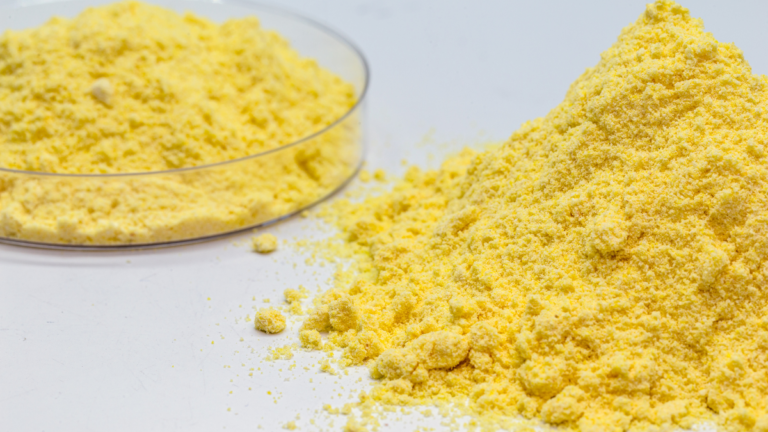
The Prosacea gel calmed the bumps for a few weeks. Then the papules crept back across the cheeks, the flush returned before every dinner, and the tube that once seemed to help stopped doing anything at all. This is the most common story we hear about sulfur for rosacea: real early relief, followed by a predictable relapse. The reason is not that sulfur does nothing. It is that sulfur does three useful things and leaves a fourth undone, and the over-the-counter version most people reach for is barely dosed.
Quick answer
|
81% → 29%
Demodex-positive rosacea patients before and after 8 weeks of topical sulfur (2023 cohort)
|
3
rosacea drivers sulfur targets in one ingredient: mite, yeast, and dead-skin scale
|
~1%
actual sulfur in homeopathic OTC gels like Prosacea, versus the 5 to 10 percent studied
|

Sulfur is a rare tri-action topical, but the blood-vessel component of rosacea is left untouched.
Why Sulfur Has Been Used for Rosacea for Over a Century
Sulfur is one of the oldest tools in dermatology, used since the time of Hippocrates for scaly and inflamed skin. It earned its place in acne, seborrheic dermatitis, scabies, and rosacea because it combines three activities in a single molecule: it is antifungal, antibacterial, and keratolytic. A 2025 narrative review in the Journal of Cosmetic Dermatology confirmed this broad-spectrum, immunomodulatory profile and its long track record in rosacea (sulfur in dermatology review, 2025). As far back as 1984, a study of 10 percent topical sulfur showed meaningful improvement in rosacea, and later work found sulfur cream reduced inflammatory lesions comparably to oral antibiotics.
The Tri-Action Mechanism: Mite, Yeast, and Scale
When sulfur is applied to the skin it reacts with cysteine and with oxygen to form hydrogen sulfide and pentathionic acid. These reactive sulfur species are toxic to small organisms and dissolve keratin. That single chemistry produces three distinct benefits in rosacea skin.

One chemistry, three targets: mite, yeast, and the scale that shelters them.
1. Acaricidal: lowering Demodex density
Rosacea skin carries far more Demodex mites than healthy skin, typically many times the clinical threshold of five mites per square centimetre. Those mites and their gut bacterium activate the inflammatory cascade behind papules, pustules, and flushing. Sulfur damages the mite cuticle and lowers mite load. A real-world cohort of rosacea patients treated with a topical sulfur preparation saw Demodex positivity fall from 18 of 22 patients (81 percent) to 6 patients (29 percent) after eight weeks (sulfur and Demodex in rosacea, 2023). For the full picture of why mite density drives relapse, see the Demodex and rosacea clinical guide.
2. Antifungal: calming Malassezia yeast
Rosacea rarely travels alone. Many patients also carry an overgrowth of Malassezia, the skin yeast behind seborrheic dermatitis and fungal acne, and the two conditions frequently overlap on the central face. Sulfur is directly antifungal, which is why the same ingredient treats dandruff, tinea versicolor, and seborrheic dermatitis. Reducing the yeast burden removes one more input into the inflammatory loop. If your flare-ups sit alongside greasy flaking around the nose and brows, the yeast angle matters; the Demodex and yeast connection explains how mite and fungal overgrowth reinforce each other.
3. Keratolytic: clearing the follicular scale
Sulfur dissolves the dead-skin plug that blocks the follicular opening. That buildup is exactly where mites feed and where yeast proliferates, so descaling the follicle removes their shelter and helps other topicals penetrate. Patients often notice smoother, less sandpapery texture within a couple of weeks, which is the keratolytic effect at work.
What Sulfur Alone Cannot Fix
Here is the honest limitation. Rosacea has four core drivers, and sulfur reaches three of them. The fourth, the dilated blood vessels that produce fixed central redness and visible telangiectasia, is completely outside what sulfur can do. No amount of sulfur will shrink a blood vessel. That job belongs to a vasoconstrictor such as oxymetazoline or to vascular laser and light-based therapy.

Sulfur is a strong adjunct, not a stand-alone treatment: the vascular and systemic sides remain.
Sulfur also does nothing about the systemic reservoir. Mites repopulate the skin from untreated areas and from the internal environment that let them overgrow in the first place. That is why sulfur used by itself tends to calm a flare and then relapse: the vessels stay dilated and the reservoir stays stocked.
The Prosacea Problem: Homeopathic Sulfur Is Barely Dosed
Search interest in Prosacea medicated rosacea gel has climbed sharply, so it is worth being clear about what is in it. Prosacea is a homeopathic product, and its labeled active is Sulphur 1x. A 1x homeopathic dilution is a one-in-ten dilution, which corresponds to roughly 1 percent sulfur, compared with the 5 to 10 percent used in the clinical literature. That gap explains the pattern users describe: a little help, then a plateau, then relapse. If you want the mechanism sulfur actually offers, look for a product that states a real sulfur percentage, or a prescription sodium sulfacetamide 10 percent plus sulfur 5 percent cleanser or lotion, rather than a homeopathic dilution.
How Sulfur Fits Into a Real Rosacea Protocol

Sulfur belongs in the routine as an adjunct wash or spot treatment, layered with agents that reach the drivers it cannot. Image: Pexels
Sulfur earns its place as a supporting agent inside a multi-driver plan, not as a solo cure. A sensible structure looks like this:
- Acaricidal core. A stronger mite-reducing agent such as ivermectin 1 percent or dilute tea tree oil (terpinen-4-ol) as the main driver against Demodex.
- Enzyme control. Azelaic acid to lower the KLK5 and LL-37 redness enzyme cascade, where sulfur has little effect.
- Sulfur as adjunct. A sulfur or sodium-sulfacetamide wash a few times a week to add antifungal and keratolytic support and reduce scale.
- Vascular agent. Oxymetazoline, brimonidine, or in-office laser for the redness sulfur cannot touch.
- Time. A minimum of 12 weeks to cover the mite life cycle, then maintenance.
Compounded formulas try to bundle several of these into one tube; see how a rosacea triple cream combines metronidazole, azelaic acid, and ivermectin, and why even that can relapse. For the complete long-term plan across every driver, read how to get rid of rosacea permanently.
For practitioners
Elemental sulfur exists as sublimed (flowers of sulfur) and precipitated (milk of sulfur) forms; precipitated is finer and better tolerated. The acaricidal and antifungal effect is attributed to reduction to hydrogen sulfide and oxidation to pentathionic acid at the skin surface. Practical formulations for rosacea are sodium sulfacetamide 10 percent with sulfur 5 percent (cleanser, suspension, or lotion), which pairs keratolysis with anti-inflammatory action and better cosmetic acceptability than elemental sulfur pastes.
Counsel on odor and transient xerosis as the main adherence barriers. Note the distinction between sulfonamide hypersensitivity, which is relevant to sodium sulfacetamide, and elemental sulfur, which is not a sulfonamide and does not cross-react. Sulfur is considered low-risk in pregnancy, making it a useful option when topical ivermectin is being avoided. Position sulfur as an adjunct that addresses mite, yeast, and scale, and pair it with a KLK5 inhibitor and a vascular-targeted agent for the components it does not reach.
Further Reading on demodex.net/
- Demodex and Rosacea: The Complete Clinical Guide
- Azelaic Acid for Rosacea: The Mite, the Yeast, and the Redness Enzyme
- Ivermectin for Demodex: How It Works and When It Is Used
- Tea Tree Oil for Demodex: A Clinical Evidence Guide
- Natural Remedies for Demodex Mites: A Clinical Evidence Review
- The Demodex Research Library
Frequently Asked Questions
Does sulfur kill Demodex mites?
Sulfur has direct acaricidal activity that lowers Demodex density rather than instantly wiping mites out. On skin it reacts to form hydrogen sulfide and pentathionic acid, which damage the mite cuticle. In one 8-week rosacea cohort, topical sulfur reduced Demodex positivity from 81 percent of patients to 29 percent. It works best over a full 12-week course to cover the 14 to 18 day mite life cycle, and usually alongside a stronger acaricidal agent such as ivermectin or tea tree oil.
Is Prosacea good for rosacea?
Prosacea is a homeopathic gel whose only active is Sulphur 1x, which works out to roughly 1 percent sulfur, well below the 5 to 10 percent used in the dermatology studies. Many users get a mild calming effect, then a relapse, because the concentration is low and sulfur alone does not address the dilated blood vessels behind persistent redness. It is reasonable as a gentle adjunct, not as a stand-alone rosacea treatment.
What percentage of sulfur is best for rosacea?
The classic rosacea studies used sulfur around 5 to 10 percent, often combined with 10 percent sodium sulfacetamide in a prescription lotion or cleanser. Higher concentrations are more effective but more drying and have a stronger odor, which limits how long people keep using them. Start low, moisturize well, and build tolerance rather than starting at the highest strength.
Can sulfur make rosacea worse?
It can cause transient dryness, peeling, redness, and a sulfur smell, especially early on. A short-lived flare as mite numbers fall is also possible, similar to the die-off reaction seen with other acaricidal agents. Persistent burning or worsening beyond the first two weeks means you should stop and reassess with a clinician.
Sulfur versus metronidazole for rosacea, which is better?
Both reduce inflammatory lesions. Metronidazole is a well-studied anti-inflammatory but is not meaningfully acaricidal at topical strength. Sulfur is weaker on inflammation but adds acaricidal and antifungal action, so it targets more of the underlying drivers. In practice they are complementary rather than competing, and many protocols rotate or layer agents under supervision.
Can I use sulfur with ivermectin or azelaic acid?
Yes, under clinician guidance. A common pattern is a KLK5-lowering agent such as azelaic acid in the morning and an acaricidal agent in the evening, with sulfur used as a periodic wash or spot adjunct. Introduce one product at a time, keep the barrier supported, and avoid stacking multiple strong actives on the same night.
Not sure whether mites are driving your rosacea?
Take the 2-minute Demodex quiz or find a Demodex-aware practitioner.
References
- Wang X, et al. Sulfur and its derivatives in dermatology: insights into therapeutic applications, a narrative review. Journal of Cosmetic Dermatology. 2025. PMC12355337.
- Tanaka A, et al. Real-world evidence for the treatment of rosacea with sulfur or metronidazole preparation in Japanese patients. 2023. PMC10628168.
- Gupta AK, Nicol K. The use of sulfur in dermatology. Journal of Drugs in Dermatology. 2004;3(4):427-431. PMID 15303787.
- Blom I, Hornmark AM. Topical treatment with sulfur 10 percent for rosacea. Acta Dermato-Venereologica. 1984;64(4):358-359.
- Chang YS, Huang YC. Role of Demodex mite infestation in rosacea: a systematic review and meta-analysis. Journal of the American Academy of Dermatology. 2017;77(3):441-447. PMID 28711190.
- Del Rosso JQ. The use of sodium sulfacetamide 10 percent, sulfur 5 percent emollient formulation in dermatology. Journal of the American Academy of Dermatology. 2009.
- Forton FMN. The pathogenic role of Demodex mites in rosacea. Dermatology and Therapy. 2020;10(6):1229-1253.
- Two AM, et al. Kallikrein 5-mediated inflammation in rosacea. Journal of Clinical and Aesthetic Dermatology. 2014;7(1):20-25.
About the author
Marina Ivakhnenko is a functional skin practitioner and the editorial lead at demodex.net/, where she translates peer-reviewed dermatology, ophthalmology, and parasitology research into clear guidance for patients and practitioners managing Demodex mite overgrowth. This article is educational and is not a substitute for individual medical care. Diagnose and treat rosacea and any Demodex-related condition under a licensed clinician.


