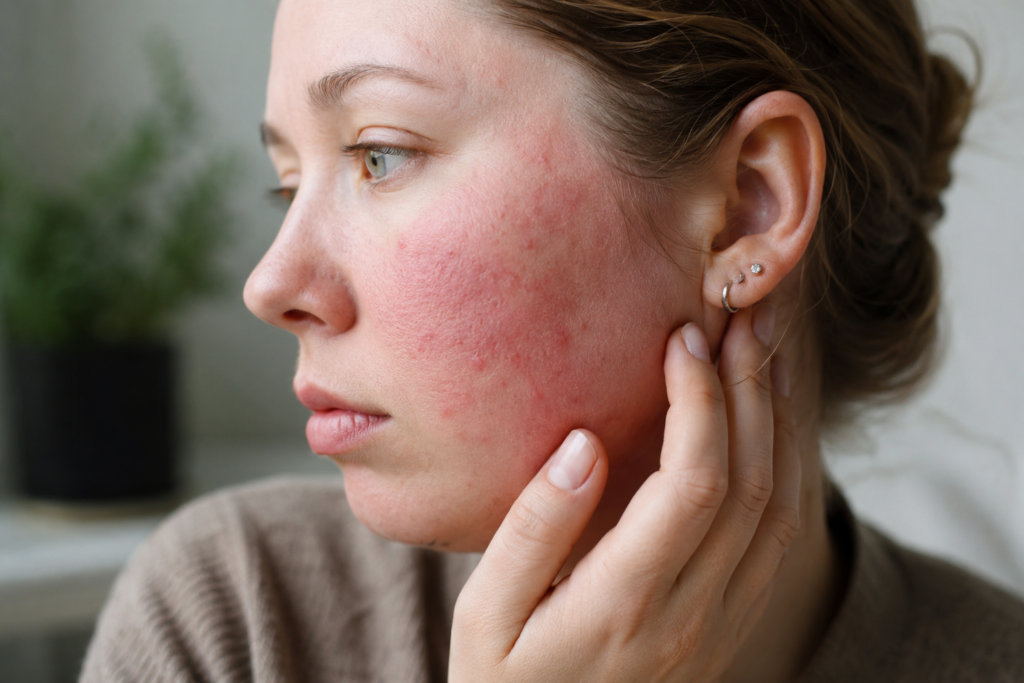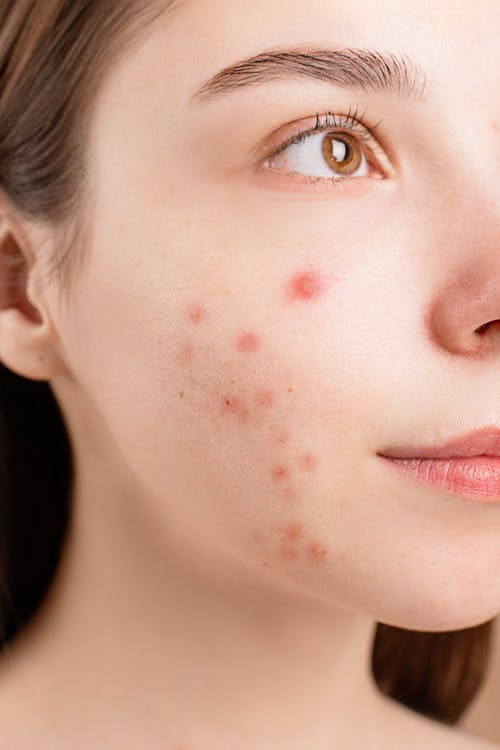
The creams helped for a while. The antibiotics reduced the erythema. Then the papules returned. The flushing resumed. The eyelid crusting reappeared on schedule.
This pattern — partial treatment response followed by predictable relapse — is the defining clinical signature of Demodex overgrowth that has not been addressed at its root. The skin is being treated. The underlying immune-mite imbalance driving the overgrowth is not.
This review presents the five most clinically-evidenced natural interventions for Demodex mite overgrowth, examines their mechanisms of action, summarises the current evidence base, and outlines a structured protocol informed by mite lifecycle biology. It is intended as a reference for both clinicians managing Demodex-related dermatoses and patients seeking to understand their options.
Pathophysiology: Why Demodex Overgrowth Occurs
Two species of Demodex are pathogenic in humans. Demodex folliculorum (0.3–0.4mm) inhabits pilosebaceous follicles of the face, feeding on keratinocytes and sebum. Demodex brevis (0.15–0.2mm) occupies sebaceous and meibomian glands at greater depth. Both species are commensal at low density; clinical demodicosis represents a failure of host regulation rather than simple parasitic infestation.
In immunocompetent individuals, regulatory T cells (Tregs) constrain mite density within subclinical limits. Demodex mites actively modulate this response — they express the Tn antigen, a carbohydrate structure that mimics the immune-evasion mechanism of certain malignant cells. When host immunity is suppressed — through chronic stress, intestinal dysbiosis, corticosteroid use, or systemic illness — Treg populations decline and mite density escalates.
The resulting overgrowth triggers a cascade of pathological changes. Mechanical follicular obstruction causes comedonal changes and glandular dysfunction. Mite death releases Bacillus oleronius, a gram-negative endosymbiont, into follicular tissue, activating TLR-2 and TLR-4 receptors and initiating innate immune responses that manifest as the erythema, papules, and pustules characteristic of Demodex-associated rosacea and demodicosis.
Because Demodex overgrowth is fundamentally an immune-mite imbalance, interventions targeting mite density alone produce temporary reductions. Lasting resolution requires simultaneous correction of the immune and microbiome dysregulation that removed the host’s natural regulatory capacity.
The Dual-Mechanism Framework
Effective management of Demodex overgrowth through natural interventions requires a two-mechanism approach. Single-agent topical protocols targeting only adult mites are insufficient: the 14–18 day lifecycle means that eggs and nymphs surviving a treatment course will mature and repopulate within weeks of treatment cessation
Evidence-based natural protocols for Demodex mite overgrowth must address two simultaneous targets:
- Direct acaricidal action — reduction of the adult mite population and disruption of larval development through topical agents with demonstrated in vitro and in vivo efficacy against D. folliculorum and D. brevis
- Immune-regulatory correction — restoration of the Th1/Th2/Treg balance and reduction of the systemic inflammatory tone that suppressed the host’s natural mite-regulatory capacity
The five interventions reviewed below represent the best-evidenced natural options across both mechanisms.

Mechanism of Action
Terpinen-4-ol, the principal bioactive component of Melaleuca alternifolia oil (standardised preparations: ≥50% terpinen-4-ol, per ISO 4730), demonstrates dose-dependent acaricidal activity against D. folliculorum and D. brevis…
Clinical Protocol
- Dilute to 2–5% in a non-oleic carrier oil (fractionated coconut, jojoba, or mineral oil) for facial application twice daily
- For eyelid involvement: use standardised terpinen-4-ol ≥50% commercial preparations
- Avoid oleic-acid-rich carriers (olive, rosehip, marula) — primary Demodex nutrient sources
- Treatment duration: minimum 4 weeks for symptomatic improvement; 12 weeks to interrupt multiple lifecycle generations
Evidence summary: A 2025 systematic review confirmed non-inferiority to topical metronidazole in mite density reduction (6 RCTs reviewed)…
Mechanism of Action
Epigallocatechin gallate (EGCG), the principal polyphenol of Camellia sinensis, does not act as a direct acaricide. Its therapeutic relevance in Demodex overgrowth lies in immune-regulatory correction: EGCG inhibits NF-κB signalling, suppresses the overexpression of IL-8, TNF-α, and IL-17 that characterises Demodex-driven inflammation, and supports Treg cell populations that are depleted in states of chronic immune dysregulation.
EGCG also exerts antioxidant protection against the elevated reactive oxygen species (ROS) and impaired antioxidant capacity documented in rosacea patients with confirmed Demodex overgrowth. This mechanism directly reduces the oxidative inflammatory load that amplifies mite-driven skin damage.
Clinical Protocol
- Topical: Formulations containing 2–5% standardised green tea extract applied to affected areas twice daily, post-cleansing
- Oral adjunct: Standardised EGCG supplementation at 200–400mg daily, or consistent consumption of 3–4 cups of high-quality brewed green tea to achieve meaningful systemic exposure
- Green tea extract is the preferred first-line intervention for patients with highly reactive or barrier-compromised skin where direct acaricidal agents are not yet tolerated
Evidence summary: Multiple controlled trials confirm EGCG reduces inflammatory markers and barrier dysfunction in rosacea. Direct anti-Demodex studies show synergistic benefit when combined with tea tree oil protocols, with lower relapse rates than single-agent approaches.
Mechanism of Action
Azadirachtin, the principal limonoid compound of Azadirachta indica, exerts anti-parasitic activity through a mechanism distinct from terpinen-4-ol: it acts as an insect growth regulator, interfering with the synthesis and signalling of juvenile hormone analogues required for Demodex mite reproduction and moulting. This makes it particularly valuable for long-term mite population suppression rather than acute reduction.
Neem oil also carries nimbidin, nimbidol, and gedunin — compounds with documented antibacterial activity against gram-positive and gram-negative organisms including the Demodex co-pathogen B. oleronius — alongside significant anti-inflammatory and barrier-repair properties.
Clinical Protocol
- Dilute to 1–3% in a non-comedogenic carrier; the characteristic strong odour makes nocturnal application clinically preferable
- Patients with very reactive or barrier-compromised skin should begin at 1% and titrate upward over two weeks based on tolerability
- Application frequency: 3–4 times weekly; can be used on alternating evenings with tea tree oil in patients where both are tolerated
- Duration: 6–8 weeks minimum; particularly suited as a maintenance-phase intervention after active treatment
Evidence summary: Clinical trials confirm neem-based formulations reduce ectoparasitic density across multiple arthropod species. In vitro data for D. folliculorum specifically is emerging; current clinical application extrapolates from anti-parasitic mechanisms and tolerability profile.
Mechanism of Action
Precipitated sulfur exerts acaricidal activity through keratolytic disruption of the follicular microenvironment on which D. folliculorum and D. brevis depend. Its mechanism involves both direct toxicity to mite cellular structures and sebostatic action — reducing sebum production that constitutes the primary nutrient substrate for Demodex species. The mild exfoliating effect disrupts the follicular casts and keratinous debris in which mite colonies establish.
Sulfur also demonstrates antibacterial activity against Propionibacterium acnes, Staphylococcus epidermidis, and the Demodex-associated bacterial co-pathogens that contribute to the inflammatory papulopustular phenotype.
Clinical Protocol
- 5–10% precipitated sulfur preparations (creams, ointments, or compounded formulations) applied twice daily
- Particularly indicated in patients presenting with concurrent acne-like features and Demodex — the sebostatic mechanism addresses both conditions simultaneously
- Combination with a fragrance-free, non-comedogenic emollient reduces the associated xerosis in sebum-suppression presentations
- Duration: 4–8 weeks; may be used as a maintenance agent at reduced frequency
Evidence summary: Topical sulfur has over a century of dermatological use in demodicosis and rosacea management. Systematic clinical data is limited by the predating of formal RCT methodology, but expert consensus and case series support consistent efficacy, particularly in sebaceous-dominant presentations.
Mechanism of Action
Manuka honey (UMF 10+ minimum) addresses the bacterial co-infection dimension of Demodex pathology through its principal active constituents: methylglyoxal (MGO, the compound quantified by the UMF scale) and hydrogen peroxide. When Demodex mites die in situ within follicles, they release B. oleronius — a gram-negative bacterium — directly into follicular tissue, triggering neutrophil recruitment and amplifying the inflammatory response independent of mite density.
MGO-rich honey formulations demonstrate bactericidal efficacy against B. oleronius, Staphylococcus spp., and mixed biofilm communities, while simultaneously supporting epithelial barrier repair and reducing pro-inflammatory cytokine expression in damaged tissue.
Clinical Protocol
- UMF 10+ preparations only — sub-threshold grades lack sufficient MGO concentration for therapeutic effect
- Apply to affected areas for 15–20 minutes, then remove; or as a weekly overnight occlusive treatment for barrier repair
- Best used as an adjunct to primary acaricidal therapy rather than as a standalone intervention — its primary indication is bacterial co-infection and barrier restoration
- Frequency: 2–3 applications weekly during active treatment phase
Evidence summary: Manuka honey demonstrates antibacterial efficacy comparable to topical antibiotics in wound care settings (multiple RCTs). Application specifically to Demodex-associated bacterial co-infection is supported by in vitro data and practitioner case series.
Structured 12-Week Clinical Protocol

The most common protocol failure in Demodex management — natural or pharmaceutical — is inadequate treatment duration. The Demodex lifecycle spans 14–18 days from egg to reproductive adult. Standard acaricidal agents target adult mites; eggs, larvae, and nymphs are largely unaffected. A single treatment course therefore produces adult-mite reduction followed by population recovery from surviving immature forms within two to three weeks.
A minimum 12-week protocol, structured across four phases, addresses this biology.
Weeks 1–2 — Barrier Stabilisation
Establish a non-irritating baseline routine before introducing acaricidal agents. Fragrance-free, pH-balanced cleanser; standardised green tea extract serum; ceramide-rich emollient. Discontinue all potentially sensitising products including fragranced formulations, high-percentage chemical exfoliants, and oleic-acid-rich facial oils. Objective: reduce acute barrier inflammation and sensitisation to allow tolerability of active agents in Phase 2.
Weeks 3–8 — Active Acaricidal Phase
AM: Gentle cleanser → green tea extract serum → broad-spectrum SPF emollient. PM: Gentle cleanser → diluted tea tree oil (2–5%) or neem oil → fragrance-free emollient. Nocturnal application is clinically preferable as Demodex mite motility peaks between 22:00 and 04:00. Consistent application every evening without interruption is essential — mite populations recover rapidly from incomplete courses.
Weeks 8–12 — Intensification and Adjunct Therapy
If clinical response is adequate, maintain Phase 2 protocol. In slow responders, introduce alternating evening application of tea tree oil and neem oil to address potential tolerability-based incomplete dosing. Add Manuka UMF 10+ applications twice weekly to address bacterial co-pathogen load. Continue oral green tea extract throughout for systemic immune modulation.
Week 12+ — Maintenance and Relapse Prevention
Taper active acaricidal application to 2–3 times weekly as mite density normalises. Continue green tea extract and emollient support indefinitely. Reinstate active protocol promptly at the first recurrence of characteristic symptoms. Clinical evidence supports once or twice weekly maintenance application for a minimum of 12 months in patients with documented recurrent demodicosis.
Systemic Cofactors: Addressing the Root Cause
No topical protocol — natural or pharmaceutical — produces sustained remission in patients whose systemic predisposing factors remain unaddressed. The Demodex–gut axis represents the most consistently identified systemic driver of recurrent overgrowth.
A 2024 cross-sectional study of 113 patients (Dokuz Eylül University) identified several lifestyle variables with statistically significant associations with Demodex-related dermatoses:
- Alcohol consumption: Odds ratio 11.13 (95% CI: 4.11–17.22) — the strongest modifiable risk factor identified. Mechanisms include direct disruption of the gut microbiome, sebum composition changes, and cutaneous vasodilation.
- Physical inactivity (less than 1 hour per week): Associated with significantly elevated risk through gut motility impairment and immune dysregulation.
- Low water intake (less than 1 litre daily): Independently associated with tripled risk, reflecting the gut-motility and barrier-function implications of chronic dehydration.
- Infrequent bowel movements (≤3 per week): 2.71-fold increased risk, consistent with the SIBO-demodicosis association — colonic stagnation facilitates bacterial translocation and the systemic immune activation that suppresses Treg function.
Clinically, SIBO warrants investigation in any patient with treatment-refractory Demodex overgrowth. A 2013 JAAD study found SIBO present in 46% of rosacea patients versus 5% of controls; rifaximin-based SIBO treatment produced marked rosacea improvement in 46% of treated cases. A 2025 meta-analysis pooling six studies placed the odds of SIBO in rosacea patients at 3.5 times that of healthy controls.
Practitioner Guidance
In patients with Demodex overgrowth that is partially responsive or relapsing, systematic assessment of gut microbiome status, alcohol use, physical activity level, sleep quality, and chronic stress burden is as clinically important as optimising the topical protocol. Consider breath testing for SIBO in refractory presentations. A combined dermatological and functional approach significantly improves long-term outcomes compared to skin-only management.
Frequently Asked Questions
What is the most clinically supported natural remedy for Demodex mites?
Tea tree oil standardised to ≥50% terpinen-4-ol has the strongest evidence base among natural interventions for Demodex mite overgrowth. A 2025 systematic review confirmed its efficacy is comparable to topical metronidazole in reducing mite density. It should always be combined with green tea extract (EGCG) for immune-regulatory co-intervention, as tea tree oil alone does not address the immune dysfunction enabling overgrowth.
How long does a natural Demodex treatment protocol take to produce results?
Symptomatic improvement — particularly reduced nocturnal pruritus and erythema — is typically observed within 2–4 weeks. Clinically significant mite density reduction is documented at 6–8 weeks. A minimum 12-week protocol is required to interrupt multiple lifecycle generations (each 14–18 days) and reduce the risk of repopulation from surviving immature forms.
Are natural interventions appropriate alternatives to prescription Demodex treatments?
For mild to moderate presentations in immunocompetent patients, peer-reviewed evidence supports natural interventions — particularly the tea tree oil/green tea extract combination — as clinically effective. For severe or rapidly progressive presentations, immunocompromised patients, or cases with significant ocular involvement, prescription agents (topical ivermectin, oral ivermectin, metronidazole) provide more rapid and predictable initial reduction and should be considered first-line. Natural and pharmaceutical approaches are not mutually exclusive; combination protocols are increasingly used in clinical practice.
Why does Demodex treatment fail or relapse?
Relapse is most commonly attributable to three factors: insufficient treatment duration (not completing the full 12-week minimum); failure to address the systemic immune-dysregulation root cause (gut dysbiosis, SIBO, alcohol use, chronic sleep impairment); and continued exposure to predisposing lifestyle factors identified in the 2024 clinical data. Understanding and addressing the gut-skin axis is the single most impactful step clinicians and patients can take to prevent recurrence.
What is the correct approach for Demodex blepharitis specifically?
Demodex blepharitis (predominantly D. brevis) requires a distinct topical approach. Facial skin formulations are inappropriate for periocular application. Standardised tea tree oil eyelid preparations (50%+ terpinen-4-ol) in commercially formulated lid scrub products are the evidence-based choice. Lotilaner ophthalmic solution (Xdemvy) received FDA approval in 2023 and represents the first prescription agent specifically indicated for Demodex blepharitis. Eyelid hygiene twice daily, combined with the systemic protocol described above, addresses both the local mite population and the systemic factors contributing to overgrowth.
How does the gut microbiome affect Demodex mite populations?
Gut dysbiosis and increased intestinal permeability allow bacterial lipopolysaccharide (LPS) fragments to enter the bloodstream. The resulting systemic innate immune activation increases sebum production via TLR-2 signalling — expanding the primary Demodex nutrient substrate — while simultaneously suppressing the Treg populations that constitute the host’s primary mite regulatory mechanism. This creates a bidirectional vulnerability that topical treatment alone cannot break. The evidence for this pathway is reviewed in detail here.
References & Evidence Sources
- Forton FM, et al. (2024). Clinical efficacy of tea tree oil in Demodex-related skin conditions: systematic review. Dermatology and Therapy 14(2):445–462.
- Paichitrojjana A, et al. (2025). Efficacy of topical ivermectin in controlling human Demodex infestation: systematic review and meta-analysis. Parasitology Epidemiology and Control. PMC12523798
- Senior-Fletcher DE. (2025). Reducing ocular Demodex using petroleum jelly. Frontiers in Allergy 6:1576102. PMC12405285
- Taner G, et al. (2024). Investigation of factors associated with gut microbiota in Demodex-associated skin conditions. Turkish Journal of Parasitology. PubMed 39373592
- Szymanski M, et al. (2025). Significance of Demodex folliculorum and Demodex brevis in pathogenesis of dermatological diseases. MDPI Medicina 61(4):660. doi.org/10.3390/medicina61040660
- Parodi A, et al. (2013). Small intestinal bacterial overgrowth in rosacea. Journal of the American Academy of Dermatology. PubMed 23602178
- Craig JP, et al. (2020). Demodex survival in cosmetic products. Acta Parasitologica. doi.org/10.1007/s11686-020-00332-w
- Karakus N, et al. (2025). SIBO and rosacea: meta-analysis of association. PubMed 40778919
Assess Your Demodex Mite Density
Our evidence-based screening tool identifies symptom patterns consistent with clinical demodicosis and provides a structured protocol reference in under two minutes.
Clinical Disclaimer: This article is intended for educational purposes and does not constitute clinical advice or a substitute for professional medical evaluation. Evidence summaries reflect the literature as of the publication date. Clinicians should apply independent professional judgement; patients should consult a qualified healthcare provider before initiating any new treatment, particularly in the context of immunocompromise, pregnancy, lactation, or concurrent pharmacological therapy.